

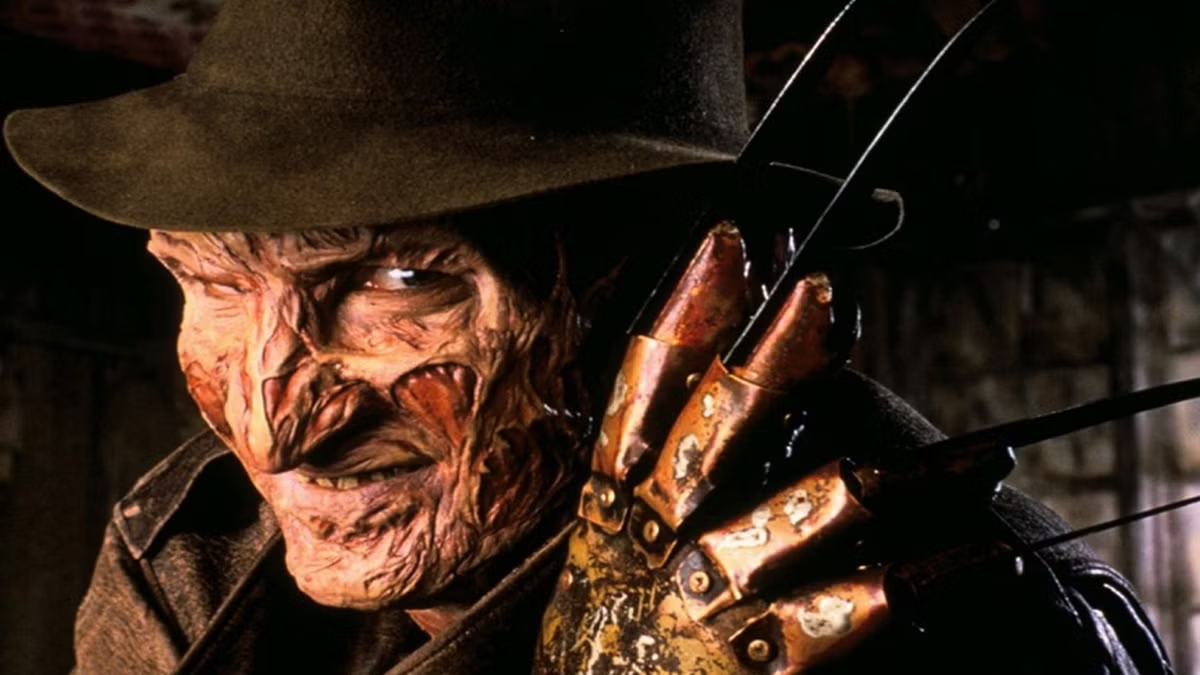
The Elm Street house isn’t just a structure of wood and brick; it’s an architectural virus.
When Wes Craven unspooled A Nightmare on Elm Street onto theater screens in 1984, he didn’t just introduce a new slasher; he permanently broke the safety contract of the horror genre.
Before Freddy Krueger, horror had a simple rule: If you could outrun the monster, lock the deadbolt, or flee the woods, you could survive. Michael Myers and Jason Voorhees were terrifyingly physical, but they were bound by three dimensions. Craven looked at those physical boundaries and realized that the ultimate hunting ground wasn’t a foggy camp or a dark alley. It was the one place every human being is biologically forced to visit every single night: the subconscious.
Nearly four decades, nine films and countless nightmares later, Freddy remains the gold standard of horror villainy. He is a monster built on biological betrayal, ancient mythology and a deeply poetic brand of sadism that turned the slasher genre into an arena of surrealist performance art.
The Biological Trap: Weaponizing Sleep Deprivation
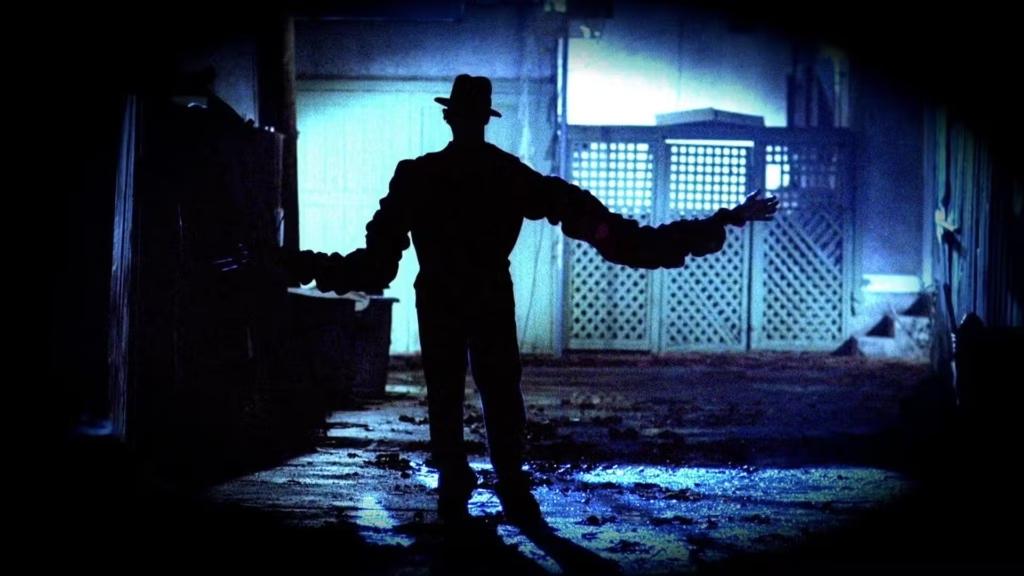
The raw, primal terror of Freddy Krueger doesn’t begin with his razor-tipped glove or his ruined, melted flesh. It begins with the simple, agonizing reality of sleep deprivation. Sleep is not optional. It is an inescapable biological tax. You can buy a gun, reinforce your doors or stay in a crowded room, but eventually, your brain chemistry will betray you.
Craven beautifully weaponizes this psychological torture tactic throughout the franchise. As the teenagers of Springwood fight to stay awake, guzzling coffee, downing caffeine pills and burning their own flesh with curling irons, they enter a state of waking psychosis.
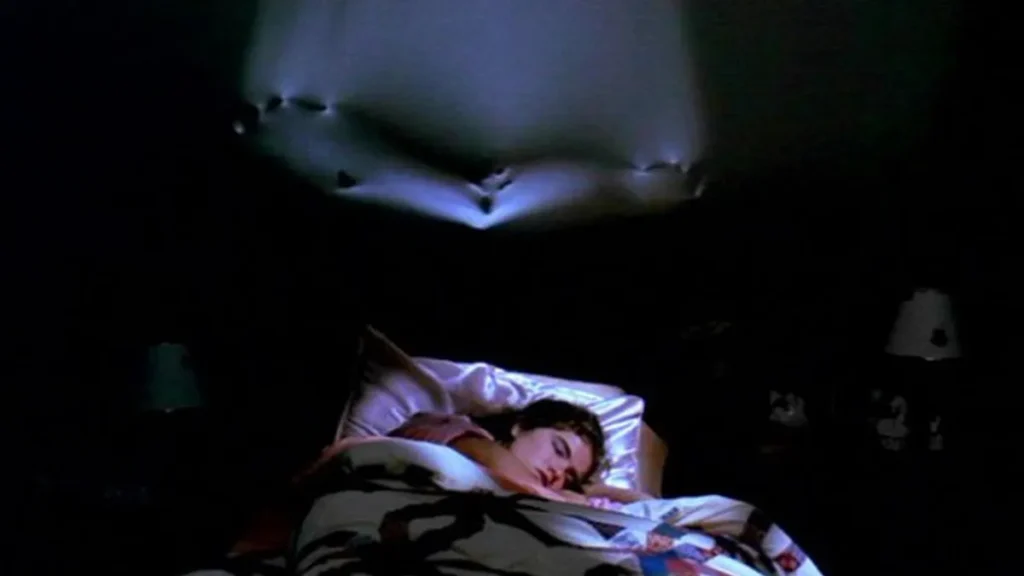
By the time Freddy actually manifests in their dreams, his victims are already psychologically broken. The boundary between reality and the dream world has dissolved. In the 2010 remake, this is brought to a clinical, terrifying focus through “micro-sleeps,” seconds-long bursts of sleep where the brain drops into REM while the body is still technically awake and moving. You could be walking down a grocery aisle or sitting in a diner, blink and suddenly you are standing in a rusted boiler room.
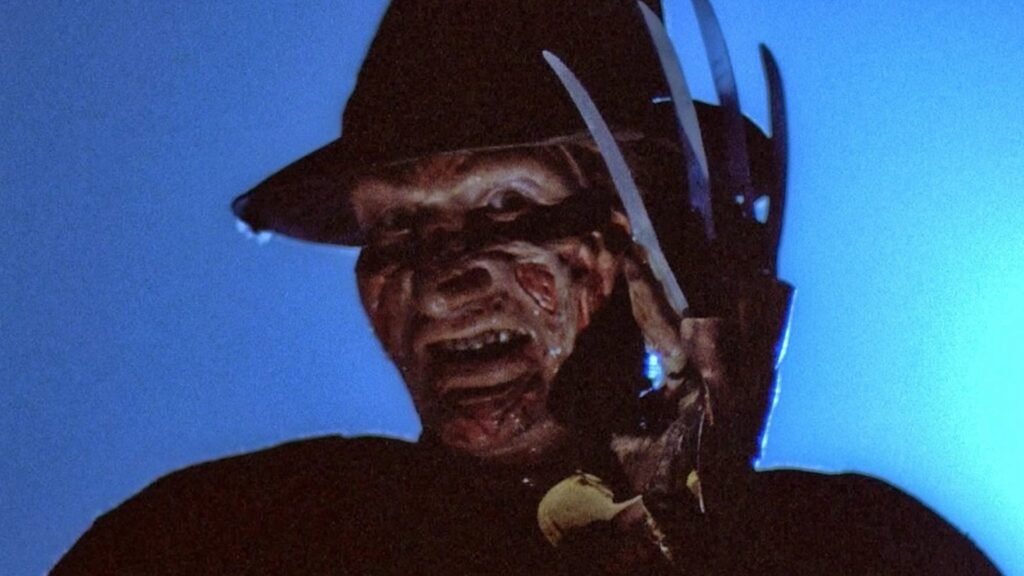
Psychologically, our dreams are supposed to be our ultimate sanctuary. It’s the private theater where our brains process trauma, stress and desire. Freddy doesn’t just kill his victims; he violates that biological safe space. He turns a person’s deepest insecurities, secret phobias and hidden shames into lethal weapons. If you are afraid of insects, you become one. If you are ashamed of your physical body, he will tear it apart. He is omnipotent within your mind, meaning your own imagination is actively helping him murder you.
Ancient Shadows: The Mythology of the Dream Demon
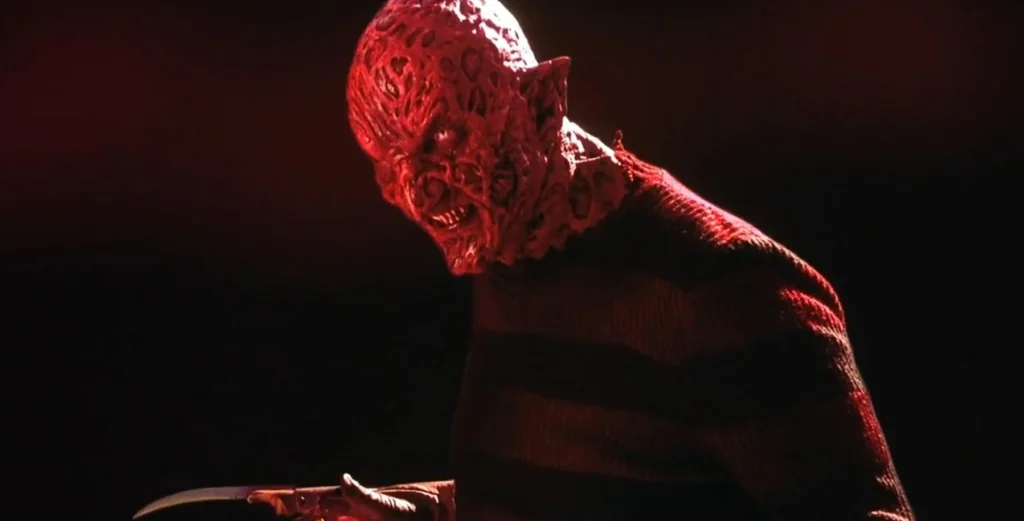
While Freddy Krueger feels uniquely coded to the anxieties of 1980s suburban America, his roots stretch back thousands of years into ancient global folklore. Wes Craven didn’t just invent a monster; he tapped into a cross-cultural archetype that humanity has been trying to explain since the dawn of civilization.
Across history, almost every culture has a name for the entity that stalks the sleeping:
The Mara / The Alp: In Germanic and Slavic folklore, the Mara is a malicious spirit that sits heavily upon a sleeper’s chest, crushing the breath out of them and inducing terrifying, paralyzing dreams. This folklore is the literal etymological root of the word “nightmare.”
The Incubus: Medieval European mythology whispered of the Incubus, a predatory demon that invaded the beds of the sleeping to physically and psychologically violate them. Freddy shares this deeply invasive, highly personalized and predatory nature.
The Baku: In Japanese mythology, the Baku is a chimerical spirit that can be summoned to devour nightmares. However, the myth carries a dark warning: If the Baku is unsatisfied, it will devour not just the bad dream, but the person’s hopes, desires and entire future, leaving them a hollow, catatonic shell.
In Freddy’s Dead: The Final Nightmare (1991), the franchise explicitly connected Freddy to this global heritage by introducing the Dream Demons, ancient, primordial entities that traveled the cosmos looking for the most wicked human soul alive to grant them the power to make nightmares physical reality. Freddy wasn’t just a local ghost; he was the modern vessel for an ancient, mythological evil.
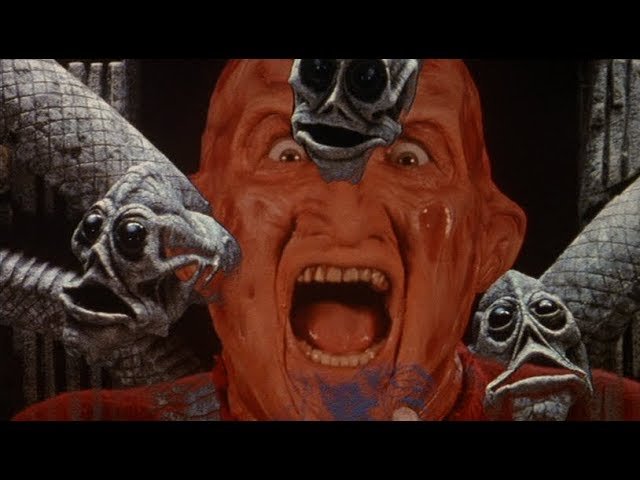
The Architecture of Fear: Red, Green and Burned Flesh
A horror icon’s visual identity must trigger immediate, subconscious discomfort. Freddy’s design is a masterclass in psychological manipulation, though it split into two distinctly terrifying directions across the history of the franchise.
The Theatrical Master: Robert Englund
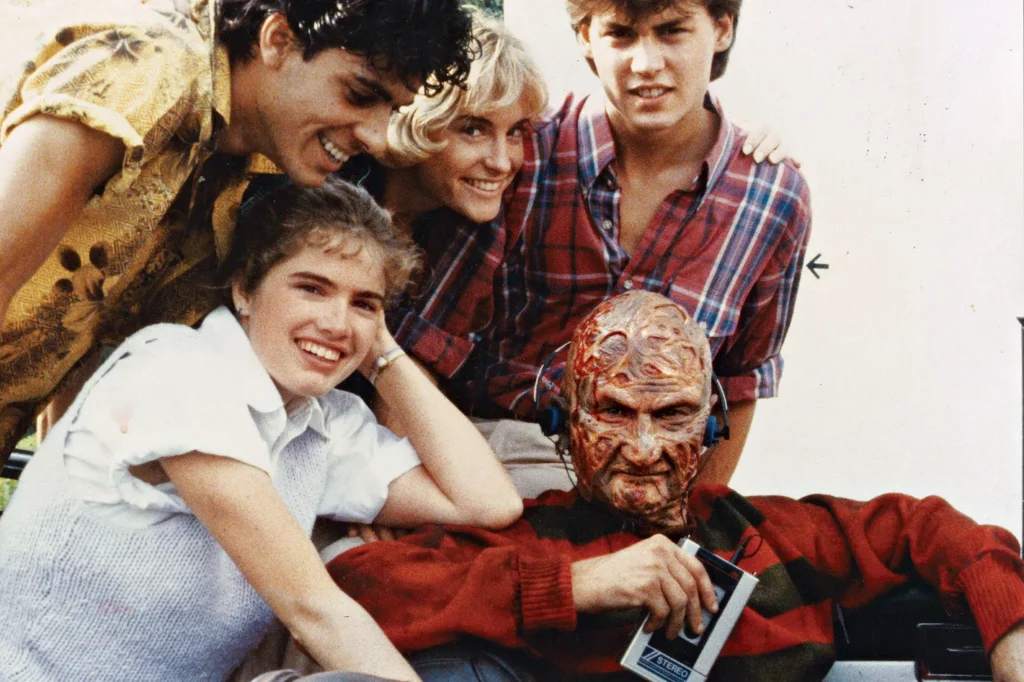
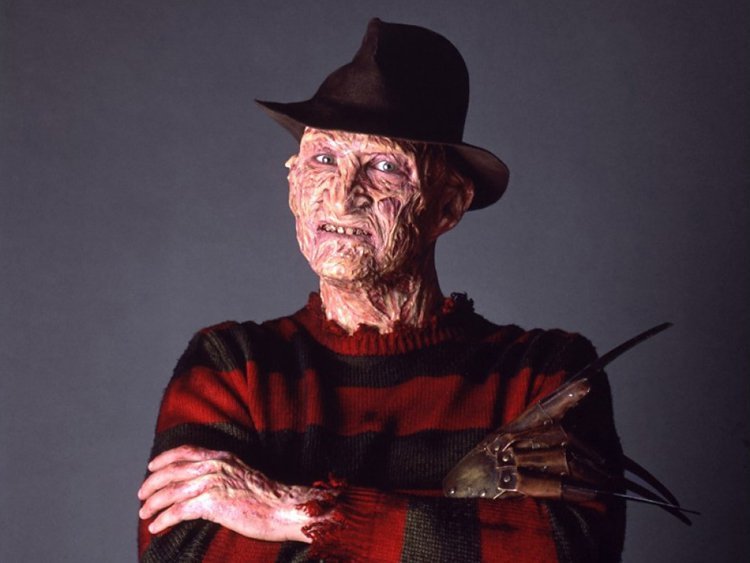
Wes Craven meticulously engineered the original Freddy aesthetic based on psychological data. He chose the infamous olive-green and blood-red striped sweater after reading an article in Scientific American noting that those two specific color wavelengths are the most difficult for the human eye to process simultaneously. Side by side, they create a subtle visual jarring effect, a localized optical chaos.
Robert Englund brought a darkly charismatic, physical performance to this look. Inspired by the swagger of classic Hollywood gangsters and the physical comedy of vaudeville, Englund’s Freddy was a theatrical sadist. His burns were stylized, leaving his jawline sharp and his eyes piercingly expressive. This allowed him to drop wicked puns, sneer with theatrical malice and operate like a twisted ringmaster of a nightmare circus. The fedora, taken from a real-world unhoused man who had terrified a young Craven out of a window, gave him a shifting, transient silhouette that instantly signaled danger.
The Realistic Predator: Jackie Earle Haley

When Samuel Bayer directed the 2010 remake, the production team decided to strip away 20 years of pop culture camp and pull Freddy back into the pitch-black shadows of reality.
Jackie Earle Haley’s Freddy was built using actual medical references of third-degree burn victims. His face was asymmetrical, missing ear cartilage, his nose flattened and his skin pulled taut and raw over exposed facial structures. This Freddy didn’t dance, and he didn’t crack jokes.
Leaning heavily into the grim reality of the character’s backstory as a child predator, Haley played Krueger with a quiet, raspy and deeply unsettling malice. The visual identity shifted from a colorful comic-book monster back to a realistic, deeply distressing human monster wrapped in supernatural power.
A Timeline of Poetic Cruelty: Freddy’s Creative Kills
What truly cements Freddy Krueger in the horror hall of fame is his sheer artistry. He doesn’t just stalk and stab like a traditional killer; he treats every murder as a custom-tailored piece of performance art. Across nine films, his kills evolved from raw, surrealist horror into massive, big-budget practical effects spectacles.
A Nightmare on Elm Street (1984)
The Ceiling Drag (Tina Gray): The kill that put Freddy on the map. Dragged up the wall and across the ceiling by an invisible force, Tina is sliced open while her boyfriend watches in absolute, helpless horror. Shot in a rotating room set, this sequence defied gravity and told audiences that the physical rules of reality were gone.
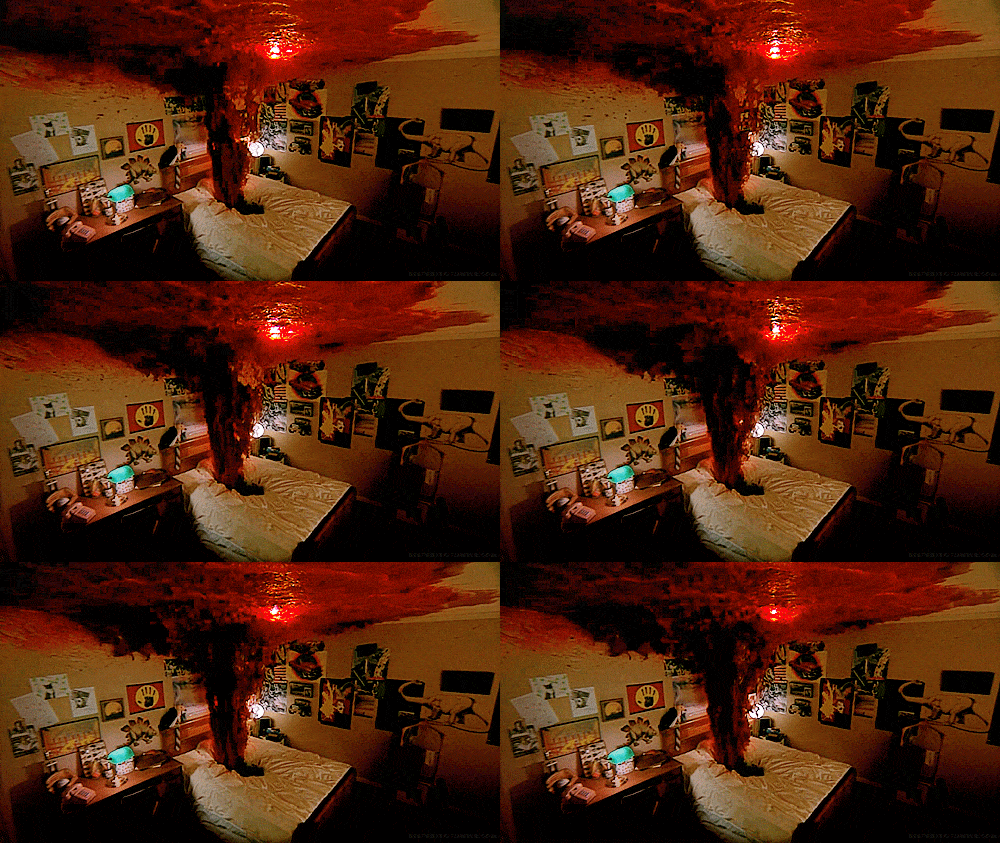
The Blood Geyser (Glen Lantz): A teenage Johnny Depp is pulled straight down into the center of his mattress. After a moment of dead silence, a volcanic, high-pressure geyser of blood shoots out of the bed, painting the ceiling and walls red. It remains one of the most visually shocking practical effects in horror history.
A Nightmare on Elm Street 2: Freddy’s Revenge (1985)
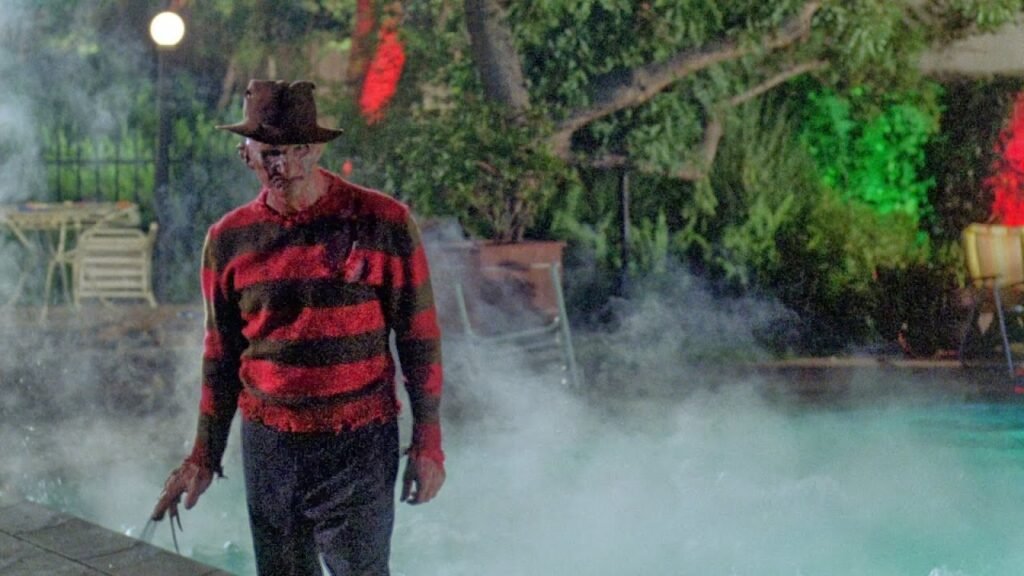
The Pool Party Massacre: In this heavily debated sequel, Freddy attempts to possess a teenager named Jesse Walsh to break into the waking world. When Freddy physically tears his way out of Jesse’s body and stalks into a crowded backyard pool party, slicing through teenagers in broad daylight, it showed a raw, unfettered fury stripped of dream world illusions.
A Nightmare on Elm Street 3: Dream Warriors (1987)
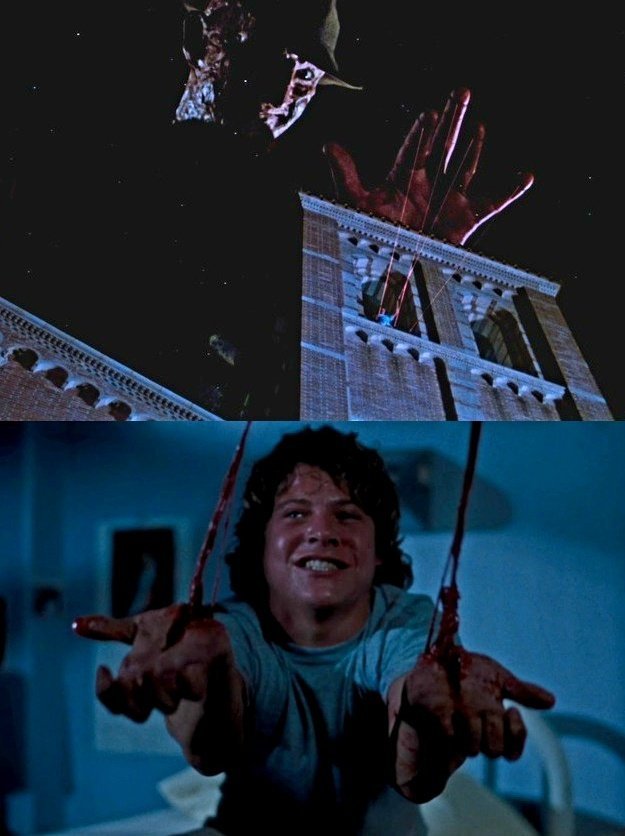
The Human Puppet (Phillip): Phillip is a troubled teen who passes the time making intricate puppets. Freddy exploits this passion by slicing open Phillip’s wrists and ankles, pulling his tendons out like strings and using them to operate him like a marionette, walking him up to a tower window and cutting the strings to stage a suicide.
The Prime Time TV (Jennifer): An aspiring actress is pulled toward a television screen where Freddy’s face emerges from the plastic casing, sprouting mechanical arms and TV antennae from his head. Before smashing her head through the glass, he delivers his most famous line: “Welcome to prime time, bitch!”
A Nightmare on Elm Street 4: The Dream Master (1988)
The Roach Motel (Debbie): Debbie has an intense phobia of bugs and a passion for weightlifting. While bench-pressing, Freddy appears and pushes the barbell down, snapping her arms backward at the elbows. As she screams, insect legs burst from her joints, her skin hardens and she falls through the floor into a giant, sticky roach motel where Freddy gleefully crushes her.
A Nightmare on Elm Street 5: The Dream Child (1989)
The Biomechanical Cycle (Dan): Fusing the flesh with machinery, Freddy morphs Dan into a living motorcycle. Fuel lines puncture his flesh, electrical wires splice into his nervous system and his face melts into the front chassis of the bike in a stunning, Cronenberg-esque body horror sequence.
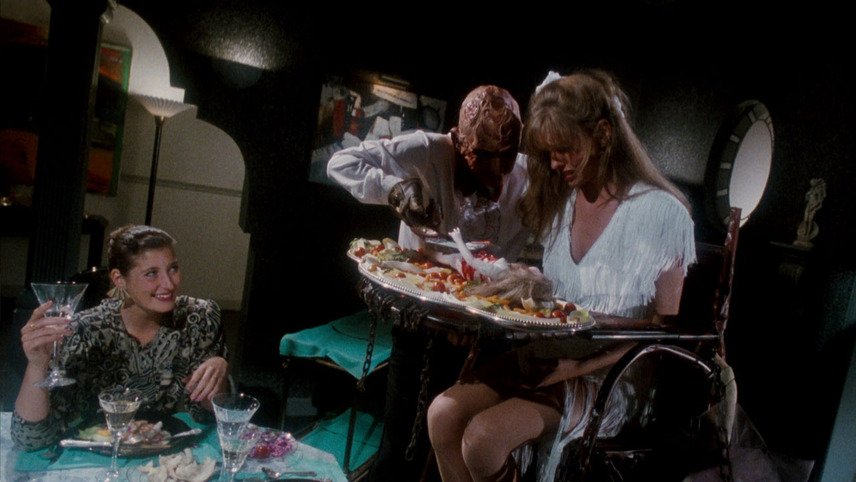
The Gourmet Feast (Greta): Greta is a young model forced into strict, suffocating dietary control by her overbearing mother. Freddy locks her in a high-society dining room and forces her to gorge on her own internal organs, laughing as her cheeks fill to the point of suffocation while the high-society guests look on.
Freddy’s Dead: The Final Nightmare (1991)
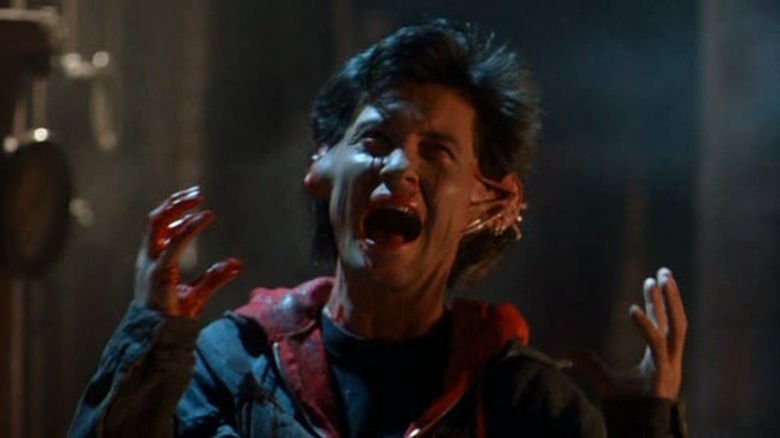
The Hearing Aid Explosion (Carlos): Leaning fully into cartoon surrealism, Freddy targets Carlos’ hearing disability. He steals Carlos’ hearing aid and replaces it with a parasitic, organic device that amplifies all sound a thousandfold. Freddy then drops a box of pins and scrapes his metal claws across an enormous chalkboard until Carlos’ head literally explodes from the acoustic pressure.
Wes Craven’s New Nightmare (1994)
The Hospital Ceiling (Julie): In a brilliant, meta-textual return to form, an ancient demonic entity takes the form of Freddy Krueger to enter our real world. When it attacks a nanny named Julie in a sterile hospital room, she is flung violently across the walls and ceiling. Stripped of the ’80s puns, the scene recaptured the terrifying, cold brutality of the 1984 original.
Freddy vs. Jason (2003)
The Cornfield / Boiler Room Pursuit (Gibb): In this crossover showdown, Freddy’s primary psychological weapon is frustration. Jason keeps stealing his kills in the waking world before Freddy can finish them in the dreamscape. This dynamic peaks when a passed-out Gibb (Katharine Isabelle) dreams herself in a surreal cornfield that dissolves into Freddy’s classic boiler room. Freddy toys with her, assuming his classic position of power, only for Jason to brutally impale Gibb in the physical world mid-dream, robbing Freddy of his prize and cementing the bitter, blood-soaked rivalry between the two titans.
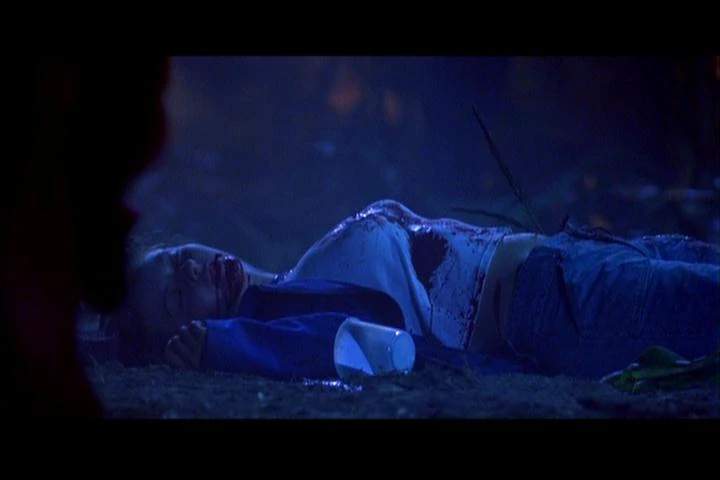
A Nightmare on Elm Street (2010 Remake)
The Diner Suicide (Dean): Trapped in a sudden micro-sleep while sitting at a diner table, Dean is approached by Haley’s Freddy, who holds a steak knife to his throat. In the real world, Dean’s friends watch in horror as his physical body stands up, takes a knife and calmly cuts his own throat open. The clinical, sudden execution highlighted the terrifying lack of bodily autonomy that defines the remake.
FINAL WORLD
Freddy Krueger works so profoundly because he represents an inevitable truth: Everyone must close their eyes eventually. By fusing ancient folklore, avant-garde visual design, and deeply personal psychological warfare, the franchise built a blueprint for a monster that can never truly be destroyed because his hunting ground is built directly into our biology.
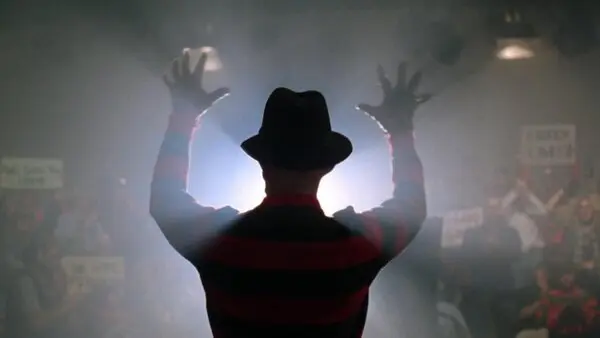
As long as human beings are forced to close their eyes, drop their guard and slip into the dark, unpredictable waters of the subconscious, Freddy Krueger will be waiting in the boiler room of our collective imagination, scraping his metal claws against the pipes, waiting for us to fall asleep.