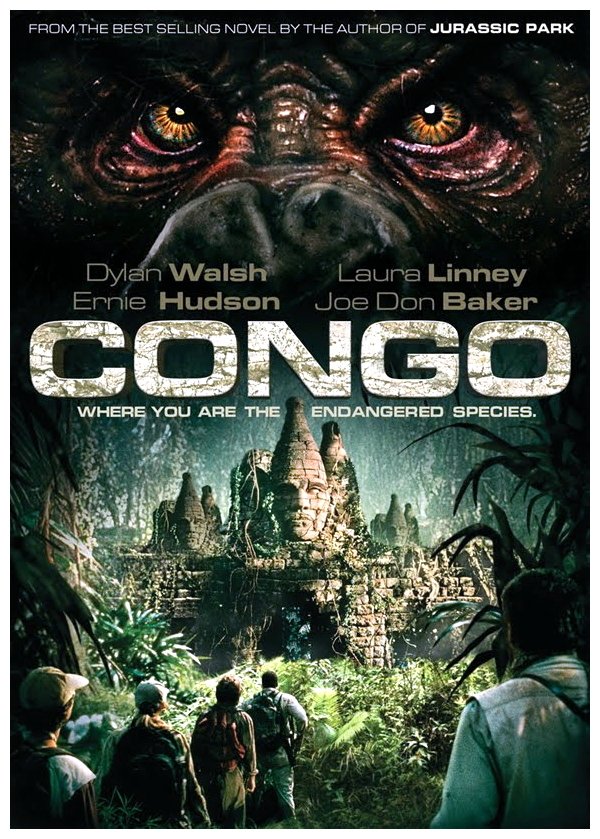

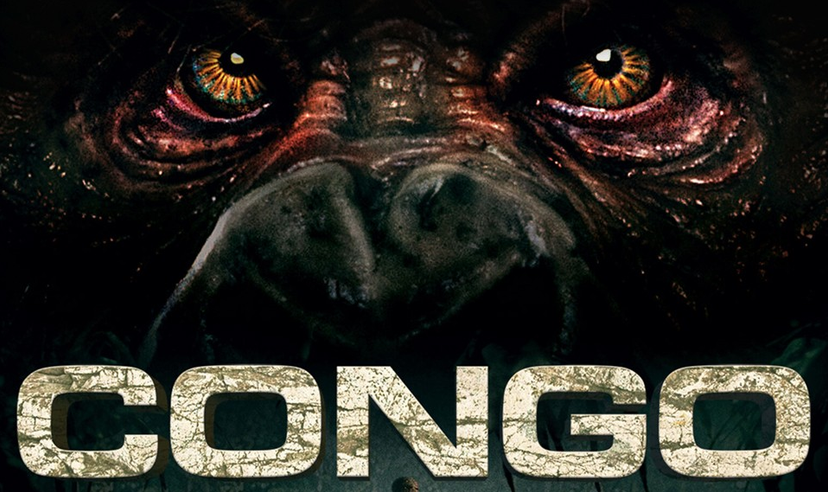
There are certain movies that immediately transport you back to the theater where you first saw them, and for us, CONGO is one of those movies. We were coming off the massive excitement of JURASSIC PARK, which had completely changed what we expected from a summer adventure film, so when another Michael Crichton story involving dangerous creatures, lost civilizations and cutting-edge effects arrived in theaters, we were absolutely ready for it.
We saw CONGO at the MANN’s Chinese Theatre here in the City of Industry, a theater that is now a UFC Gym, and we walked in expecting some serious monkey madness. What we got instead was a movie that couldn’t quite decide whether it wanted to be a serious adventure, a science fiction thriller, a creature feature or a goofy 90s blockbuster, and somehow managed to be all of those things at different points.
That doesn’t make CONGO a bad movie. In fact, there’s something incredibly charming about the whole damn thing, especially when you look back at it now. The movie has killer gorillas, diamonds, an ancient city, a talking ape, Bruce Campbell and Tim Curry worrying about sesame cake while everyone else is trying not to get murdered. What’s not to love?
Well, the monkeys and the diamonds are definitely going to require some discussion.
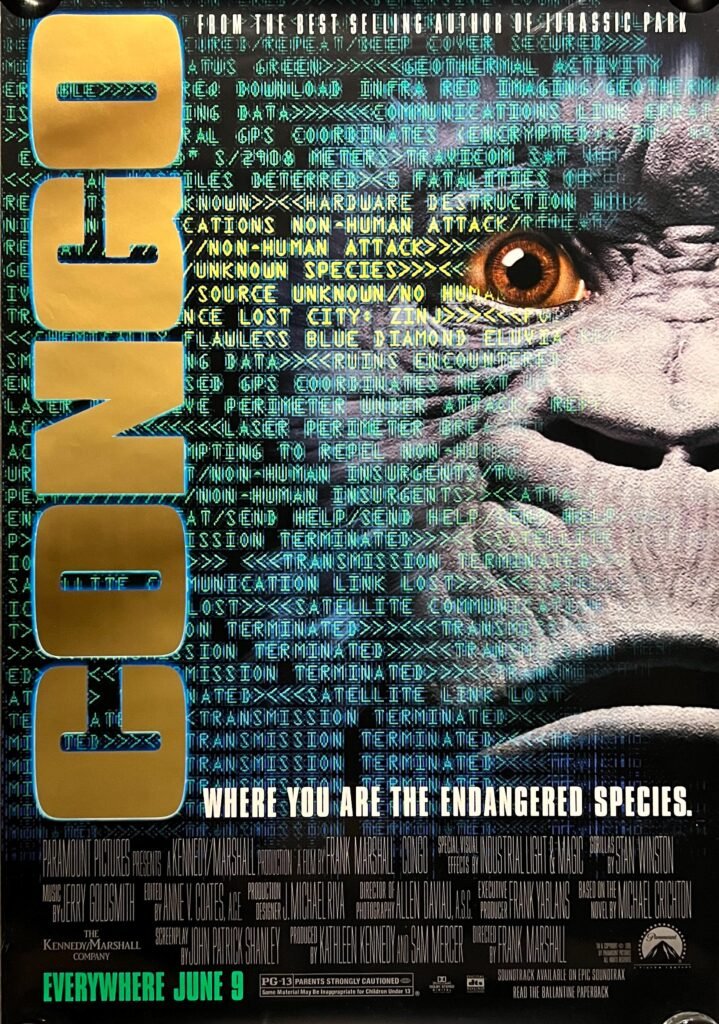
WHAT IS IT ABOUT?
Released in 1995, CONGO arrived during an interesting moment in Hollywood. JURASSIC PARK had turned Michael Crichton into one of the biggest names in science fiction and adventure, while studios were desperately looking for the next big summer spectacle that could bring audiences into theaters. The ingredients were certainly there. Crichton had written the original novel, Kathleen Kennedy and Frank Marshall were producing; Stan Winston’s effects company was responsible for the gorillas, and the cast included Laura Linney, Ernie Hudson, Bruce Campbell, and Tim Curry.
The movie follows an expedition into the Congo after a previous team disappears while searching for diamonds and the legendary Lost City of Zinj. Communications company TraviCom wants those diamonds because they are apparently worth an obscene amount of money, while Karen Ross (Laura Linney) is determined to find the missing expedition and recover the valuable stones.
WATCH THE TRAILER FOR “CONGO” BELOW
Primatologist Peter Elliot (Dylan Walsh) has an entirely different reason for making the journey. He wants to return Amy, a gorilla he has raised, to the region where she was born after discovering that her paintings may contain clues about the Lost City.
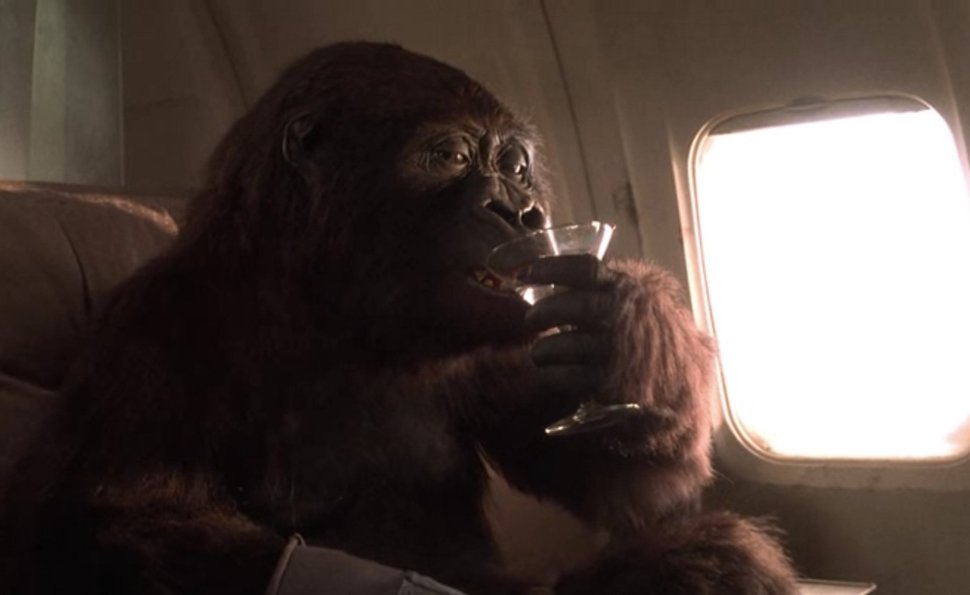
Amy communicates through sign language and a computerized system that gives her a voice, and surprisingly, the movie spends enough time developing her personality that she becomes much more than a fancy special effect. She’s curious, stubborn, emotional and occasionally pretty damn funny.
Along for the expedition is Monroe Kelly (Ernie Hudson), the guide responsible for getting everyone through the Congo, while Tim Curry plays Herkermer Homolka, a Romanian treasure hunter who claims to have his own reasons for finding Zinj. Curry is probably the best character of the whole movie and really outshines everyone else with his acting and style, but we’ll get into that later.
If you wanted to see Laura Linney wipe out some gorillas with an industrial laser, this is the flick for you!
AMY IS THE REAL STAR
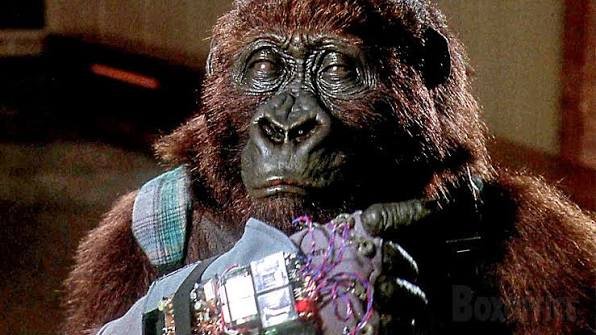
The most interesting thing about CONGO is that the movie actually asks us to care about a gorilla. That sounds simple now, but in 1995, creating a believable animal character that had to interact with human performers was a pretty ambitious undertaking. Amy wasn’t supposed to sit around looking cute or attack people whenever the screenplay needed some action. She needed to communicate, react emotionally, and convince the audience that Peter genuinely cared about her.
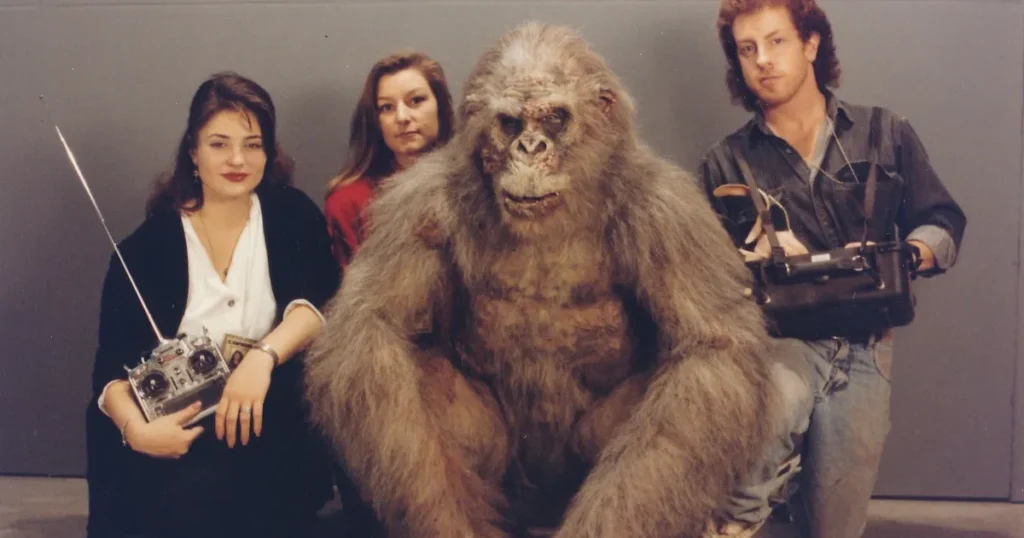
Stan Winston and his team were responsible for bringing Amy and the other gorillas to life, using practical effects and physical performers to create the animals. The result isn’t perfect by today’s standards, and there are certainly moments where you can see the mechanics of the effects, but that doesn’t make the achievement any less interesting.
Amy works because she feels like a character.
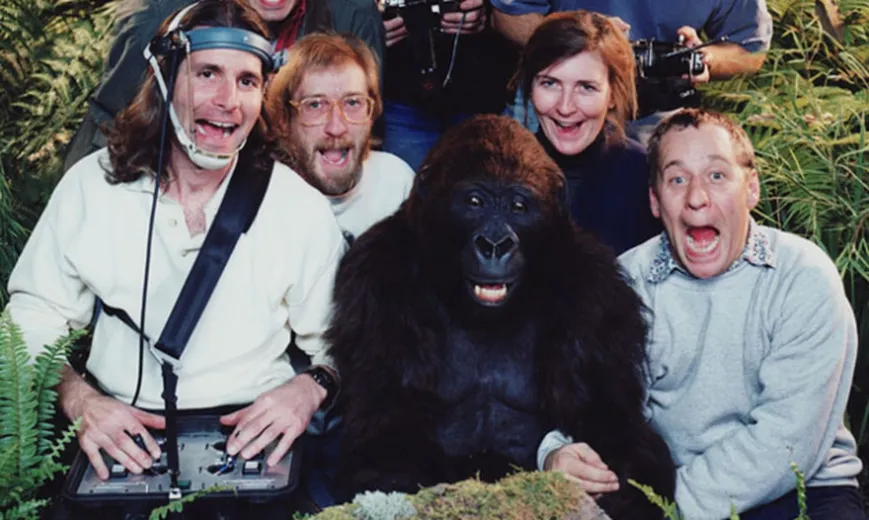
“We took a lot of artistic license with Amy that, in hindsight, we shouldn’t have taken,” Stan Winston said. “Part of that artistic license was putting a lowland gorilla face on what was supposed to be a mountain gorilla just to make her more appealing. She was cuter, but we paid a price for it because there was a sense of reality that was lost in the character.”
SIDE NOTE: My stepsister is named Amy, and she was relentlessly made the butt of many AMY jokes when this movie came out.
Her relationship with Peter gives the movie an emotional center, and her connection to the Lost City gives the expedition an actual reason to exist beyond everyone simply wandering through the jungle looking for something expensive. Once Amy encounters the other gorillas, another interesting idea begins to emerge. These aren’t simply wild animals that have decided humans are delicious. The gorillas protecting Zinj have been bred and trained to defend the city’s diamond mines.
That concept comes directly from Crichton’s story and is one of the more fascinating ideas in the movie. The gorillas are dangerous because humans made them that way, turning them into living security systems for an ancient civilization.
Unfortunately, CONGO doesn’t spend nearly enough time exploring that idea. Coming only a few years after JURASSIC PARK, the movie was inevitably going to be compared to Spielberg’s dinosaurs. That was an almost impossible standard to meet, particularly when audiences were still trying to figure out exactly how convincing computer-generated creatures could become.
TIM CURRY AND THE SESAME CAKE
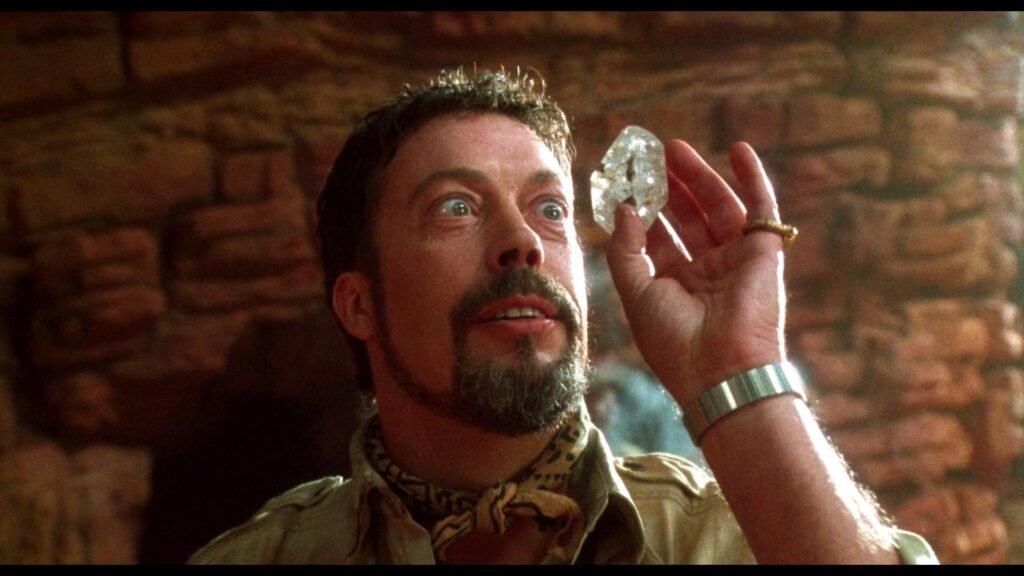
With Tim Curry’s recent passing, revisiting CONGO feels particularly appropriate because Herkermer Homolka is exactly the kind of strange character Curry could make memorable even when the movie around him wasn’t always sure what it wanted to be.
Homolka is greedy, arrogant and perfectly willing to let everyone else deal with the dangerous parts of the expedition while he worries about getting his hands on the treasure. Curry doesn’t play him like a conventional villain, though. There’s a theatrical quality to the performance that makes Homolka entertaining without turning him into a complete cartoon.
Then we get the sesame cake.
During one of the expedition’s stops, Homolka begins eating food belonging to Captain Wanta. Wanta tells him to stop, but Homolka continues as though the entire situation is beneath his attention. Eventually, Wanta has had enough and makes it very clear that the cake isn’t Homolka’s to eat. You have to see it for yourself.
The scene is ridiculous, but Curry plays it completely straight, which is exactly why it works. It’s one of those bizarre little moments that sticks in your brain long after the diamonds, ancient cities and killer gorillas have started blending together.
For horror fans, Curry’s appearance is another reason to revisit the movie. CONGO certainly isn’t his most famous role, but watching him work is still a pleasure because he knows exactly how to make an unpleasant character entertaining.
BRUCE CAMPBELL DIDN’T GET TO STAY LONG
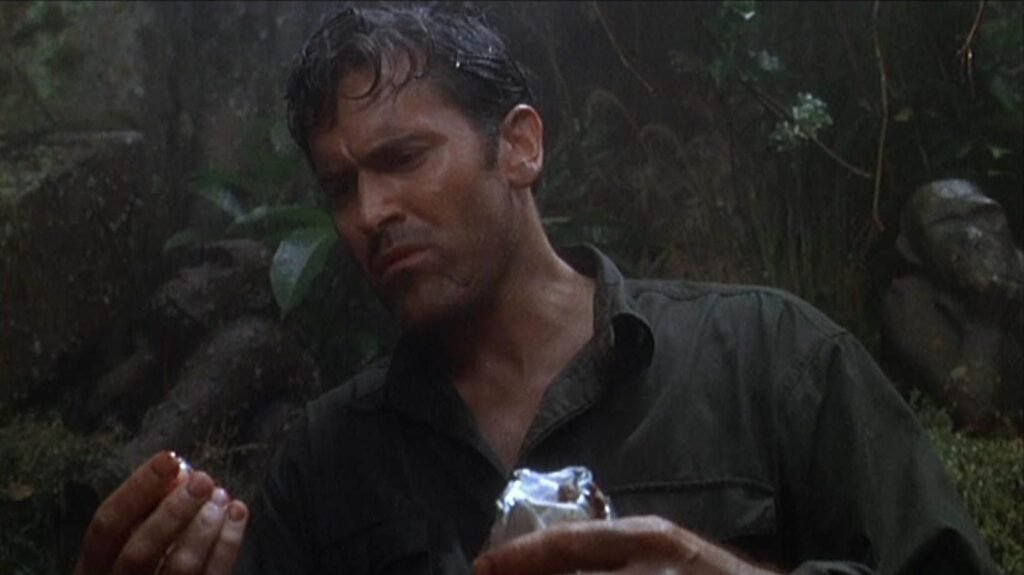
Then there’s Bruce Campbell. If you’re a horror fan, seeing Campbell appear in CONGO immediately gets your attention, especially because this was during the period when his work as Ash Williams in the EVIL DEAD movies had already made him a genre favorite.
Campbell plays Charles Travis, Karen Ross’ fiancé and one of the members of the expedition that disappears at the beginning of the movie. His appearance establishes the danger facing the expedition and gives Karen another personal reason to get involved. Unfortunately, that’s about where Campbell’s contribution ends.
He doesn’t get much time to develop the character before the movie moves on, which feels like something of a missed opportunity. It’s one of those pieces of 90s casting that makes you wonder what might have happened if the filmmakers had decided to keep him around a little longer. Campbell was a great addition to the cast and admittedly could have been utilized far better than an early kill for the film to gain some dread to it.
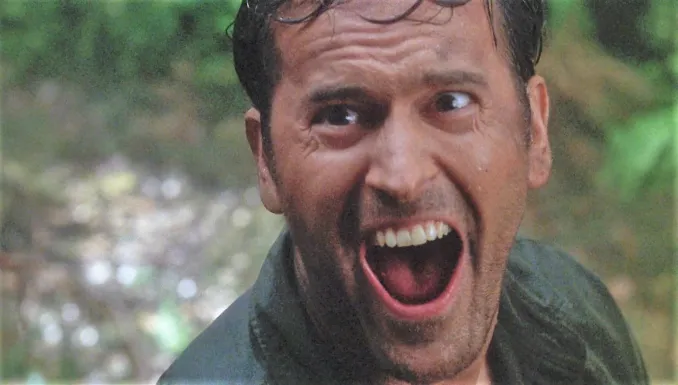
Considering how much personality Campbell brought to genre movies during this period, we certainly wouldn’t have complained.
FROM CRICHTON’S NOVEL TO THE BIG SCREEN
If you only know CONGO from the movie, Michael Crichton’s novel is worth checking out because the two versions are considerably different.
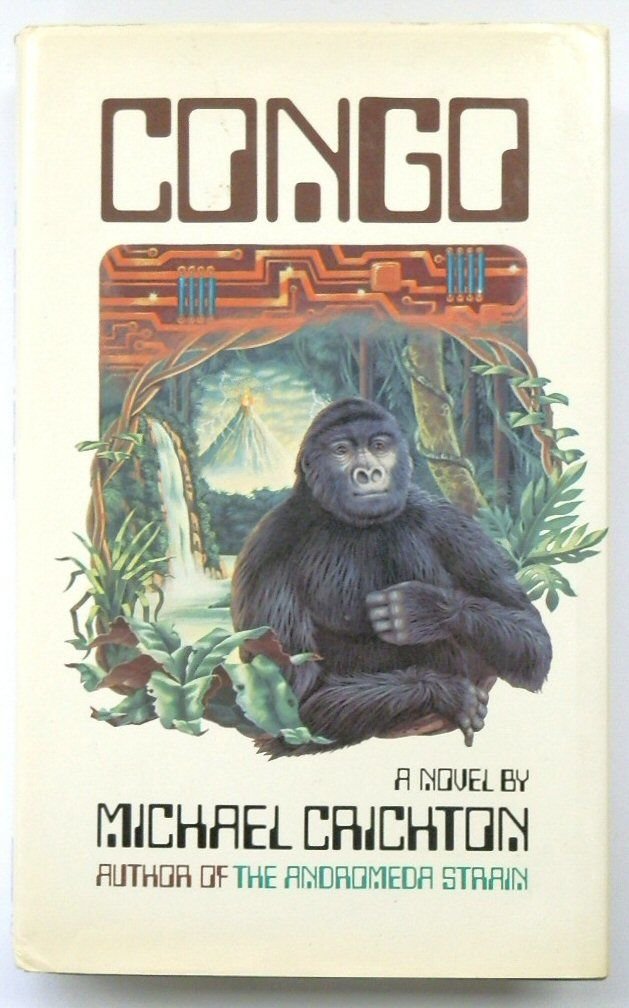
The book is much more interested in science, technology and the mechanics behind what is happening. Crichton spends more time explaining the behavior of the gorillas, the communications technology and the expedition itself, while the movie has to move much faster toward the adventure and action.
Several characters and motivations were changed during the adaptation. Charles Munro from the novel became Monroe Kelly in the film and was played by Ernie Hudson, while the corporation involved with the expedition was changed to TraviCom. The movie also simplified various relationships and motivations to keep the story moving.
The novel spends more time establishing the technology and defensive systems surrounding the Lost City, while the film largely reduces those ideas to their most basic form. The movie gives us the idea of Zinj being protected by highly dangerous gorillas, but it doesn’t spend much time explaining how that entire system developed. That’s one reason the film can feel like it is constantly rushing toward the next big sequence. Crichton’s novel has the luxury of spending pages explaining how everything works, while a summer adventure movie has to keep the audience moving.
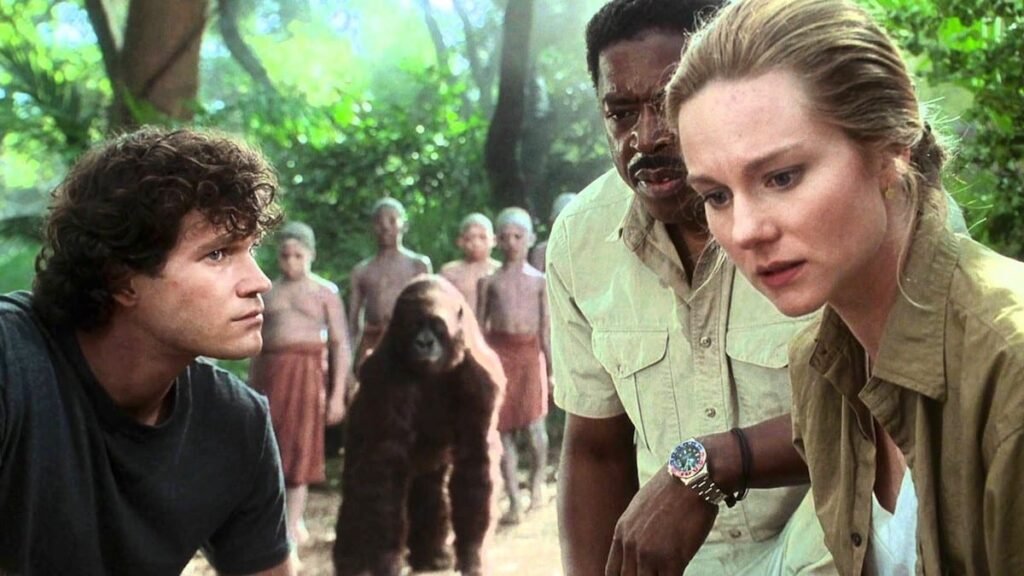
There have also been plenty of discussions over the years about supposedly “lost” material from CONGO, but the more complicated reality is that the movie went through various versions of its adaptation and screenplay before reaching theaters. Much of what changed was the result of reshaping the story itself rather than cutting down some enormous finished version of the movie at the last minute.
The theatrical CONGO we received is ultimately a streamlined version of a much more detailed story.
THE LOST CITY OF ZINJ
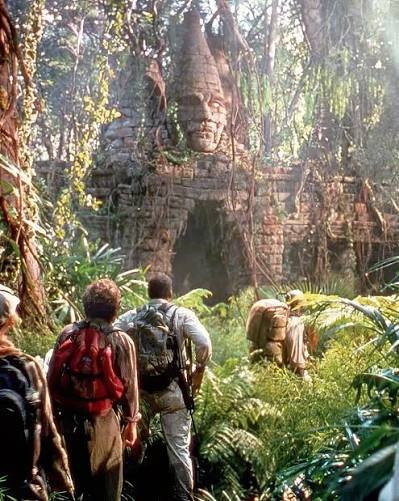
The Lost City of Zinj should have been one of the most fascinating elements of the movie. It certainly looks like it could be. Zinj is an ancient civilization built around diamond mines, with the gorillas serving as the living guardians of those riches. Once the expedition reaches the city, the movie finally connects Amy’s paintings with the mystery that brought everyone into the Congo in the first place. There is a genuinely good adventure movie buried inside that concept.
The problem is that CONGO doesn’t always give its mythology enough room to breathe. The story is so focused on getting from one action sequence to the next that some of the more interesting ideas become background information. That’s particularly noticeable when compared with Crichton’s novel. The book can stop and explain the technology, the civilization and the behavior of the gorillas in considerably more detail, while the movie has to keep the jungle adventure moving.
As a result, Zinj sometimes feels less like a lost civilization waiting to be discovered and more like the place where the movie eventually has to put all of its remaining monsters. Still, when the movie finally gets there, the idea of an ancient city protected by genetically manipulated and trained gorillas remains pretty damn cool. This isn’t to say that you should toss this film into the “shadow realm” of films you’ll never see again. It takes its time but does a good job of bringing in the wonderment of the city of Zinj just enough to keep our attention.
SO WHAT HAPPENED?
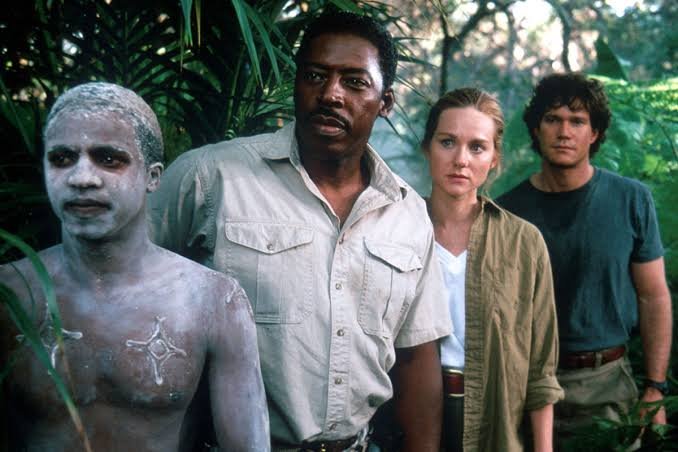
For a movie that developed a reputation as a Hollywood misfire, CONGO actually performed considerably better than you might remember. The film opened at number one in June 1995 with approximately $24.6 million and eventually earned around $152 million worldwide against a reported production budget of roughly $50 million. That’s nowhere near JURASSIC PARK territory, but it certainly wasn’t a financial disaster.
The critical response was another story. Critics were largely unimpressed, with many describing the movie as goofy, uneven and overly dependent on spectacle. Roger Ebert was considerably kinder, particularly when it came to the gorilla effects and the adventure elements.
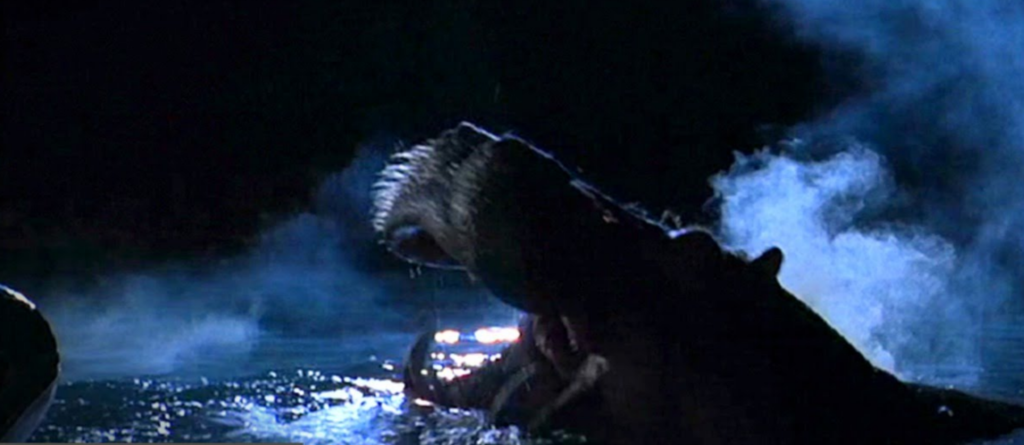
Audiences, however, kept showing up. Hell, we saw it in theaters ourselves at least 3 times. We couldn’t get enough of the special effects and story; they took us out every time and don’t get us started on that Hippo scene.
That’s what makes CONGO interesting all these years later. It wasn’t the blockbuster Paramount probably wanted, but it wasn’t some enormous bomb either. It landed somewhere in the middle and eventually found a second life through television, VHS, DVD and the people who grew up watching it. And honestly, that’s exactly where we think CONGO belongs. The video store.
A lot of films are discovered there, and after watching the film in theaters, we wanted to see it again and show our friends, so of course we purchased a copy on VHS when it was released, and we still have that same VHS to this day. (We watched it again for this piece.) We can’t tell you how many times we showed our family or friends the film. It was constantly in our fast “sportscar” re-winder machine many a nights.
WHERE TO WATCH
For anyone who grew up with 90s adventure movies, CONGO is one of those films that feels right at home on physical media. It has the kind of strange combination of big stars, practical effects, ridiculous characters and jungle adventure that made movies from this period so much fun to discover while wandering through a video store.
It’s also a perfect example of why revisiting these movies years later can be rewarding. You may not suddenly decide that CONGO is secretly a masterpiece, but you can appreciate what the filmmakers were attempting while enjoying all of the wonderfully weird pieces that somehow made it to the screen together. The only area you can watch CONGO on a streaming service is through Paramount+ or with Amazon Prime Video with the Paramount+ add-on.
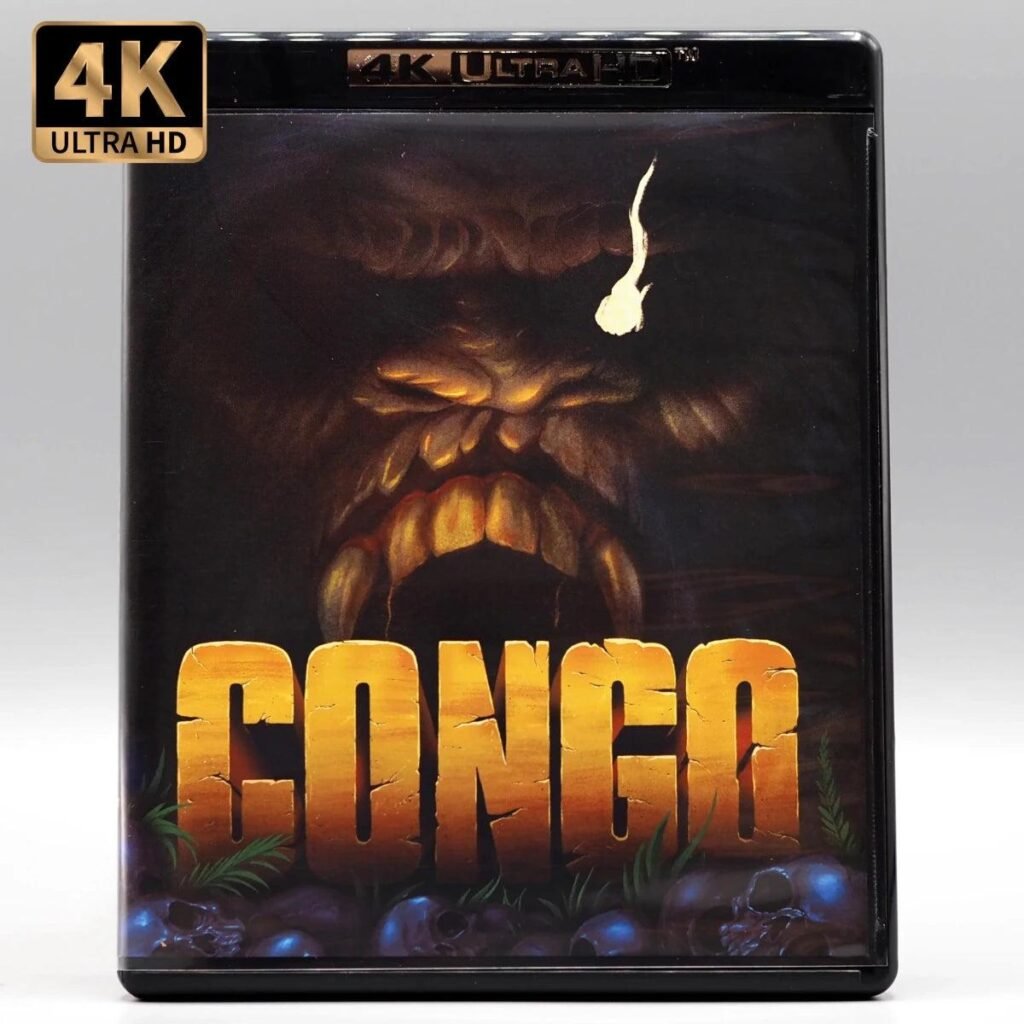
Vinegar Syndrome Ultra released CONGO on 4K UHD in November 2024, making it the film’s world UHD debut. The release uses a new 4K restoration from the original 35mm camera negative and presents the 4K disc in Dolby Vision HDR.
This is absolutely a movie you can put on while you’re doing the dishes, fixing something around the house or just looking for some uncomplicated 90s entertainment. You don’t have to treat it like high art, because CONGO certainly doesn’t demand that kind of seriousness from its audience. Just sit back and enjoy the monkeys.
FINAL WORD
Going back to CONGO after all these years brought us right back to that theater in the City of Industry, sitting there after the excitement of JURASSIC PARK and waiting to see what Michael Crichton’s next big screen adventure had in store for us. What we got wasn’t another JURASSIC PARK, and expecting it to be one probably didn’t do the movie any favors. We still had fun and truly enjoy CONGO to this day.
CONGO is messy, uneven and occasionally downright silly, but it’s also sincere. The filmmakers were clearly trying to make a big Hollywood adventure with practical creature effects, recognizable stars, a lost civilization and a story that could appeal to audiences who wanted something a little stranger than another dinosaur movie.
Amy remains the heart of the film, and Stan Winston’s work gives her enough personality to carry much of the emotional side of the story. Tim Curry brings exactly the kind of bizarre energy you’d expect from him, Ernie Hudson makes Monroe Kelly an easy character to root for, Laura Linney throws herself into the adventure and Bruce Campbell gives us just enough screen time to make us wish he had stuck around longer.
The movie’s biggest problems are also pretty obvious. The diamonds aren’t particularly interesting, the mythology surrounding Zinj could have been developed much more thoroughly and the killer gorillas don’t always work as well as the filmmakers clearly hoped they would. But everything surrounding those problems is perfectly watchable, and sometimes that’s all you really need from a Saturday afternoon movie.
CONGO isn’t JURASSIC PARK, and it never needed to be. It’s a weird, ambitious 90s adventure that somehow managed to combine Michael Crichton, Stan Winston, Tim Curry, Bruce Campbell, killer apes, ancient civilizations and a very serious argument over sesame cake into one movie.