
In 1996, we were 12 years old, right on the edge of leaving the kid phase behind and becoming the teenagers we were absolutely convinced we were ready to be. FOX Kids was already packed with shows that had our attention. We knew Mighty Morphin Power Rangers, VR Troopers and even Ultraman, so we thought we understood the formula.
Then, on Sept. 7, 1996, something completely different showed up.
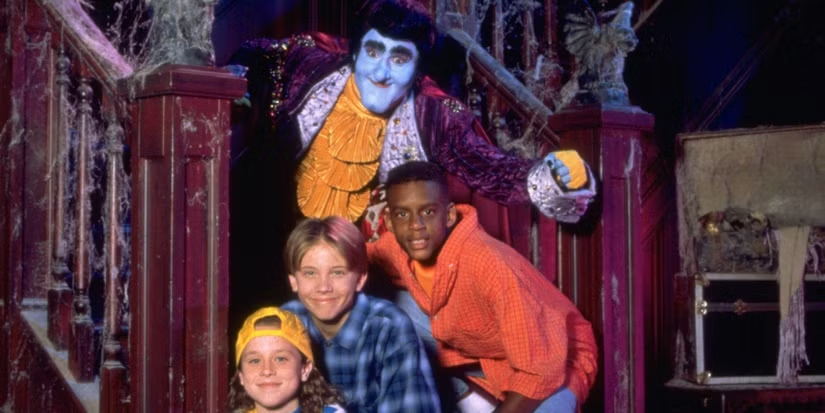
There were beetles, ghosts, monsters, a haunted mansion and three kids who somehow became superheroes. Then there was a blue ghost with Elvis hair, a giant chin and a suspicious resemblance to Jay Leno. Naturally, we watched.
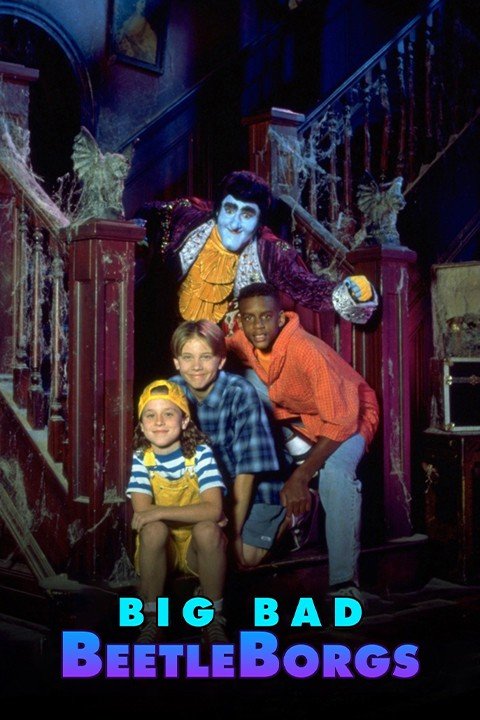
We are talking about BIG BAD BEETLEBORGS, a show that arrived during the height of the 1990s superhero craze and managed to convince us that living in a haunted mansion with a vampire, a werewolf and a Frankenstein-inspired creature was perfectly normal. How could we not be attracted to a show that let kids become superheroes and monsters everywhere? We loved it!
Thirty years later, there is still one question we have never been able to answer.
What the hell is a Flabber?
WELCOME TO HILLHURST
The story followed Drew, Roland and Jo, three kids who enter Hillhurst Mansion on a dare and discover a phantom trapped inside a pipe organ. Their wish to become their favorite comic book heroes is granted, turning them into the Big Bad Beetleborgs.
Of course, there is a catch: their wish also brings the villains from the comic book into the real world.
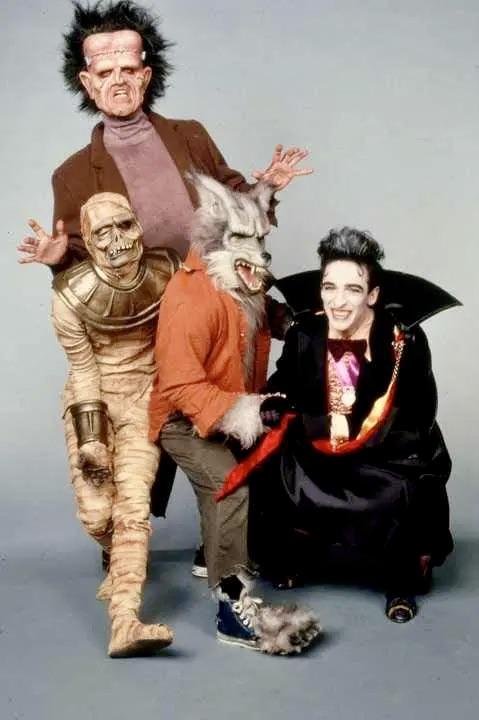
That meant the kids had to deal with being superheroes while sharing a house with supernatural residents who had their own personalities, problems and general weirdness. Who knew that a mummy washed all of his wrappings once a week or that Frankenstein’s monster needed a bedtime story or he couldn’t sleep at night. These things were all cute little nods to the monsters in the house that helped the kids fight crime. For a 12-year-old monster kid watching after school, this was pretty much the perfect setup.
Hillhurst practically functioned like a supernatural sitcom, with Frankenbeans, Wolfgang, Count Fangula and the rest of the residents creating just as much chaos as the villains outside. Imagine trying to explain that living situation to your teacher. All the monsters had their own issues and just added more fun to the kids lives. We loved Count Fangula and Wolfgang the most.
“Sorry I didn’t finish my homework. The werewolf situation got complicated.”
WATCH THE INTRO TO BIG BAD BEETLEBORGS
THE BEETLEBORGS CAME FROM JAPAN
Behind the scenes, the armored heroes came from Japan, which was the norm at this time in the 90s. Saban Entertainment adapted action footage from Toei’s 1995 Metal Hero series Juukou B-Fighter. Rather than simply dubbing the Japanese program, Saban created an entirely new American story around the existing footage.
That created an unusual challenge for the writers. Joel Barkow, who received his first professional television writing job on Beetleborgs, later explained that he and his writing partner, Louis J. Zivot had to build scripts around VHS tapes of the Japanese action sequences. They worked from time codes, figuring out exactly where available footage started and stopped so the American story could fit around it. That’s a mighty ask for writers in our opinion.
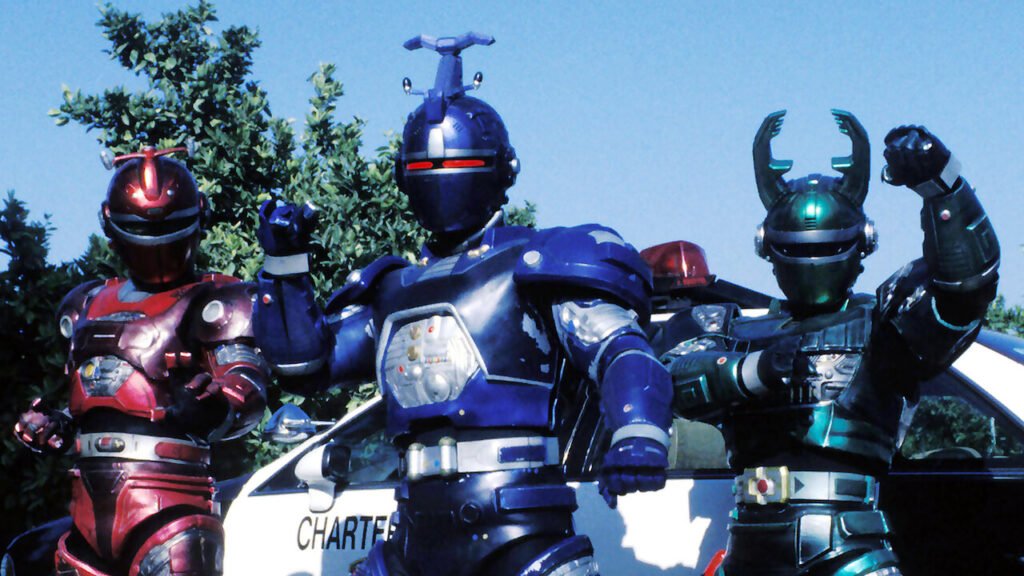
While we were sitting on the couch watching the Beetleborgs kick the hell out of something, the writers were basically trying to make the story fit inside a VHS tape.
And people think television writing is glamorous.
FLABBER GETS A MAKEOVER
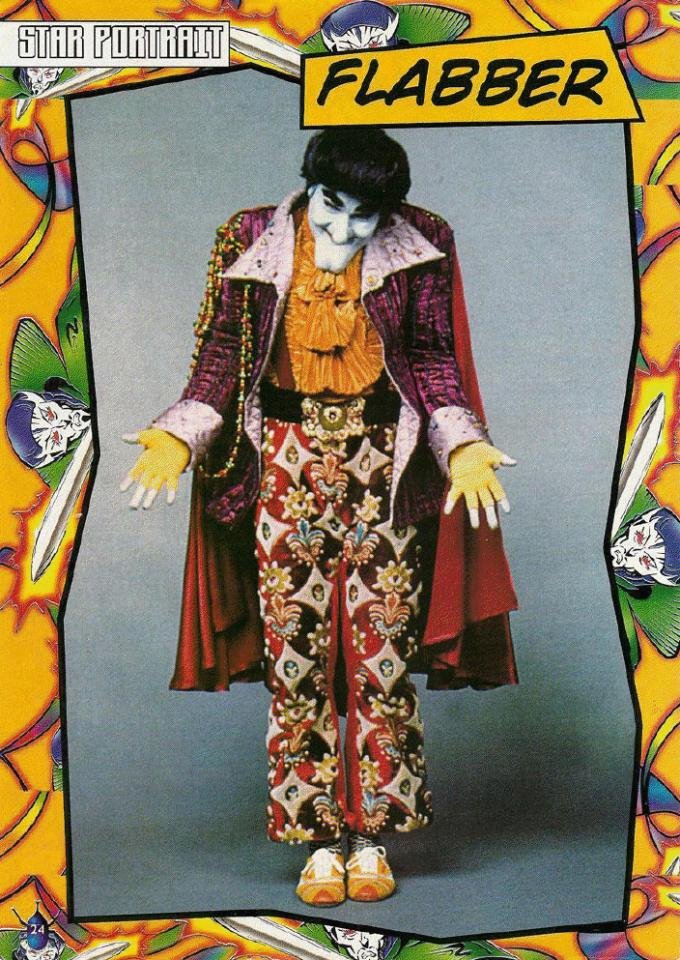
The character who became the face of the series did not always look the way we remember him. Billy Forester played the character, but early production material featured a very different version. Before the regular series reached FOX Kids, he was redesigned with blue skin, extensive prosthetic makeup, Elvis-inspired hair, and that enormous chin.
Then everyone noticed the Jay Leno resemblance.
The character also drew inspiration from Liberace, giving Hillhurst a supernatural resident who looked like he had wandered out of a haunted Las Vegas showroom. Somehow, it worked and had us glued to the tv.
FROM BEETLEBORGS TO METALLIX
The first season eventually exhausted the available Juukou B-Fighter footage, forcing Saban to look to another Japanese series. The first season wasn’t no slouch either, as it had 53 episodes. That’s a whole lot even by the usual 22 that most kids’ shows had in the 90s/
That became B-Fighter Kabuto, whose footage was used for the second American season, BEETLEBORGS METALLIX. The Beetleborgs received new armor and equipment, and the series continued for 35 episodes before ending on March 2, 1998. In all honesty, after the first season, we fell off watching it. It was 8th grade time, and we were discovering girls, skateboarding, and playing the guitar, so TV watching took a backseat to these new and fun discoveries as a youth
We could have had a third season, as there was additional Japanese footage that could have been used, but the sparkle had faded from Flabber and the gang. The show went into reruns for most of 1998 and into 1999 before slowly being removed entirely from FOX Kids programming.
30 YEARS LATER
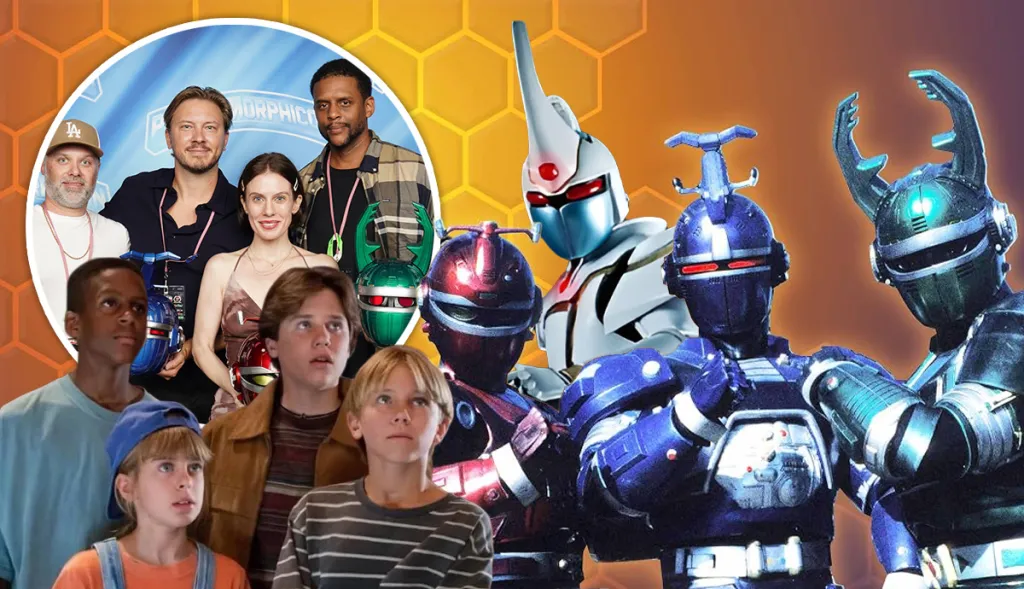
Looking back now, what makes Big Bad Beetleborgs so memorable is how strange the whole thing was. It felt like a fever dream of monster kids and superheroes were slammed together, and it actually worked well. The Japanese footage provided the superhero action, while the American production filled the world with comic books, monsters, haunted houses, and characters that looked like they belonged in an entirely different television show.
None of that mattered to us in 1996. We were 12 years old. We saw three kids become superheroes and a haunted mansion full of monsters, and we were sold. (What kid wouldn’t be?). We could get into the toys and merchandise that was made for the show but that’s another article all together.
We must say tho, thirty years later, we still may not understand exactly what a Flabber is, but we’re damn glad he was there.