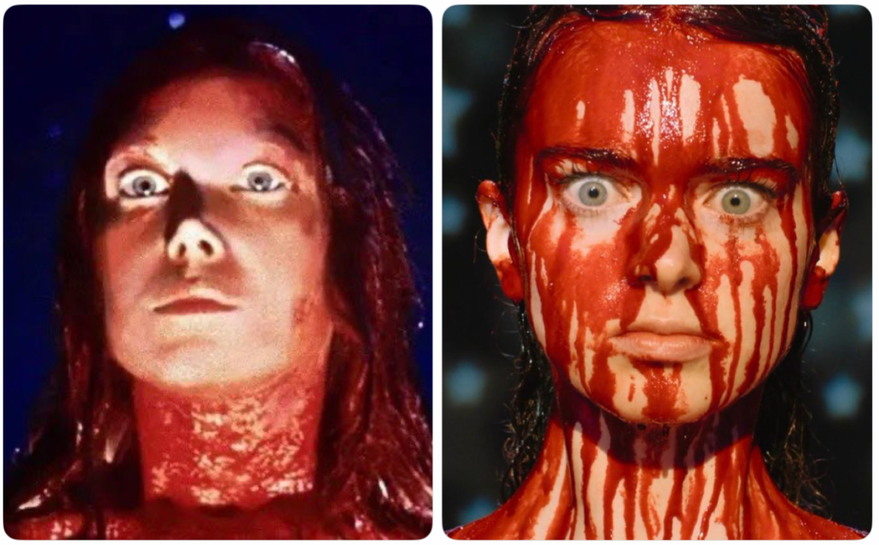


The horror canon is populated by monsters we fear, monsters we despise, and monsters whose dark motives we attempt to decipher. From the senseless void of Michael Myers to the vengeful dreamscapes of Freddy Krueger and the territorial wrath of Jason Voorhees, horror icons are often defined by the terror they inflict upon the innocent. We judge them by their body counts, their brutality, and their unwavering persistence.
Then there is Carrie White.
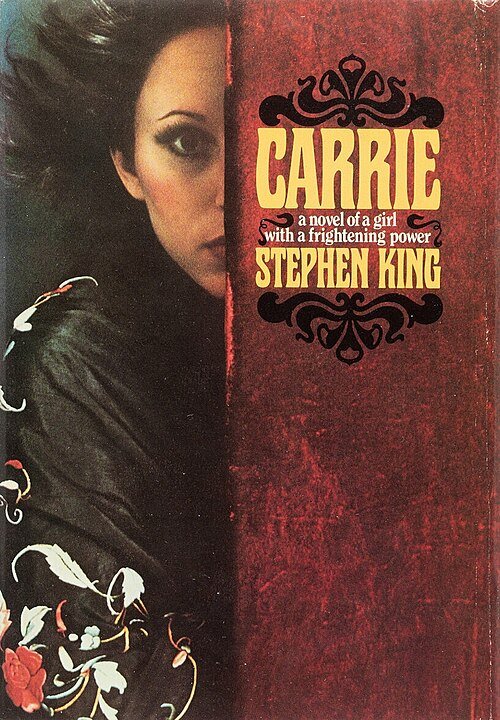
When Stephen King introduced the world to Carrie in his groundbreaking 1974 debut novel, he did not forge a slasher or a predator. He forged a victim. Despite the telekinetic carnage that levels the town of Chamberlain, Maine, Carrie White stands entirely apart from the traditional pantheon of horror antagonists. She is not a creature driven by pure malice, a sadist seeking thrills, or a monster hunting for sport. Carrie is the catastrophic result of relentless, systematic oppression, a fragile human soul crushed under the dual vices of religious fanaticism and sociopathic torment. Her violent finale is not an act of villainy, but a tragic, involuntary explosion of a human spirit pushed beyond the absolute limits of endurance.
The Architecture of Oppression: Margaret White and Chamberlain High

To understand why Carrie cannot be branded a villain, one must analyze the crucible that shaped her. Monstrosity rarely develops in a vacuum, and Carrie’s environment was meticulously constructed to deny her safety, agency, and fundamental humanity.
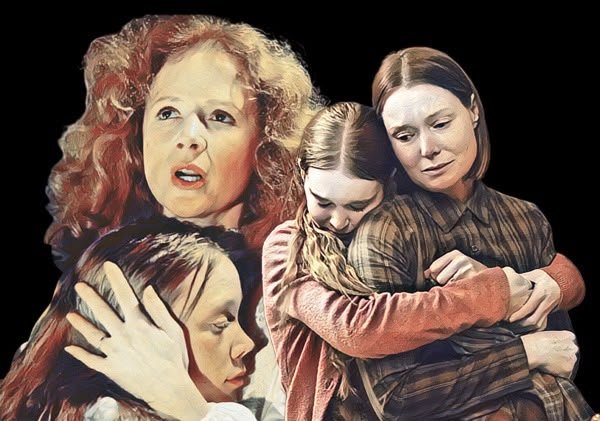
The true antagonist of Carrie’s story has always been her mother, Margaret White. Where Carrie represents suppressed vulnerability, Margaret embodies active, weaponized fanaticism. Operating under a warped, abusive theology, Margaret frames every natural stage of human development, most notably female puberty, as inherently sinful and demonic. Carrie’s home life is not a sanctuary; it is a claustrophobic prison where basic physical processes are met with physical violence, isolation in dark closets, and psychological torture.
When Carrie steps outside her home, she finds no reprieve. At Chamberlain High, her peers reinforce the torment. The iconic opening shower scene sets the thesis of her tragedy: caught in the terrifying throes of her first menstruation without any knowledge of what is happening to her body, Carrie panics, only to be met with laughter, pelted with tampons, and mocked by her classmates.

Where other horror figures choose violence as a lifestyle, Carrie’s telekinesis, her “TK,” manifests as a somatic coping mechanism. It is a biological reaction to trauma, an emotional pressure release valve that snaps under intolerable stress. She does not cultivate her power to cause harm; she spends her life attempting to bury it to survive the world around her.
Prom Night as a Psychological Breached Dam
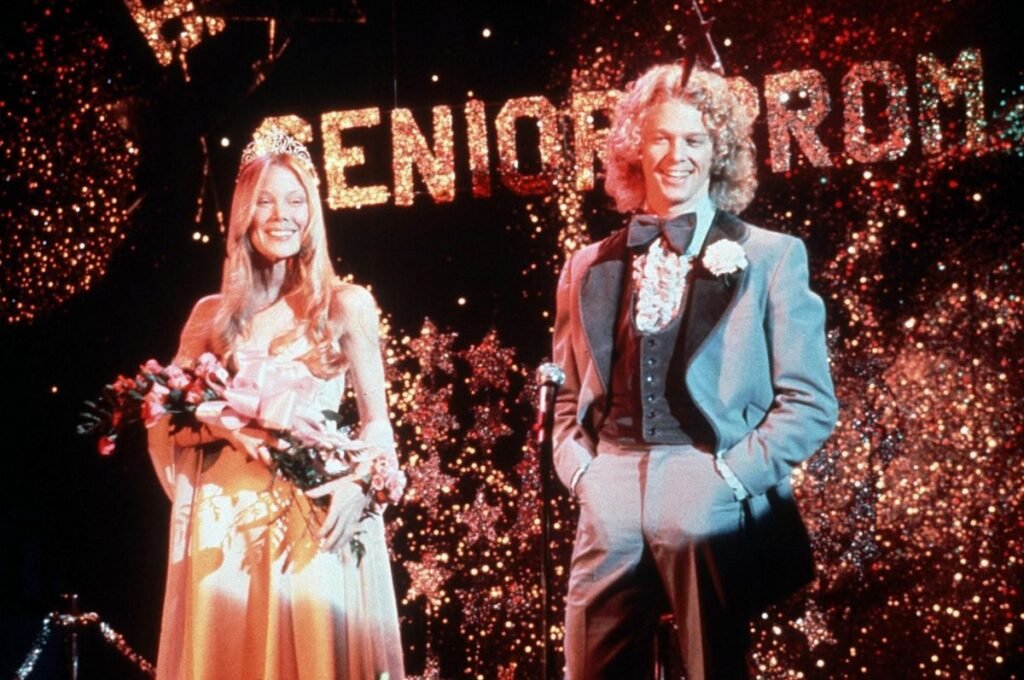
The tragic core of Carrie White’s narrative lies in the brief, beautiful illusion of hope offered to her before the final collapse. Prom night is not a trap she sets; it is a trap set for her, built on the rare moment she dares to believe she might be worthy of love and acceptance.
When Tommy Ross asks her to the prom and when she crafts her own dress, a simple act of creative self-expression and defiance against her mother, Carrie begins to step into her own humanity. On the dance floor, surrounded by peers who briefly applaud her, Carrie experiences genuine joy.
This makes the ultimate betrayal by Chris Hargensen and Billy Nolan so profoundly harrowing. Dumping the bucket of pig’s blood over Carrie at the peak of her triumph is an act of calculated, sociopathic cruelty designed to utterly destroy her self-worth.
When the blood falls, Carrie does not react with tactical malice. She undergoes a complete psychological break. The carnage that follows is an involuntary, chaotic haemorrhage of suppressed power. Like a dam bursting after years of rising floodwaters, Carrie’s telekinetic explosion destroys everything in its path, not out of a desire to rule or torment, but because her mind has been shattered beyond repair.
The Evolution of the Tragedy: Book vs. 1976 Film vs. Mike Flanagan Series
Across five decades of adaptation, the tragic narrative of Carrie White has been reinterpreted through different stylistic lenses, each re-examining the line between victimhood and monster.
The 1974 Novel: Epistolary Tragedy and Documented Isolation
Stephen King’s original novel is framed as an epistolary investigation, using news clippings, court testimonies, journal entries, and scientific excerpts written after the destruction of Chamberlain. This structure emphasizes Carrie’s role as a societal failure.
In the text, Carrie’s telekinesis is described with raw, scientific detachment as an inherited genetic trait, while the town’s destruction is documented like a natural disaster. King paints a cold, bureaucratic picture: the town did not just suffer Carrie’s wrath; the town created Carrie’s wrath through collective negligence, institutional bullying, and societal indifference.
The novel’s Carrie is deeply sympathetic, but her powers are vast and apocalyptic, leveling entire city blocks in her final, agonizing death throes.
The 1976 Film (Brian De Palma): Operatic Melodrama and Spacek’s Vulnerability

Brian De Palma’s cinematic adaptation shifts the story into a heightened, operatic nightmare, anchored by Sissy Spacek’s iconic, heartbreaking performance. Spacek portrays Carrie with a wide-eyed, bird-like innocence that makes her mistreatment almost physically painful to watch.
Purchase Brian de Palma’s CARRIE in 4K HERE!
De Palma utilizes stylistic techniques, split screens, slow motion, and a harrowing score, to immerse the audience directly into Carrie’s sensory overload. When the blood hits her dress, De Palma’s camera lingers on her disoriented, wide eyes. The violence that follows in the gymnasium feels less like a calculated massacre and more like a fever dream of sensory retaliation. In Spacek’s eyes, we do not see a villain revelling in blood; we see a terrified child trapped in a nightmare from which she cannot wake.
The Mike Flanagan Series: Deepening the Gothic Trauma
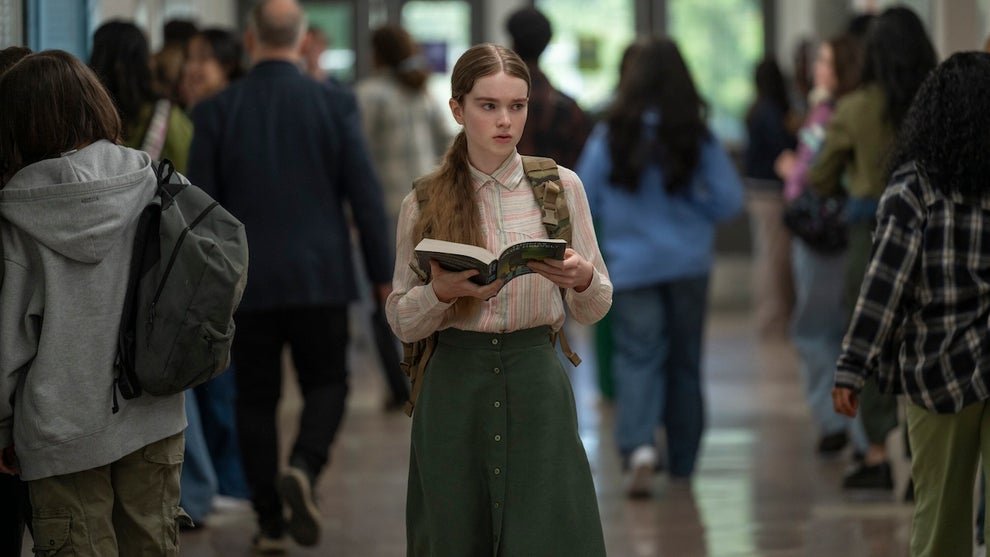
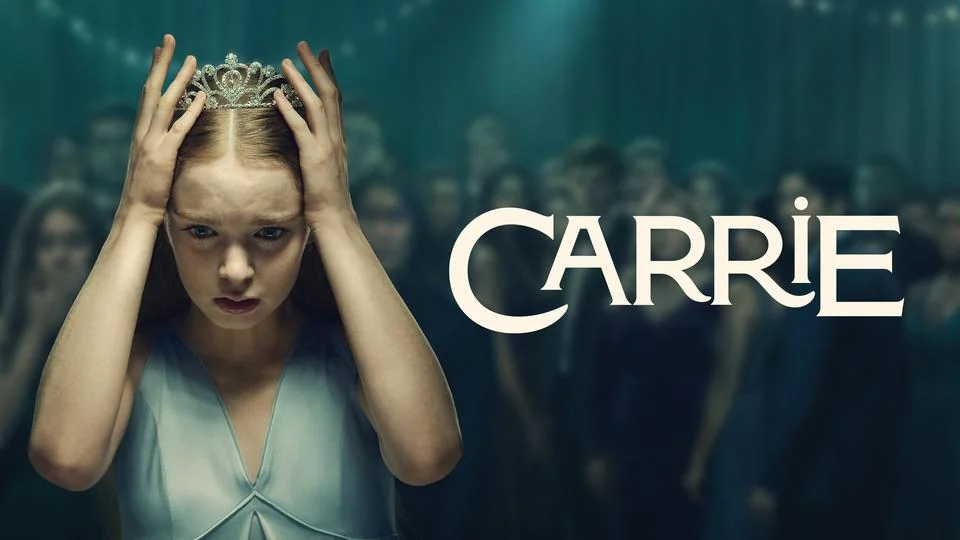
With Mike Flanagan taking the helm for a new television series adaptation, the story of Carrie White enters a modern era defined by deep psychological exploration and gothic drama. Known for his work on The Haunting of Hill House, Midnight Mass, and Doctor Sleep, Flanagan excels at dissecting trauma, generational abuse, and the tragic humanity buried beneath supernatural horror.
In an episodic format, Flanagan has the space to flesh out the psychological nuances that film runtimes often compress. Rather than rushing toward the prom night climax, a series format allows for an intimate look at the daily, agonizing pressure cooker of the White household and the systemic failure of the school systems. Rather than compressing the story into a single narrative arc leading solely to prom night, Flanagan zeroes in on the relentless, psychological grind of high school bullying, laying bare how peer cruelty operates as a slow-moving, daily execution of a teenager’s spirit.
RELATED ARTICLE: “CARRIE” (2026) – A Timely and Necessary Reimagining (Season 1 Review)
Crucially, the series contextualizes Carrie’s telekinesis not as an isolated anomaly, but as part of a broader phenomenon. By introducing a narrative thread surrounding other “gifted” children who possess similar abilities, Flanagan reframes telekinesis from a lone curse into a latent response to trauma, a biological defence mechanism shared by anomalous youth facing intense pressure or isolation. This expanded lore reinforces the central thesis: Carrie is not a singular monster born of dark magic, but rather one node in a larger, devastating pattern of vulnerable children pushed over the edge by an unfeeling world.
Bound by Pain: Why Circumstance Defines Carrie
To truly grasp why Carrie White remains one of horror’s most enduring figures, one must contrast her directly with the classic icons of the genre. Michael Myers slaughters because he is an empty void of elemental evil, a Shape without remorse, reason, or human motive. Freddy Krueger hunts because he delights in sadistic cruelty and eternal vengeance. Jason Voorhees mercilessly destroys anyone who dares step foot near the woods of Crystal Lake.
Carrie White shares none of these traits. She possesses no territory to defend, no manifesto to preach, and no innate malice driving her actions. Unlike her cinematic peers, her violent outburst is neither a lifestyle nor an ongoing crusade. If you strip away the severe religious abuse of Margaret White and the systemic cruelty of her peers, Carrie White is revealed to be nothing more than a shy, deeply lonely teenage girl who wanted to fit in, make friends, and experience a single night of normal happiness at her high school prom.
The Definitive Victim of Horror
Ultimately, Carrie White stands above traditional horror villains because her story is not a tale of monstrous terror, but a cautionary tragedy of human cruelty. She does not step into the night to hunt the unsuspecting, nor does she feed on the fear of others to sustain her existence.
Her legacy is not defined by the fire that consumed Chamberlain, but by the overwhelming sorrow of how easily that fire could have been prevented. Horror did not invade Carrie’s world from the dark outside; it was inflicted upon her by the very family, school, and community responsible for protecting her. When the ashes settle and the screams fade, Carrie White leaves behind no thirst for blood, only a haunting, timeless reminder of what happens when a society systematically breaks its most vulnerable soul.