
⭐️⭐️⭐️1/2
MILD SPOILERS AHEAD – We Suggest Watching the Entire Season Before Reading This Review
Why?
It’s usually the first question that pops into our heads when a film or book is being remade/re-adapted for the umpteenth time. What’s left to say about the same story again, and again? What can we glean from it that wasn’t already there?
With every new remake that populated horror for the better part of the 2000s, I found myself questioning this repeatedly. The “safe” answer is that a familiar title will generate box office returns. My theory was always that if we applied that same logic, wouldn’t a sequel make more sense? Wouldn’t throwing Roman Numerals behind a title work two-fold? I always figured that if someone saw, say, “Fright Night Part III”, the fans of the original would turn out in droves, because of course we would, and new fans would want to know what this was a “Part III” to, and hunt down the original two!
Wouldn’t it stand to reason that you’d double your audience?
Win/Win, right?
Alas, remakes were the “hip” thing to do, and the few instances where a legacy sequel snuck through the cracks, like The Rage: Carrie 2, or a Texas Chainsaw 3D, they were left largely ignored and admonished by horror fans who metaphorically found “this porridge too hot”, or “this bed too hard”! Heavens.
We “doth protest too much, methinks,” but that’s a conversation for another time.
WHY DO WE NEED ANOTHER CARRIE?
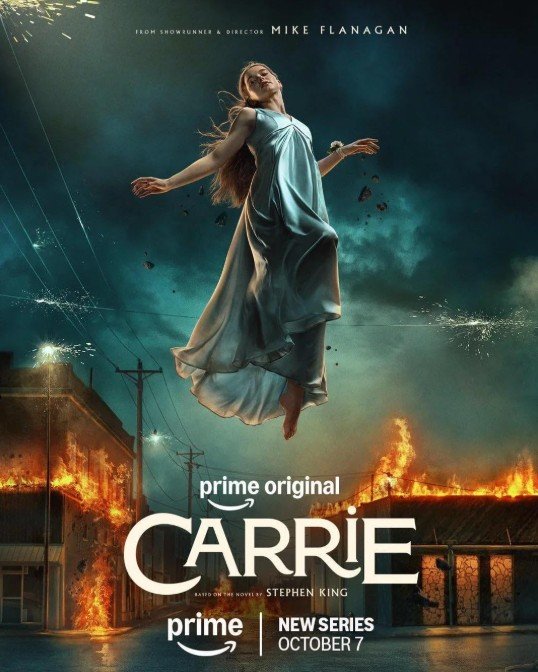
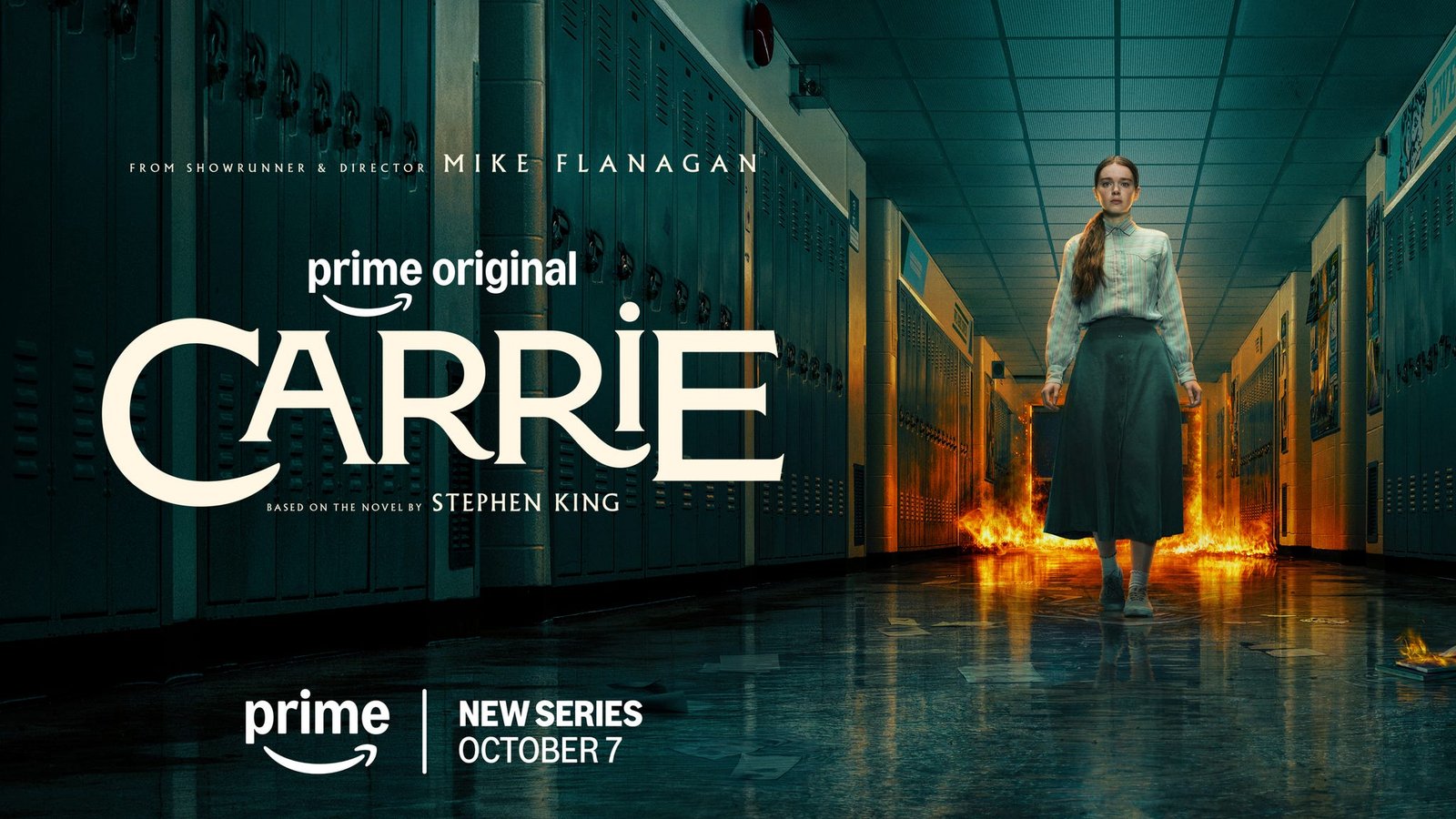
But today, the remake/re-adaptation we’re talking about is Mike Flanagan’s Amazon Prime series Carrie, which premiered on October 7. As it stands, it’s the fourth adaptation of Stephen King’s debut 1974 novel about a relentlessly bullied girl who discovers she has telekinetic powers when provoked, learns to hone them, and suffers a final indignity at her school prom that serves as a catalyst for a devastating massacre that all but wipes the small town of Chamberlain, Maine, off the map.
Director Brian De Palma blew the doors off with his 1976 adaptation, released 50 years ago this year, (which remains the best iteration, in my opinion). We got a loosely related sequel in 1999 with The Rage: Carrie 2, followed by a television miniseries starring Angela Bettis and written by Hannibal series writer Bryan Fuller in 2002. Then came a frankly unfairly maligned, if serviceable, re-adaptation in 2013 starring Chloë Grace Moretz. It drew less ire for simply going through the motions and more because “she’s too pretty to be Carrie,” an unacceptable assertion that both undercuts Moretz’s vulnerable performance and simultaneously insults every actress who played Carrie before her.
As Flanagan’s version of Sue Snell muses in the final episode of this new series, “What the fuck is wrong with us?”
And therein, folks, lies the answer to “why?” What the fuck is wrong with us? What is it about our culture and mentality that makes some people feel the need to degrade, belittle, or bully others? What’s the point? What are we projecting that needs to be addressed? Why do we have to keep having this conversation?
It’s simple. We’ve never stopped finding new and horrific ways to take people down a peg simply because they just want to exist. Whether you belong to a marginalized group, are dealing with a handicap, or, in the sickest scenario Flanagan explores in this new series, are simply a kind, friendly person, you somehow incur the ire and wrath of miserable, ugly, often jealous people who want to scuff up whatever makes you different from them. Worse yet, we’ve become a country that not only celebrates and encourages this behavior but even allows it to climb and fester within the highest echelons of authority and governance. WE. NEVER. LEARN.

THAT is why we need a new Carrie every 10-20 years. To remind us that our hubris is going to bring about our collective downfall, whether that may be as apocalyptic as our extinction, or as simple as one girl pushed too far one night at Prom. Like most horror stories, Carrie has and always will be a warning.
A canary in the coal mine.
A reckoning that we need to shape the fuck up – or else.
A NEW CARRIE FOR A CRUEL WORLD
Anyone familiar with Mike Flanagan’s work knows his storytelling style involves taking very real, deeply affecting elements of life and weaving them into familiar horror tropes. He strings these themes up taut enough that, when plucked, the reverberations are felt all the way down to your core. I’m happy, but unsurprised, to report that Carrie is the next masterpiece in the writer/director’s oeuvre. From The Haunting of Hill House to The Fall of the House of Usher, Flanagan and his team of co-writers and co-directors never simply follow the established beats. If you’re going to cover a familiar song, you have to play with the melody a little. And Carrie is no simple jaunt back through the halls of Ewen High.
WATCH THE TRAILER FOR “CARRIE” BELOW
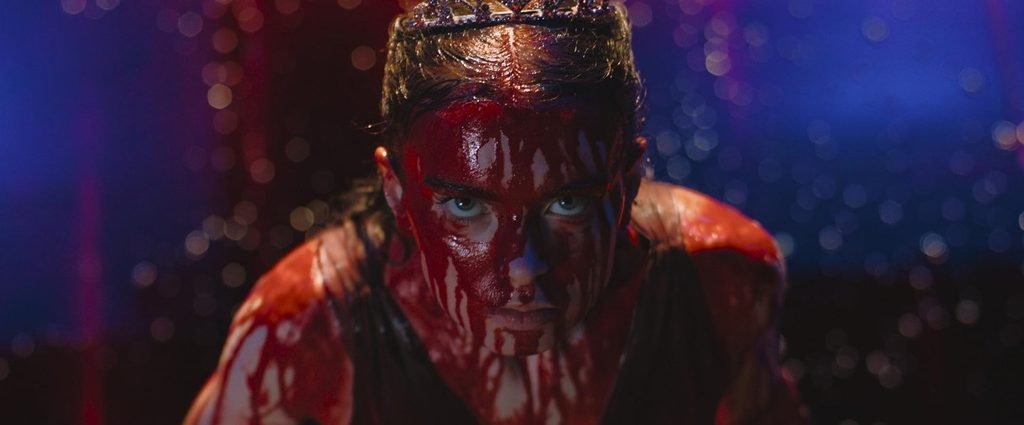
I won’t waste your time by summarizing the plot of Carrie – on its most fundamental levels, it’s the same story we all know. From “Plug it up!” on through “They’re all going to laugh at you”, and beyond, the basic tenants of the story are present and accounted for here. So, forget about pig’s blood, forget about prom, forget about the room of repent. They’re all there, I assure you.
What I want to do is discuss why this Carrie is worth your time again after having seen so many versions already, and why Flanagan’s vision for the characters therein exist in a modern-day “what if” scenario that doesn’t put Carrie White in a fishbowl of misery, but how the ramifications of everyone in her orbit are brought about by actions both small and irreparably damaging.
SUMMER H. HOWELL MAKES CARRIE HER OWN
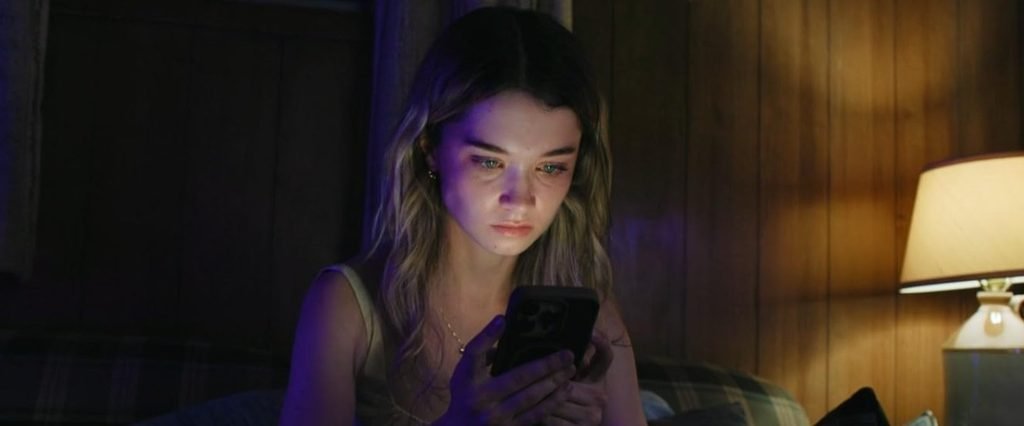
The first of many updates comes in the form of Carrie White herself, played marvelously by Summer H. Howell in what I anticipate will be a career-launching performance. We first meet her hiding in a closet, fiercely protected by her mother, Margaret (Flanagan regular Samantha Sloyan, who continues to exude an incredible level of magnetism despite playing despicable characters. There’s got to be a secret bet between her and Flanagan to see just how unlikable they can make a character without losing a single notch in the Nielsen ratings). Carrie’s father has just died in a freak accident at a construction site. Having never spoken about his family, or much of anything else, to his coworkers, the police are shocked to discover his wife and child huddled together in the closet like a scared kitten and its feral mother. Margaret holds her arm across her daughter, shielding her from “the outside world” both physically and metaphorically.
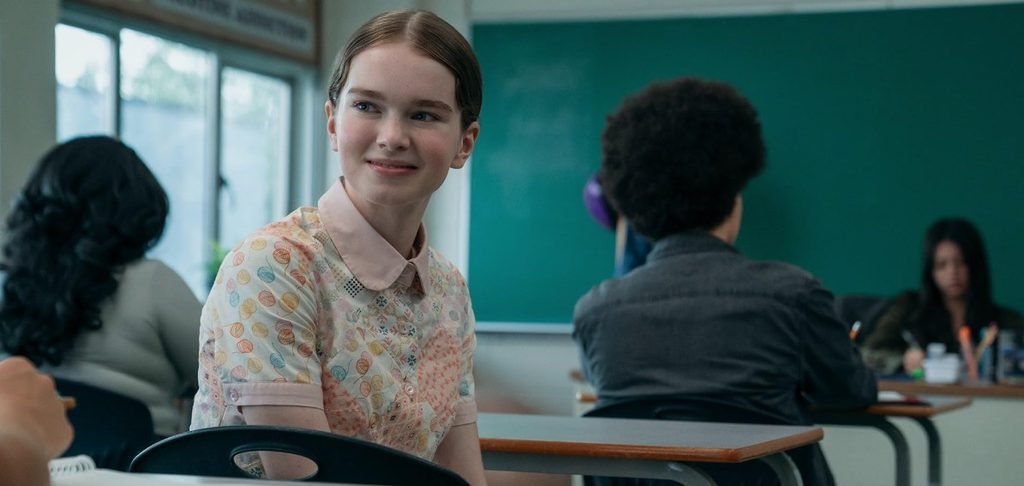
And what does Carrie do when she sees these “outsiders”? She smiles warmly. Unafraid. Unguarded. Already, the familiar tracks of King’s novel and its previous adaptations have taken a different turn. Flanagan gives us a Carrie White who isn’t peering out from behind strands of hair, clutching books tightly to her chest with her head down, already weary of unwanted attention. This Carrie is fascinated by the outside world. Eager to learn. Eager to make friends. Eager to try new technology.
When you stop to think about it, that makes what we already know all the more tragic. We’re not watching a girl who has already grown somewhat calloused to the abuse at home and the slings and arrows of her peers. We’re watching someone starry-eyed, excited, innocently naive, and happy to be part of a world she has no idea can be unspeakably cruel, violent, and unpredictably frightening. We’re watching a freshly bloomed flower wilt in real time. I honestly don’t know what’s more tragic: seeing a girl who has already succumbed to depression or watching her happiness erode with each passing day.
It’s important to really soak in Summer H. Howell’s performance during these moments. At 22, Howell brings the benefit of hindsight to the role, but she also has a talent far beyond her years for channeling it into a performance where fear and sadness slowly break through Carrie’s smile at just the right moments. Watch how her shoulders dip when the frustration and exhaustion of her situation become almost unbearable. Yet there’s a fortitude in Howell’s performance, too, that sets her Carrie apart from previous iterations. Imagine Carrie White of all people getting to deliver her own snide “plug it up” to a tormentor as she confidently walks out of the lunchroom, or perfectly shutting down a “two-word” remark with, “That’s three words, bitch.”
I can’t even begin to describe the chills that come from watching Howell summon an enormous amount of menace during a dinner scene late in the series. The simple act of cracking open a door behind her, all while keeping her glaring eyes fixed on her mother across the table, is chilling enough on its own. Howell keeps the performance small and restrained, yet still manages to level you with undeniable force.
ALISON THORNTON GIVES CHRIS HARGENSEN NEW DEPTH
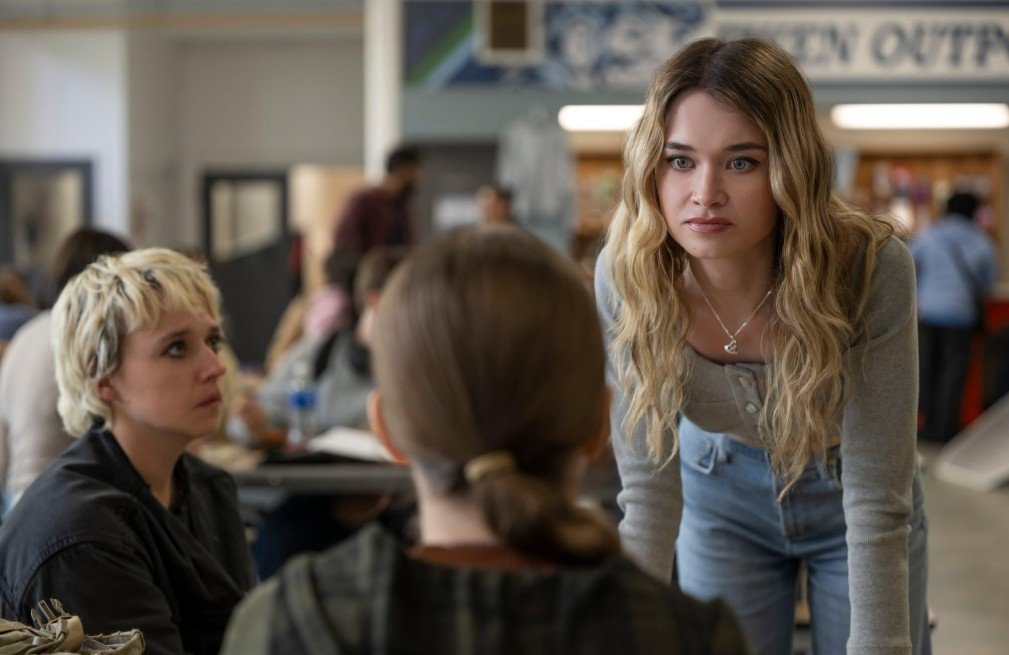
In the other corner of the ring, performing her own highwire act, is Alison Thornton as Chris Hargensen, the queen bee of literary and cinematic bullies. The character was originally played by an appropriately catty Nancy Allen in 1976, then portrayed with pure “ice-in-the-veins” hatred by Portia Doubleday in 2013, possibly the meanest of all the Hargensen portrayals. In Flanagan’s world, however, Hargensen gets more than just the role of ringleader among the “mean girls.” She’s given a genuine, three-dimensional arc.
We see the neglect and vitriol of her home life with a dismissive father, played by another Flanagan regular, Michael Trucco, who may be at his most punchable here. To Chris, though, this is still preferable to living with her mother, played by the always awesome Heather Graham, her mother’s new boyfriend Kent (Gil Bellows), and his daughter Brooklyn (Rowan Danielle), all while trying to “play nice” with her new family. Chris has just been accepted into the college she applied to, but thanks to her father’s shady business dealings, he can no longer afford to send her. Flanagan’s take on Hargensen presents a tricky challenge for Thornton. On one hand, we’re asked to humanize this spoiled brat by showing us that her life outside school, where she’s accustomed to holding court, is far from ideal. On the other, we’re still supposed to hate her, and justifiably so! With everything in her life falling apart around her, the sight of the sunny, seemingly carefree “new girl,” Carrie White, is about as welcome as door-to-door missionaries. It triggers something primal, hateful, and, worst of all for Chris, uncontrollable.
Thornton plays the role with such a calculated, measured approach that even as we gain a better understanding of where Chris’s hatred and malice come from, she never loses an ounce of her villainy. Thornton has an uncanny ability to flash a welcoming smile and, in several moments, reveal genuine pangs of fear and sadness, making us feel for a girl who has truly been dealt a raw deal. Yet she also possesses an ice-cold, murderous stare that sends chills straight up your spine. Just as effectively as she can evoke sympathy, Thornton can strike fear, true fear, with the way she locks her jaw, widens her eyes, and delivers her lines with such venom that they cut straight to the bone. If her words can sting us as viewers, imagine what they do to the people on the receiving end.
TWO GIRLS ON A COLLISION COURSE
So, what we have here this time are not one, but two girls on the same path to ruin. It may have always been there, but more than ever, the pathway to hell has been more defined. Carrie White, a product of repression and anxiety, finding the color and vibrancy of life being taken from her with one vicious act of bullying after another. Chris Hargensen, a girl of beauty, confidence, and entitlement, seeing everything that made her feel safe, unique, and untouchable being pulled away one privilege at a time. Both girls racing to a finish line that will end in doom and destruction.
The creation of Hargensen’s “Carrie Red” Instagram page, which brutally mocks, insults, and outs her peers (not just Carrie, but everyone, including Ewen High faculty), is as much a mental assault on the school as Carrie’s telepathic one come Prom Night. The burning, mangled bodies of those unlucky enough not to escape the gym are no less damaged than the souls targeted in the vitriolic posts that have crushed egos, revealed deep secrets, and led to not only excessive bullying, but also ruined careers, caused riots in the parking lot, suicide, and a nationwide media frenzy. The ramifications of Hargensen’s hateful misdeeds have a psychological ripple effect on the town in ways that equal Carrie’s path of physical destruction mere days later, a development unique to this series alone. And all of it is played with Oscar-caliber talent by the two young women.
A SUPPORTING CAST THAT DELIVERS
Believe me, I know it feels like I’m skirting the hard, talented work behind the show’s other performers. I assure you that Carrie features a number of intensely emotional moments supplied by the rest of the cast, which includes the conflicted and eventually drained Sue Snell, played emotionally by Siena Agudong. The always reliably good-natured Tommy Ross, played by Joel Oulette, is performed with care and realistic benevolence. Josie Totah’s Tina (sort of the modern iteration of the P.J. Soles character in the original film) is a sneaky, sometimes infuriating character who lives in Hargensen’s shadow but relishes her “friend’s” downfall. Her arc comes to a head during Prom in a too-little, too-late act of mercy and realization that affects everything that came before it. It’s also a performance worth examining. Prey actress Amber Midthunder, as this version’s Rita Desjardin, is pulled into something darker and deeper than just looking out for the outcast Carrie White. As a relatively new teacher, she finds the chaos around her (and the effect it has on her peers) something beyond her job description, and her role is demanding and painful to watch, thanks to her own soft, calculated performance. Beetlejuice, Beetlejuice co-star Arthur Conti exhibits a detachment and nihilism as the new Billy Nolan that’s far scarier than anything we’ve seen (or read) in the past. He’s someone so nonchalant in his cruelty and hateful view of the world that his attitude literally “infects” Hargensen and leads her to do unthinkable things. He’s pure evil, but played in such an easy, cavalier way that you believe everything he says.
Then there’s Matthew Lillard, Tim Bagley, and Naika Toussaint as Principal Grayle, school counselor Peter Morton, and Carrie’s neighbor Stella, respectively. The show’s triangle of warmth.
Lillard’s portrayal of a frustrated principal bound by bureaucracy and state laws leaves his hands firmly tied in situations where even he knows justice is required, yet he can’t legally or ethically enact it. You see his spirit dwindling every time Margaret White storms into his office with a new complaint or Hargensen’s father arrives with a new threat of litigation. Lillard’s performance is pitch-perfect here. He plays someone who knows that his own threats of “I’ll assign detention” or “I’ll reprimand them accordingly” are weak and inspire no confidence, while, at the same time, remaining acutely aware of the pain his students are feeling and his inability to fix the problem. Unlike the principals in previous adaptations, who were so uncomfortable with the situation at hand that they couldn’t even get Carrie’s name right (“We’re all very sorry, Cassie”), Lillard’s Principal Grayle deeply cares for his students and their welfare. He sees something familiar in Carrie, a pain he may have experienced in his own youth, and it shows in every soft line delivery, every caring look, and every painful defeat he has to mask. He and Flanagan have taken something of a “nothing” character and made him nearly one of the most tragic. We know this guy goes home every day and just cries, without ever being shown.
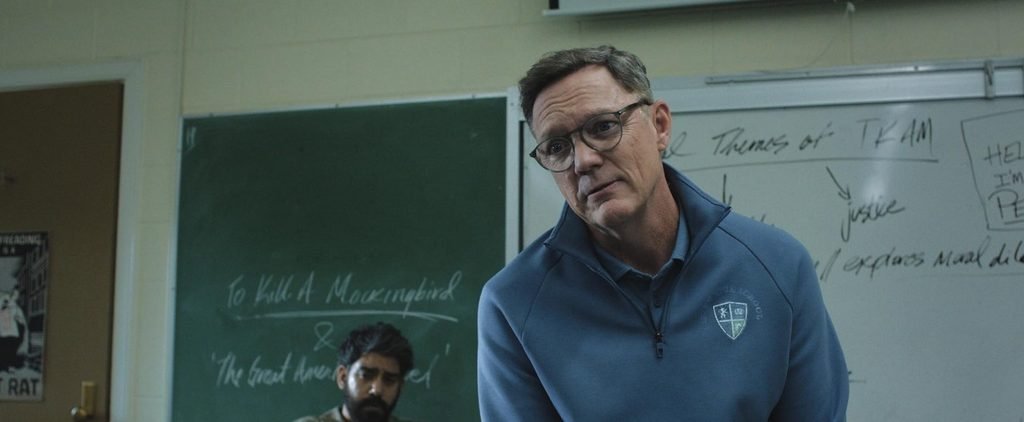
Bagley, mostly known for comedic roles, shines as Mr. Morton, who similarly understands the pain that both Carrie and even Hargensen are going through. There’s a beautiful moment in his office in the second episode where he and Carrie trade inspiring quotes before she opens up about her sadness and fears. His warmth and deep understanding are enough to move you to tears before he shows Carrie the library, where she can explore all the literature she was denied as a child. Bagley gives arguably the show’s most beautiful performance.
Toussaint, as Stella, Carrie’s next-door neighbor since childhood, is another character comparable to the Dudleys in Flanagan’s Hill House series. Another “nothing” character in literature who is given so much more in the series, Stella is Carrie’s earliest ally in a dark, mean world. She sees firsthand what Carrie deals with at home and nurtures the child’s innocent wonder by secretly loaning her classic literature and offering encouragement. Something as simple as a “Have a great first day of school” note is miles more effective for Carrie than the conspiratorial warnings of a paranoid mother who fears the specter of “the deep state” and its possible indoctrination of her daughter away from her forced-upon values. Toussaint doesn’t have many scenes, but the ones she does have are filled with warmth and safety.
WHEN THE STORY STRAYS FROM CARRIE
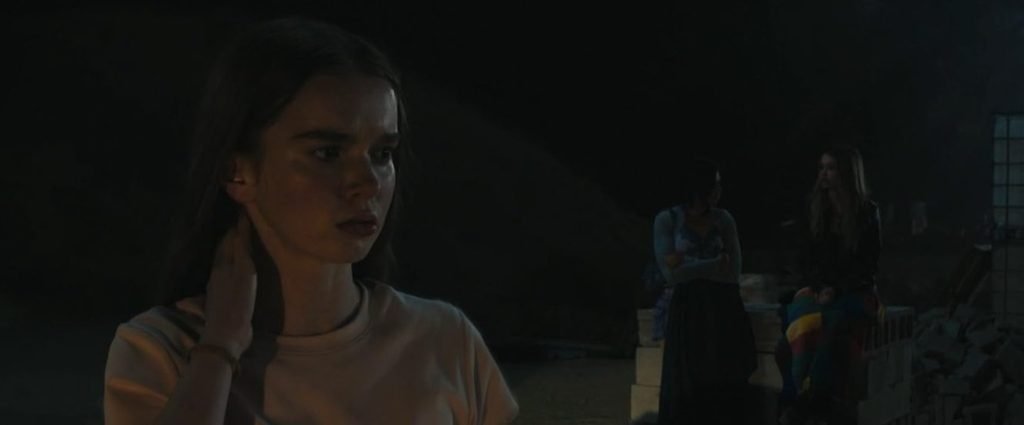
Not all of Carrie works, however. Without spoiling anything, a new subplot involving an outlier played by Thalia Dudek (who really is wonderful in the role) doesn’t gel so hot, nor does the involvement of a weird, X-Men-like organization of telepaths who have a long-standing war against militant parents of “gifted” children, led by Battlestar Galactica star Katee Sackhoff. Flanagan is obviously setting up something broader within the King universe, with an eighth episode clue that possibly ties all this to The Shining. All well and good (It: Welcome to Derry did something similar), but in the small microcosm of one season that had no guarantee of continuing at the time, these elements stuck out like a sore thumb and often ground the drama to a strange halt. Whether all this leads somewhere (and with the recent news of Season Two being greenlit, it most certainly does), the interloping of Dudek’s character during the prom sequence seems to undercut and rob Carrie of her wrath just a bit. Enough that it sucked a noticeable amount of wind out of it, at any rate.
THE HORROR HITS CLOSER TO HOME
But as Mr. Morton says in one episode about Carrie and Chris, “they’re the figureheads”, and that’s where the focus should lie when approaching Flanagan’s newest adaptation. Victimizers and victims, indivisible from their story, and how they play out. Their actions should be watched carefully and talked about with children. None of this is “Afterschool Special” melodrama. It’s real, and it’s happening in schools all over the world.
It’s a modern retelling, complete with horrors involving child predators, the horrible addition of “shooter drills” that our children have to endure (and, sadly, are even used to), and the weaponization of social media, which has forever changed the landscape of what Carrie used to deal with and what Chris had at her disposal to scorch the earth with her hatred. Two opposing forces, locked in battle, who have it hard enough without their respective parents filling their heads with their own pushy outlooks or intervention. The riots and civil unrest are as much a product of what they’re dealing with at home as of their own actions at school (something I wish more parents would realize).
The irony is that Margaret White is so fearful of “the deep state” and yet goes to great lengths, including rigging hidden cameras around the house, to surveil her daughter. Both are distressingly realistic and hilariously true to form for her updated character. Just wait until she creates her own online persona, and tell me if she reminds you of anyone in your social orbit.
Flanagan spells it all out for us with impeccable writing, precise and effective direction, perfect needle drops (Lana Del Rey’s Did You Know That There’s a Tunnel Under Ocean Blvd during Episode 7’s montage of prom being set up is not only beautiful but, in context and with hindsight, absolutely devastating), and dynamite performances by an unbeatable cast.
FINAL WORD: CARRIE STILL HAS SOMETHING TO SAY
Make no mistake, though: this show belongs to Howell and Thornton, “the figureheads.” In a period that’s given us such amazing breakout performances as Naomi Scott’s disturbing turn as Skye Riley in Smile 2, Inde Navarrette’s unsettling “Freaky Nikki” in Obsession, Linda Cardellini in Crystal Lake, Samara Weaving in the Ready or Not films, Madeleine McGraw in the Black Phone films, Tatiana Maslany in Keeper, Mia Goth in the X Trilogy, and Lupita Nyong’o’s dual performances in Us, among countless other actresses who deserve their flowers, women have been blessing our genre with intense, guttural performances of late that have elevated horror in ways that have made it far more terrifying and far more real. Howell and Thornton carry on this wave with astounding performances all their own, with the added burden of taking on roles that are already famous and subject to fan backlash. They fucking nail it and deserve their spot among the greats.
The titles of each episode are patterned after classes one would attend in school. Foreign Language, Social Studies, AP Physics, etc. Each one opening with a brief, but informative lesson about what women are capable of, and how over centuries, their insights, their strengths, their gifts are stunted by frightened, intimidated men who refuse to acquiesce to a woman in a position of power or authority. Carrie will return in Season 2. I can’t wait to see what lessons Flanagan and company have in store for us.
Class: Dismissed.