


Written By: Rhiannon Elizabeth Irons
Author's Note
Welcome to Australia’s Darkest Hour. My name is Rhiannon Elizabeth Irons, and I’ll be your host as we explore some of the crimes that shook the land Down Under to its core. In this installment, we examine one of the most horrific and pivotal cases in Australian history: the 1986 murder of Sydney nurse Anita Cobby.
Australia’s Darkest Hour is a series dedicated to exploring the deepest shadows of our nation’s history, uncovering the truth behind notorious cases, and honoring the victims and legacies left in their wake. However, because of the nature of this case, reader discretion is strongly advised. This article contains detailed discussions of violent crime, severe physical trauma, sexual assault and murder.
The details of what happened to Anita on that night in February 1986 are excruciatingly horrific, but understanding the full brutality of the crime is essential to understanding the sheer shockwave it sent through the nation and why her family’s ultimate triumph of turning immense grief into hope remains so vital today.
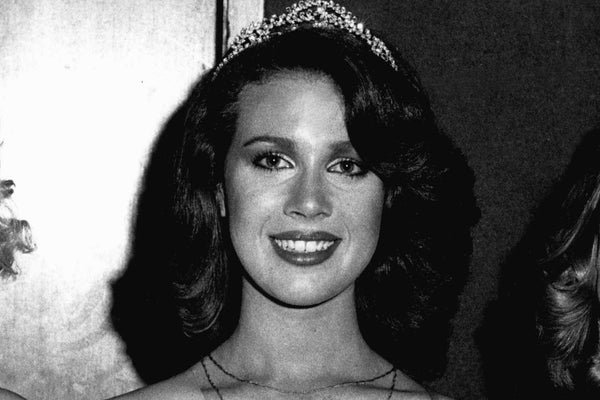
(Anita Cobby)
Introduction: The Night That Woke Australia to Pure Evil
On the warm Sunday evening of Feb. 2, 1986, 26 year old Anita Cobby finished her nursing shift at Sydney Hospital. She boarded a train at Town Hall Station bound for Blacktown in Sydney’s western suburbs, eager to get home to her parents’ house, where she was staying. It was a routine, everyday journey, a young woman returning home after hours spent caring for others.
She never made it to her front door.
What occurred in the hours following Anita’s arrival at Blacktown Railway Station was a crime so barbaric, so senseless and so profoundly cruel that it irrevocably altered the Australian cultural consciousness. The abduction, sexual assault and murder of Anita Cobby did not merely shock Sydney; it united an entire nation in grief, rage and an urgent demand for absolute justice.
Four decades later, the name Anita Cobby remains etched in the Australian psyche, a symbol of lost innocence, the darkest depths of human cruelty and, ultimately, the enduring power of a family’s legacy forged out of unimaginable tragedy.
Part I: Who Was Anita Cobby?
Before she became a headline, Anita Lorraine Lynch was a vibrant, gentle and deeply ambitious young woman. Born on Nov. 2, 1959, in Sydney to Garry Lynch, a RAAF graphic artist, and Grace “Peggy” Lynch, a nurse, Anita grew up in a warm, tight-knit household alongside her sister, Kathryn.
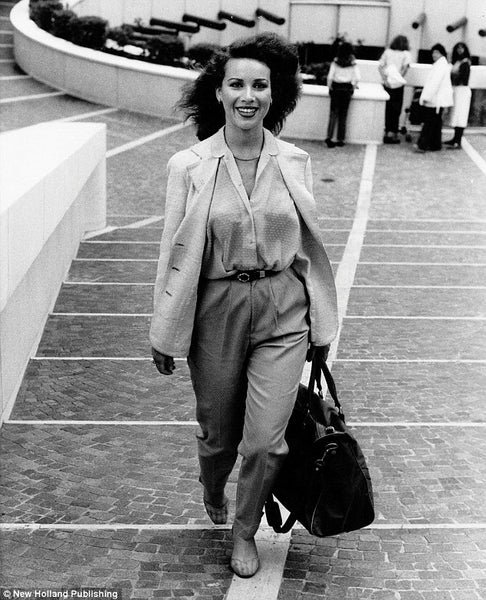
Strikingly beautiful, with dark brunette hair, bright eyes and a radiant smile, Anita entered local beauty pageants during her late teens. In November 1979, she was crowned Miss Western Suburbs. While a promising modelling career beckoned, Anita chose a path driven by compassion rather than glamour. She followed her mother into the nursing profession, graduating as a registered nurse at Sydney Hospital, where her soft spoken empathy made her beloved by patients and colleagues alike.
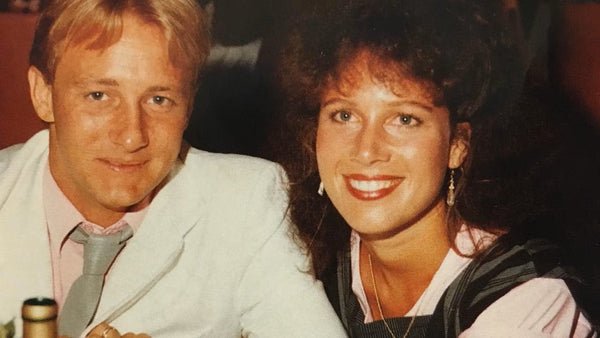
While studying nursing, Anita met John Cobby. The two fell deeply in love, marrying in March 1982. Their years together were filled with youth and adventure, including an extended backpacking trip through Europe. However, like many young couples, they faced personal hardships, including the heartbreaking grief of a miscarriage. By early 1986, the pressure had taken a toll, and they were temporarily separated.
Anita moved back into her parents’ home in Blacktown. Yet, despite the physical distance, Anita and John remained in constant contact, sharing a bond that neither considered truly broken. In fact, in the days leading up to Feb. 2, the pair had been actively discussing reconciliation.
Part II: The Horror at Prospect
A Chance Encounter with Evil
On Feb. 2, 1986, Anita met up with friends for dinner in Sydney’s city center before taking the 9:12 p.m. train home. She arrived at Blacktown Station shortly before 10 p.m. Expecting her father to meet her, she discovered he had been delayed. Rather than wait inside the station, Anita decided to walk the short distance home along Newton Road, a path she had walked dozens of times.
Cruising the streets of Blacktown that same night was a predatory gang of five men in a stolen Holden Kingswood sedan:
• John Travers (18), a violent predator with a reputation for carrying a knife
• Michael Murphy (33), the older ringleader of the group
• Leslie Murphy (22), Michael’s younger brother
• Gary Murphy (27), another sibling
• Michael Murdoch (18), a childhood friend and criminal associate
The men were cruising, looking for someone to rob or victimize. As Anita walked alone under the streetlights, they pulled up alongside her.
Abduction, Torture and Murder
In a matter of seconds, Anita was ambushed, overpowered, dragged into the back seat of the Kingswood and pinned down. Her screams were muffled as the car sped away into the darkness toward a rural, secluded paddock on Reen Road in nearby Prospect.
What took place over the next hour in that pitch-black field defies comprehension. All five men subjected Anita to a relentless, brutal campaign of physical torture and sexual violence. She was repeatedly beaten, stripped and subjected to severe sexual assaults by each member of the gang. Medical reports would later reveal that Anita suffered extensive internal and external injuries, severe trauma across her entire body, broken bones and deep lacerations as she fought desperately for her life.
When they were finished, fearing she could identify them, John Travers produced a knife. Anita was dragged through a barbed wire fence into an adjacent paddock, leaving severe cuts from the wire. There, Travers slashed her throat with such horrific force that medical examiners later noted she was nearly decapitated. The men left her bleeding to death in the grass and drove away to buy takeaway food, leaving her body to be discovered two days later by a local farmer whose cows had gathered around the site.
Part III: Shock, Public Outrage, and the Leaked Autopsy Report
The Broadcast That Galvanized Australia
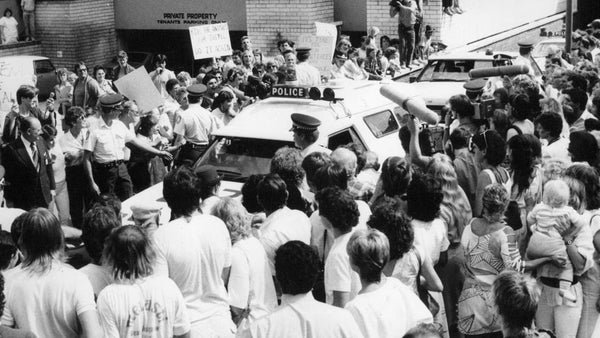
When news broke on Feb. 4 that the body of the missing nurse had been discovered, the nation was thrown into mourning and fury. However, the public’s shock quickly turned into overwhelming rage when the full, horrific extent of the crime was brought to light through the media.
Prominent Sydney morning radio host John Laws obtained a leaked copy of Anita Cobby’s official autopsy report. The document contained explicit, harrowing details of the catastrophic injuries Anita had suffered during the attack.
In a controversial move that sent shockwaves across the broadcasting industry and the nation, Laws read the autopsy report live on the air. Hearing the clinical, brutal details of what Anita endured both horrified and galvanized public sentiment, sparking unprecedented nationwide demands for capital punishment and police action.
Decades later, in a 2016 interview with Seven News, John Laws defended his decision to read the horrific details to his listeners, stating that he felt “the general public ought to know” and that “it incited anger in the public that murders like this were happening and we weren’t being given the full details.”
Part IV: The Manhunt, Miss X, and the 22 Day Net
Strike Force Emu and the Investigation
To solve the crime, New South Wales Police established Strike Force Emu, bringing in more than 50 dedicated detectives to work around the clock.
• The $50,000 Reward: On Feb. 6, just four days after the murder, the NSW state government posted a $50,000 reward for information leading to the capture of her killers.
• The Train Re-enactment: On Feb. 9, police executed a meticulous re-enactment of Anita’s journey to jog the memories of commuters. Constable Debbie Wallace dressed in clothes similar to those worn by Anita on the night of her disappearance and boarded the 9:12 p.m. train to Blacktown. As Constable Wallace walked the length of the train during the journey, detectives interviewed passengers and showed them photographs of Anita.
The Informant and the Stolen Kingswood
The initial breakthrough came from a police informant regarding a stolen vehicle, a white Holden Kingswood. The tip led investigators toward a clique of local hoodlums: John Travers, Michael Murdoch and the Murphy brothers. Cross-referencing police files revealed that several of the men had extensive histories of violent crime, and Travers was known to carry a knife.
On Feb. 21, detectives moved in. They located and arrested Travers and Murdoch at Travers’ uncle’s house, while Les Murphy was picked up at Travers’ residence. Murdoch and Les Murphy were initially charged with vehicle theft offenses and released on police bail. Travers admitted to stealing a car, but under intense interrogation, he made conflicting statements regarding the murder, prompting police to detain him in custody.
The Secret Hero: “Miss X” and the Wiretap Confession
While locked in a cell, John Travers made a crucial misstep that ultimately destroyed the gang. He requested that police call a young female friend so she could bring him a packet of cigarettes.
When police dialed the number, they reached Travers’ girlfriend. Though terrified of Travers and his violent nature, she met privately with an officer and courageously revealed details of his sadistic background. Known publicly during the trial as Miss X, and sometimes referred to in early reports as Mrs. X, she agreed to act as an undercover operative for Strike Force Emu.
When Miss X visited Travers in his cell, Travers began boasting and confessed his role in the horror at Prospect. Recognizing they needed ironclad proof, detectives convinced Miss X to wear a concealed recording microphone hidden inside her bra.
Returning to talk to Travers and later visiting Murdoch’s house, Miss X bravely wore the wire, successfully capturing explicit, chilling audio confessions from both men detailing the abduction, assault and murder. Armed with the secret tape recordings, police launched swift raids and arrested all five men.
Just 22 days after Anita was snatched from a Blacktown street, her killers were locked behind bars.
The Trial and Historic Sentence
The trial in early 1987 at the NSW Supreme Court became one of the most publicized legal proceedings in Australian history. Outside the courthouse, crowds gathered daily, screaming for the return of the death penalty.
On June 10, 1987, the jury found all five men guilty of abduction, rape and murder. Six days later, Justice Alan Maxwell delivered sentences that reflected the public’s outrage. Visibly shaken while reading the autopsy findings, Justice Maxwell sentenced each offender to life imprisonment. He marked each inmate’s official prison file with a strict directive:
“I direct that non parole periods not be fixed… They are never to be released.”
Part V: Prison Justice and Where the Killers Are Now
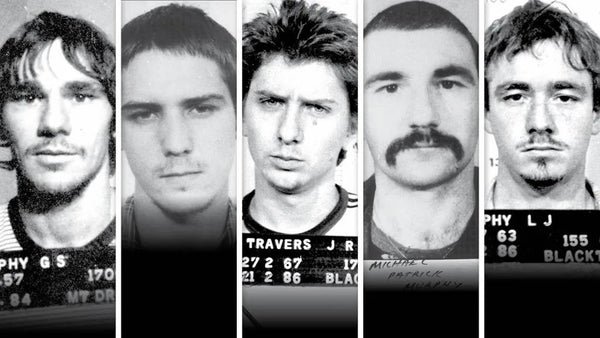
Inside Australia’s maximum security prison system, the five killers became instant marked men. Even within a world populated by violent criminals, the sheer cruelty of what these five men did to a helpless young woman violated the strict unwritten code of the prison population. They were reviled, despised and subjected to relentless vigilante justice by fellow inmates who believed they deserved to spend their lives in isolation and misery.
The Attacks Inside Maximum Security
The hatred reserved for these men inside maximum security was immediate and enduring. Fellow prisoners made it clear that predators who committed such violent atrocities against women would find no safe quarter.
• Constant Protection: All five killers spent their sentences largely segregated from the general prison population for their own protection, living out their days in high security protective custody blocks.
• The Shower Block Attack: Despite high security, fellow inmates occasionally found openings. In June 2019, Gary Murphy was cornered in the shower block at Long Bay Jail by fellow inmates. He was savagely beaten with heavy objects, suffering skull fractures and life-threatening head injuries before guards could intervene. He survived, only to be returned to high risk isolation.
The Status and Fate of the Killers
| Killer | Role in Crime | Current Status / Fate |
|---|---|---|
| John Travers | Primary assailant; carried knife | Serving life without parole in maximum security |
| Michael Murphy | Ringleader of the group | Deceased (Died of liver cancer at Long Bay on Feb. 21, 2019) |
| Gary Murphy | Co offender | Serving life without parole; severely beaten in prison shower (2019) |
| Leslie Murphy | Co offender | Serving life without parole in maximum security |
| Michael Murdoch | Co offender | Serving life without parole in maximum security |
In February 2019, at age 65, Michael Murphy died of liver cancer at the Long Bay Prison Hospital. His death was met with total indifference and relief from the public and former investigators. Retired Senior Sgt. Garry Heskett remarked,
“All I can say is good riddance, and may he rot in hell.”
John Travers, Leslie Murphy, Gary Murphy and Michael Murdoch remain isolated in maximum security under constant protection from other inmates. None have ever been granted parole, and all will die behind bars under Justice Maxwell’s directive.
Part VI: Life After Loss – The Husband and the Family
John Cobby: The Heartbroken Husband
In the aftermath of the murder, media scrutiny focused heavily on Anita’s estranged husband, John Cobby. Hounded by reporters and crushed by unbearable guilt and trauma, John dropped out of sight. For decades, he lived a transient life, struggling with deep post traumatic stress and the burden of losing the love of his life.
Crime journalist Mark Morri recounted the devastating moment John learned of her fate:
“On February 4, 1986, John Cobby’s life imploded. He was driving up the coast looking for his missing wife Anita when over the radio he heard: ‘The body of a naked woman has been found in a paddock in western Sydney.'”
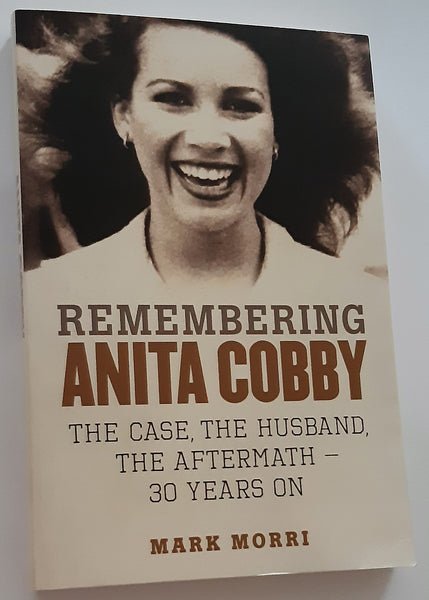
In 2016, marking 30 years since the tragedy, Mark Morri published the book Remembering Anita Cobby: The Case, the Husband, the Aftermath, written with John Cobby’s full cooperation. In it, John opened up about their relationship, their plans for reconciliation and the decades he spent trying to process the loss. Today, John lives quietly, having found a measure of peace after sharing his story with the world.
Garry and Grace Lynch: Turning Grief Into Light
Rather than allowing bitterness to consume them, Anita’s parents, Garry and Grace Lynch, transformed their heartache into advocacy.
In 1993, following another local tragedy, the murder of 9 year old Ebony Simpson, Garry and Grace partnered with Ebony’s parents, Peter and Christine Simpson, to establish the Homicide Victims’ Support Group (HVSG). The organization revolutionized how Australia supports families grieving victims of violent crime, providing crisis counselling, court support and legal advocacy.
Both Garry and Grace passed away, Grace in 2005 and Garry in 2008, but their vision lived on through Anita’s sister, Kathryn Szyszka.
Part VII: The Ultimate Legacy – Grace’s Place
On Feb. 2, 2023, exactly 37 years to the day since Anita was taken, a milestone in trauma recovery officially opened in Doonside, Western Sydney: Grace’s Place.
Named in honor of Anita’s mother, Grace, Grace’s Place is the world’s first residential trauma recovery facility specifically designed for children impacted by homicide.
Built with multimillion-dollar support from the NSW and federal governments, as well as community donations, Grace’s Place provides a safe haven where young people who have lost loved ones to violent crime can receive specialised counseling, creative therapy and holistic healing.
At the entrance stands a Magnolia grandiflora tree, Grace Lynch’s favorite flower, blooming as a symbol of hope, purity and resilience.
Conclusion: A Legacy That Outshines Darkness
The murder of Anita Cobby remains one of the darkest chapters in Australian criminal history. It revealed a depth of cruelty that horrified a nation and forever changed how Australians view public safety, justice and victim support.
Yet, the ultimate story of Anita Cobby is not defined by the five men who took her life in a Prospect paddock. It is defined by the nurse who spent her life helping others, by a husband who held onto her memory and by a family whose devotion built a sanctuary for generations of traumatized children.
Out of the darkest night in Western Sydney grew a legacy of light that continues to heal lives today.
[…] back to Australia’s Darkest Hour. My name is Rhiannon Elizabeth Irons, and I’ll be your host as we continue to explore some of the […]