
“Seeing is believing, but feeling is the truth.”
–Thomas Fuller
“I’ll believe it when I see it on TV.”
– John Waite
It’s Halloween, 1992. England.
The last of the trick-or-treaters have walked away. The streets are quiet. The candy bowl is just about empty. You turn the porch light off, lock up for the night, and settle in on the couch to watch that Halloween Special you saw advertised all week.
It’s your standard holiday “Puff Piece”, with familiar news anchors you watch every day doing a “spooky” Halloween story from somewhere local. You’ve seen it before. Street festivals, pop-up vendors, maybe a local tavern that has Jack-O-Lanterns in the windows and a special “pumpkin”-infused ale. They’re going to do the same thing when Thanksgiving rolls around and the floats drift slowly down the crowded street.
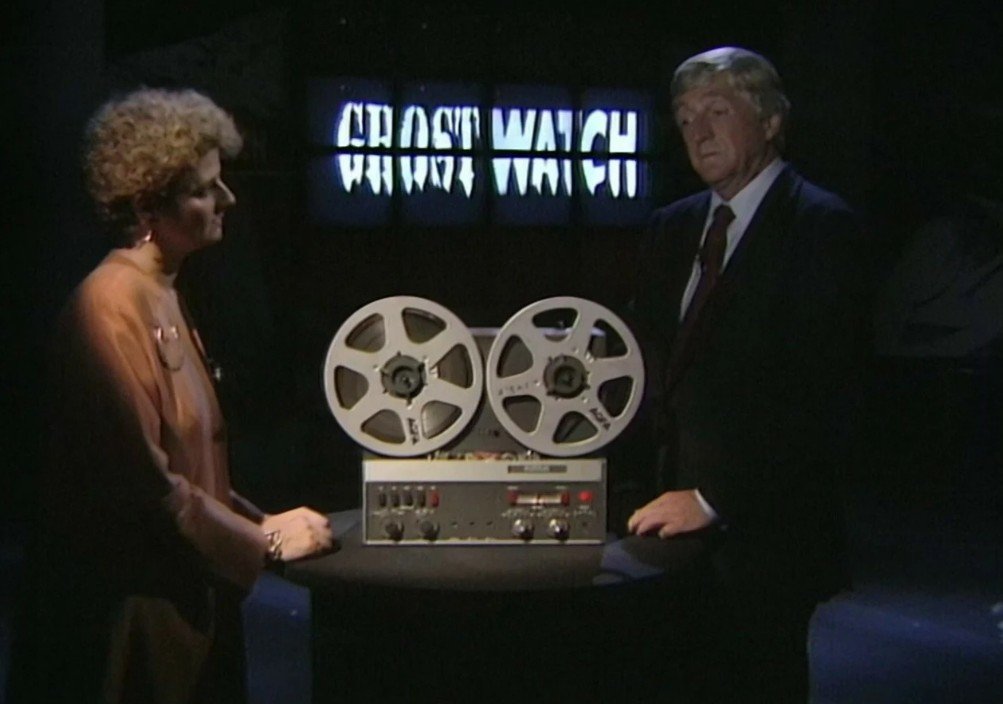
Tonight, the cute and bubbly presenter Sarah Greene from the popular kid’s variety show Going Live is visiting the residence of Pamela Early (Brid Brennan) and her young daughters Suzanne (Michelle Wesson) and Kim (Cherise Wesson), who claim that their home is haunted by a ghost they call “Pipes”. So with a cadre of camera cameras, Sarah sets up in the house hoping to get some “spooky” activity. Outside, Red Dwarf regular Craig Charles interviews the crowd of people hanging out on the street to get opinions on the haunting and maybe share a few ghost stories of their own. And back at the station, trusted journalist and host of Parkinson for the last twenty years, is Michael Parksinson, who with guest paranormal expert Dr. Lin Pascoe (Gillian Bevan) are watching the events, explaining the phenomena (should there be any), and fielding calls from the audience about what they’re seeing, and/or whether they themselves have experienced their own paranormal activity.
Ghostwatch is exactly the type of harmless, local Halloween special you put on to listen to while you clean up around the house, or just plop down on the couch in exhaustion from getting up every time the doorbell rang with expectant, costumed children waiting for their candy. It’s a “Puff Piece”, remember? Good for a laugh and (hopefully) a couple of chills, should the claims of this haunting be legitimate.
It was supposed to be fun. It was supposed to be light-hearted entertainment. No one could have expected the outcry, anger and terror this special would cause. And by the end of this two-hour BBC broadcast, a nation was in a panic, the switchboards were alight with an estimated 1,000,000 phone calls from terrified viewers, it was said to have allegedly caused one suicide and was cited to have induced post-traumatic stress disorder in the children who viewed it. Ghostwatch was ultimately prohibited from being aired again and has not been seen again on BBC television to this very day.
Ghostwatch (1992)
⭐️⭐️⭐️⭐️
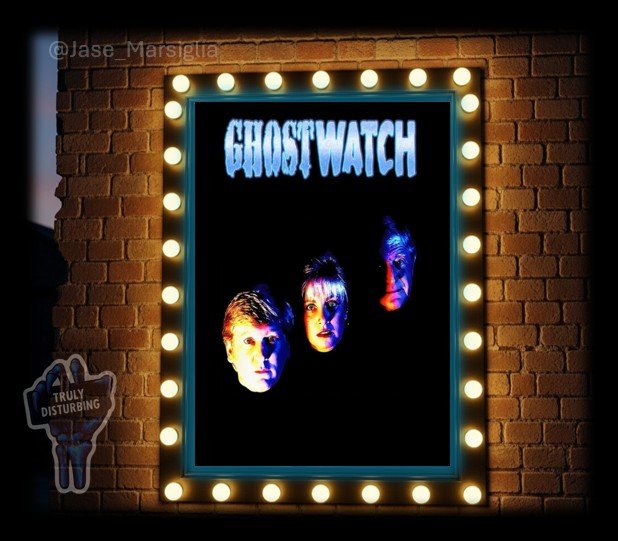
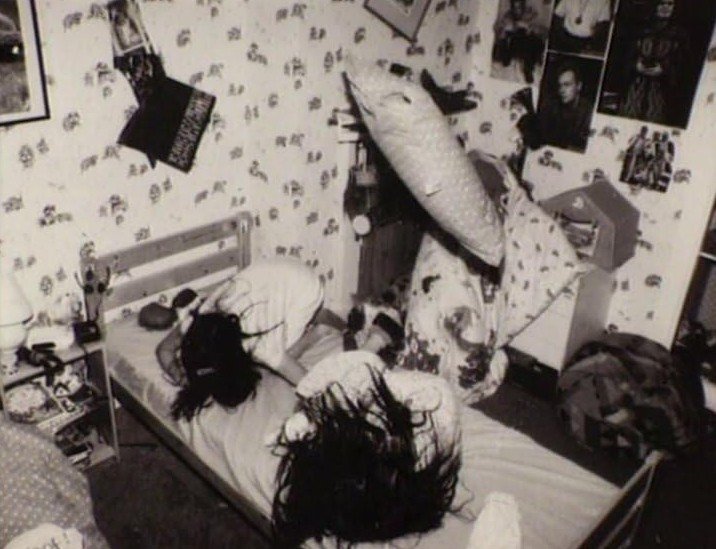
Taking most of its cues from the infamous 1977 Enfield Poltergeist case, Ghostwatch slowly and steadily descends its audience into hell as we witness a casual (as casual as a news crew in your house can be) hangout with candy, board games, and decorations, and the occasional “bump in the night” before things take a real turn and we (and call-in viewers) start catching fleeting glimpses of this “Pipes” character lurking in the kids’ bedroom, and – most alarming of all – vicious, bloody scratches materializing on Suzanne, the eldest child, and her suddenly speaking in a deep, demonic voice.
But let’s go back a little bit. Back to a time when the concept of “found footage” or “faux documentaries” were not so commonplace. There was no Blair Witch Project, no Paranormal Activity, no V/H/S franchise. The two primary examples of these movies at that time were 1978’s infamous Faces of Death and its sequels, and the equally (if not more so) controversial Cannibal Holocaust. Two films that, love them or hate them, effectively and confidently blurred the lines between reality and fiction in such a way that still, to this day, even with the Internet, Blu-Ray/DVD bonus features, and interviews, people will argue that certain elements and aspects are real. I personally know people that think the “Monkey Brains” dinner in Faces of Death and the grisly “impaled lady” in Cannibal Holocaust were 100% genuine sequences. Another important thing to remember is that up until only twenty years ago, Cannibal Holocaust didn’t have much of a presence on our shores, and few “big chain” video rental stores would carry Faces of Death, which was typically found in “Mom-and-Pop” stores and spoken about in hushed whispers on the schoolyard.
So, the idea of the whole “am I really seeing what I think I’m seeing” aspect of horror and cinéma vérité was nothing like it is today, where there’s literally whole “found footage” options on streaming services like Tubi or Shudder, and a veritable cavalcade of films that purported to be genuine footage to take you for a Low-Fi ride through disturbingly realistic horror.
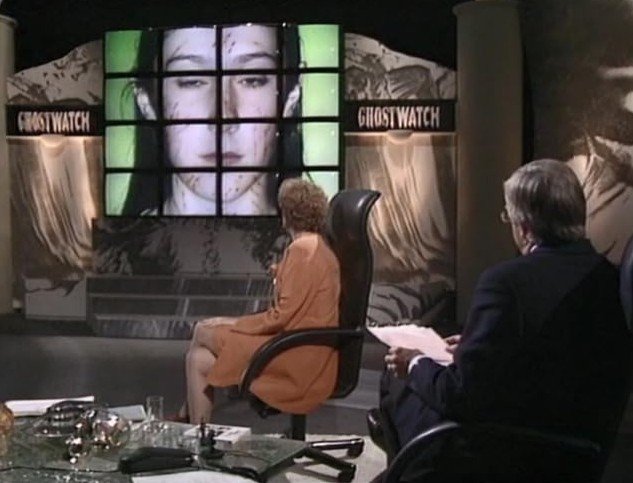
Come 1992, something like this – and featuring trusted television personalities who have been part of your daily routine for years – came with no obvious tells that could signal to the viewer that what was happening on screen, wasn’t really happening. Ghostwatch was suddenly the updated, televised descendant of Orson Welles’ 1938 radio drama The War of the Worlds – and had all the hysteria that came with it.
Written by Stephen Volk and brilliantly directed by Lesley Manning (who should be part of the “found footage”/”mockumentary” conversation a lot more than she is, considering how pioneering this broadcast was), Ghostwatch was pre-shot weeks in advance and edited to appear as though it was being broadcast live from both the location of the haunting and the studio where Parkinson and his parapsychologist were watching the telecast. Green’s real-life husband and Top of the Pops host Mike Smith was reporting from the phone lines to “field calls” (all of which were pre-recorded and scripted). In the interest of maintaining realism, the standard BBC call-in number was provided on-screen for those who wanted to call in.
And boy, did they.
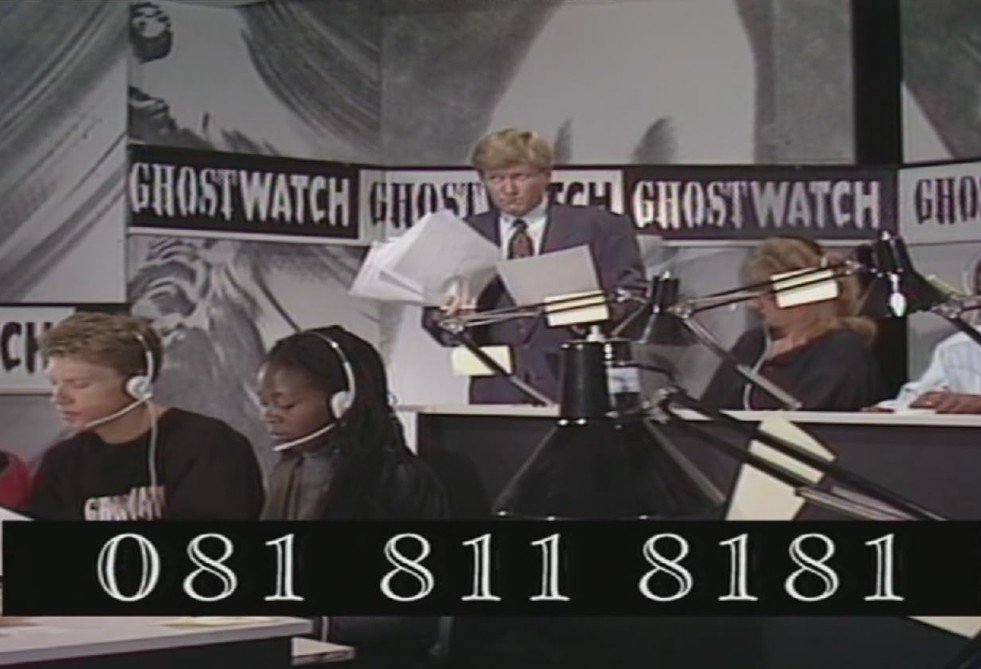
Despite the show not being live in the slightest, the switchboards exploded with approximately 30,000 callers, all of whom were terrified by what they were seeing. Instead of being met with one of the on-screen “call center” actors, the few who did get through were advised that the show was fictional and offered a chance to regale their own spooky stories for a potential future broadcast or special. Some were relieved. Some were amused. And some were absolutely irate. This means with the lines perpetually engaged, thousands of people received a busy signal – meaning thousands of people were not let in on the gag.
The panic was sweeping through Britain with each passing minute, and the tension and scares were ramping up as each “occurrence” on screen became more disturbing and intense. By the time Ghostwatch ended, the damage was done.
Nearly everyone who watched was left shocked, disturbed, and – in most cases, due to the time of the airing – left with very young children who expected something more akin to It’s the Great Pumpkin, Charlie Brown and instead went to bed wide-eyed with PTSD. The number of parents who tried to explain to impressionable children that “it was just a show” were left trying to explain the inexplicable. Again, “fake documentaries” were not a thing, so even grown adults were left wondering exactly what the fuck they just experienced and positioned to calm children with assurances that even they weren’t believing. The British Medical Journal published at least two diagnoses of post-traumatic stress disorder in children, causing Ghostwatch to be the first program or movie ever to induce the affliction in anyone. The players also received their share of backlash with people infuriated that their trusted sources of entertainment and news were involved in such a horrifying production, with many of their fans feeling betrayed.
But the real tragedy and arguably the final straw in this mess occurred five days later.
A young, 18-year-old factory worker named Martin Denham, who suffered an undisclosed impairment that caused him severe learning disabilities and the mental capacity of a young child, had been watching Ghostwatch that Halloween night, and – with no reason to believe otherwise – completely and totally accepted everything he was seeing as genuine.
Over the course of the couple of days after Ghostwatch aired, Martin began hearing knocking within the walls of his home, not unlike the knocks portrayed by the evil spirit of “Pipes” during the broadcast. We can only assume what was going through this poor kid’s head when the knocking began, but as it persisted, combined with the less-than-hospitable entity on the show being able to possess and/or kill, and his child-like rationale, it’s a safe bet that the young Mr. Denham was understandably terrified for his life, and spent those days after the broadcast sleeping with the lights in his room on.
On November 5, Martin wrote a small note for his family. “Please don’t worry – if there are ghosts I will be a ghost, and I will be with you always as a ghost”. He tucked it into his back pocket, tied hosepipe around his neck, and hung himself from a tree near his home.
The “knocking” he heard, simply the sounds emitted from a central heating system in need for repair.
When the case was presented to the Broadcasting Standards Commission after an order from the High Court, the BBC and producers behind Ghostwatch were forced to issue a public apology for what parents, censors, and news were calling “a deliberate attempt to cultivate a sense of menace”.
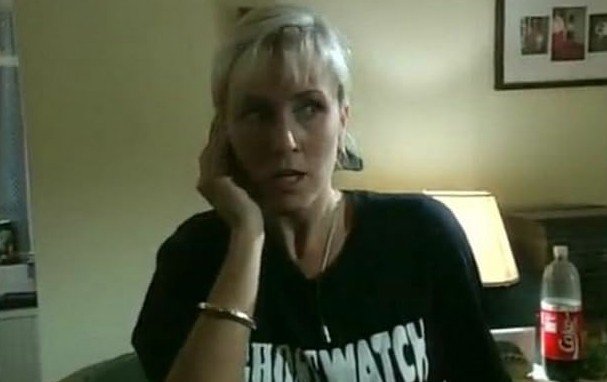
As of this writing, Ghostwatch has never aired again on any UK-based television network.
Today, and particularly with “found footage” still holding the genre firmly, Ghostwatch has become something of a lost curio. A film re-discovered by modern audiences stateside either on YouTube and eventually, on Shudder, where it’s held a steady residency. Now people have a chance to see one of horror’s most infamous and unlikely productions for the first time. The irony, however, is that with a generation desensitized to “found footage”, and living in a land of Deep Fake AI technology, our sophistication to this stuff has only become more attuned. We know the tells, we know the tricks. Something like Ghostwatch would be predictable, even tame, by today’s standards.
But to really appreciate what they were trying to achieve in 1992, you have to push it all out of your head. Forget about all the films you’ve seen that, frankly, spawned directly from this, turn out the lights, turn up the TV, and huddle in the darkness to watch something that was unique, cleverly written and produced, and performed with such sincerity that you really can’t objectively blame viewers for being terrified of what they were witnessing.
It’s truly a chilling experience and handled with such gusto, that it just might still have the teeth to run a chill up your spine, or cause you to flick a light on when it makes the shadows of the room a little too thick and nebulous. Ghostwatch is a masterclass in suspense and media trickery that just happened to land during a time when we as a culture just weren’t quite ready for it. We’re more adept and better suited to let it tell its story, play its tricks. Even if the horrors of “Pipes” weren’t genuine, the intent was, and obviously so was the fear and its lasting effect on viewers.
It was, after all…just a television special.
HOME VIDEO
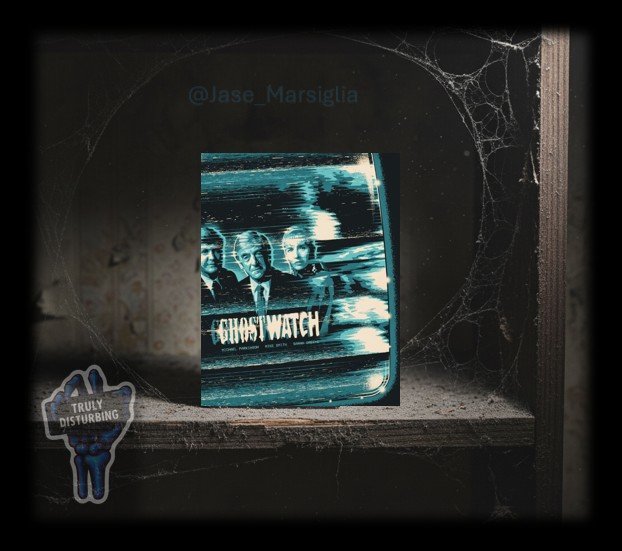
Even being, for all intents and purposes, “banned” from BBC airwaves since 1992, Ghostwatch did eventually get a home video release through the British Film Institute’s “Archive Television” line with a DVD in 2002. We wouldn’t get our hands on an official copy until twenty years later, when 101 Films released a special Limited Edition under their Black Label line (Spine #28), and poured in a couple fun retrospective features, as well as a couple of archival ones from the UK’s releases. Check out the breakdown below:
- Aspect Ratio: 1.33:1 Standard Fullscreen
- Audio: LPCM English Mono 2.0
- Subtitles: English
- Do You Believe in Ghosts?
- Commentary with Film Historians Shellie McMurdo and Stella Gaynor
- (Archival) Commentary with Filmmakers Stephen Volk, Ruth Baumgarten and Leslie Manning
- (Archival) Shooting Reality
- Reversible Cover insert featuring original and newly commissioned artwork by Thomas Walker.
- Six Art Cards
- 52-Page Liner Notes booklet with new writing by Sarah Appleton, Tim Murray, and a short story by Stephen Volk.
- 128-Page Reproduction of the Script, Annotated by Director Leslie Manning
- Limited Edition Rigid Slipcase with newly commissioned artwork by Thomas Walker.
Bits ‘N’ Pieces
Traum-A-Meter:
1 out of 4
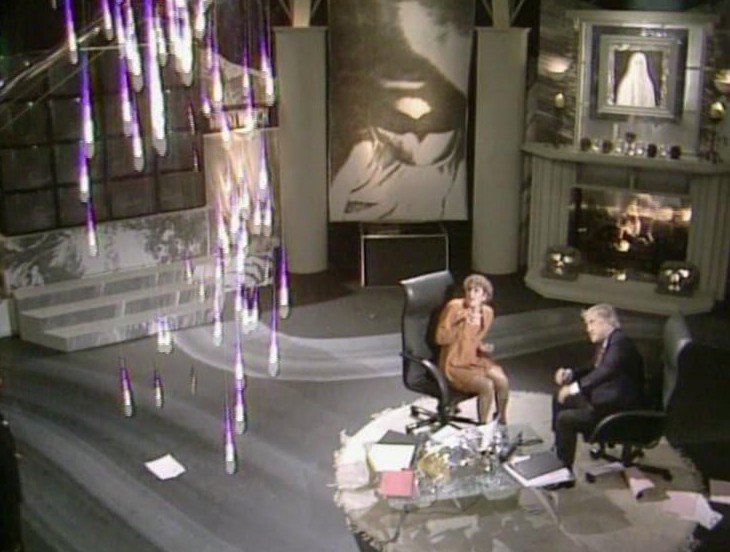
A few scratches, but this was all about mood and atmosphere. It’s certainly scary, but not gory, so those looking for a good old fashioned ghost story in the “found footage” tradition can look no further.
Today’s Jam: “End of the Road” by Boyz II Men was the anthem of the day in the UK when this infamous special ended, and for Ghostwatch…it really was!