
⭐️⭐️⭐️1/2
MILD SPOILERS AHEAD – We Suggest Watching the Entire Season Before Reading This Review
Mary Shelley’s Frankenstein is an entire world of difference from what cinema-goers would get used to. In film, he’s a murderous, lumbering monster that wages a war against mankind for its nonacceptance of him. But in the novel (and the occasional iteration, Branagh’s 1994 adaptation and the recent Guillermo del Toro film, for example), the creature isn’t born evil because of a snafu in brain theft. He’s a mental infant, a sponge discovering the world around him, and his so-called “evil” is a product of an unkind, violent species that dislikes and revolts against things that are … different. And Dr. Frankenstein? He’s horrified of his creation, shuns it, and when his “child” feels understandably neglected, he reacts with the same fear and violence everyone else did. The creature’s very existence is steeped in tragedy and is a stark example of the “nature or nurture” theory that killers, real-life monsters, are created, not born.
Any fan of Friday the 13th who knows the franchise inside and out sees the parallels between Jason Voorhees and Frankenstein’s monster. Both were born disfigured, shunned and treated with hostility (hell, Jason is even “reborn” in Part VI via lightning, not unlike our bolt-necked friend from Universal). When the final reel of Sean Cunningham’s 1980 film begins, Pamela Voorhees, played with a gnashing fervor by Betsy Palmer, we’re made aware that Jason, neglected by the camp counselors and bullied for his deformities, sadly drowned in Crystal Lake, sending his mother into a murderous, grief-addled rampage to ensure that no one ever comes to this camp again.
In her own twisted, damaged logic, she justifies her murders under the theory that if Camp Crystal Lake remains closed, no one will suffer the indignities Jason did, and no parent will suffer the grief of losing their child to a system that relies on irresponsible teens to watch them.
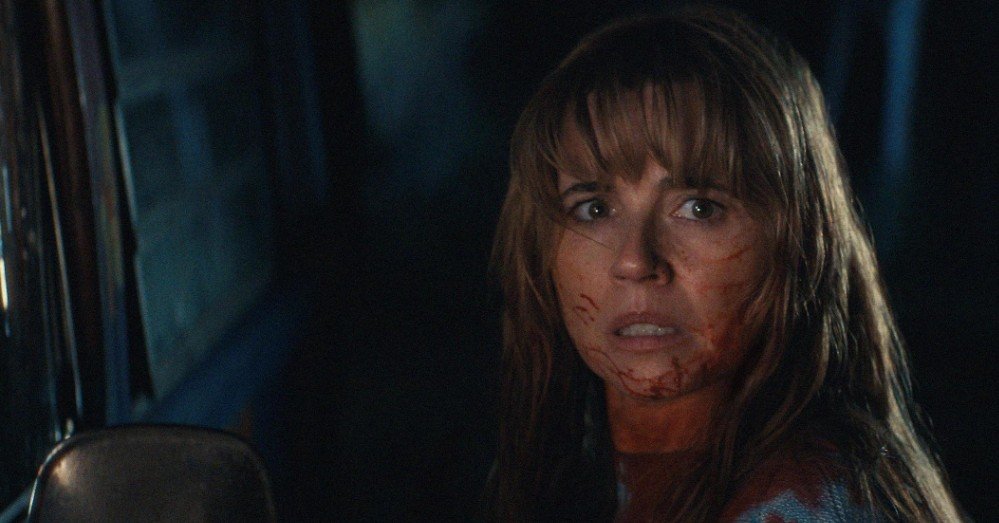
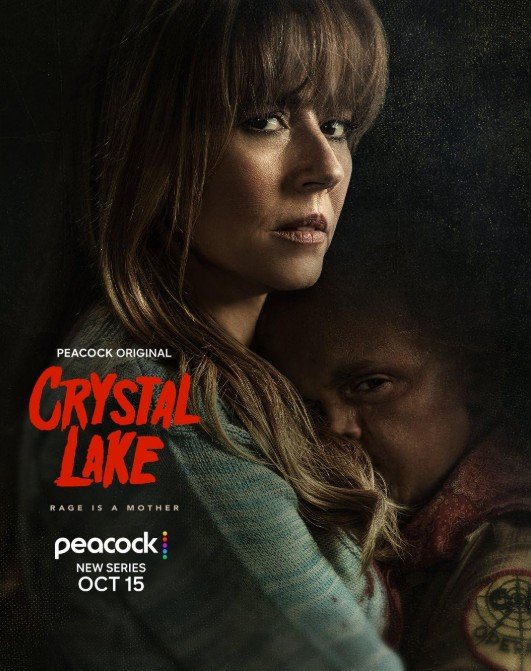
The new Crystal Lake series, which premiered on Peacock last week, makes Pamela Voorhees Frankenstein’s monster as well as her son. We already knew Jason. We thought we knew Pamela. What we’re given is a normal, caring, doting mother who is running from a dark past and is plunged into despair so deeply that it changes her entire personality. Despite the lion’s share of her existence being the final 15 to 20 minutes of the original Friday the 13th, with little “pop-up” cameos in various sequels for when we voyage into Jason’s psyche, Pamela’s twisted aura has always been ever-present. She lived in the shadow of her hulking, hockey-masked progeny, and that’s fine. Jason became the star, the new Michael Myers of the ’80s. A silent, indestructible force of nature that stalked the woods of Crystal Lake and messily destroyed anyone who dares encroach on the sacred ground his mother died on to protect him. He was the horror icon. But his every move, his every motivation, was always his mother.
And not in the symbiotic Norman Bates kind of way. Norman was a product of horrific abuse. Pamela was love. Unconditional. Undeterred. Unwavering. Much like Rosemary Woodhouse’s maternal instincts kicked in during the closing of Rosemary’s Baby, Pamela looked upon her terribly disfigured boy and saw only innocence. Something she knew would be unfairly treated. Something she knew would greet the world with hope and longing to fit in, and never receive it. Pamela Voorhees was, and remains, a good mother.
WATCH THE TRAILER FOR “CRYSTAL LAKE” BELOW
And now, finally and deservedly, Pamela’s story can be told. And with the help of Hannibal writer/producer Bryan Fuller, It: Welcome to Derry writer/producer Brad Caleb Kane, and A24, the studio behind Backrooms, Talk to Me and Ti West’s X trilogy, we’re given the broad, gory scope of everything that led to Friday the 13th.
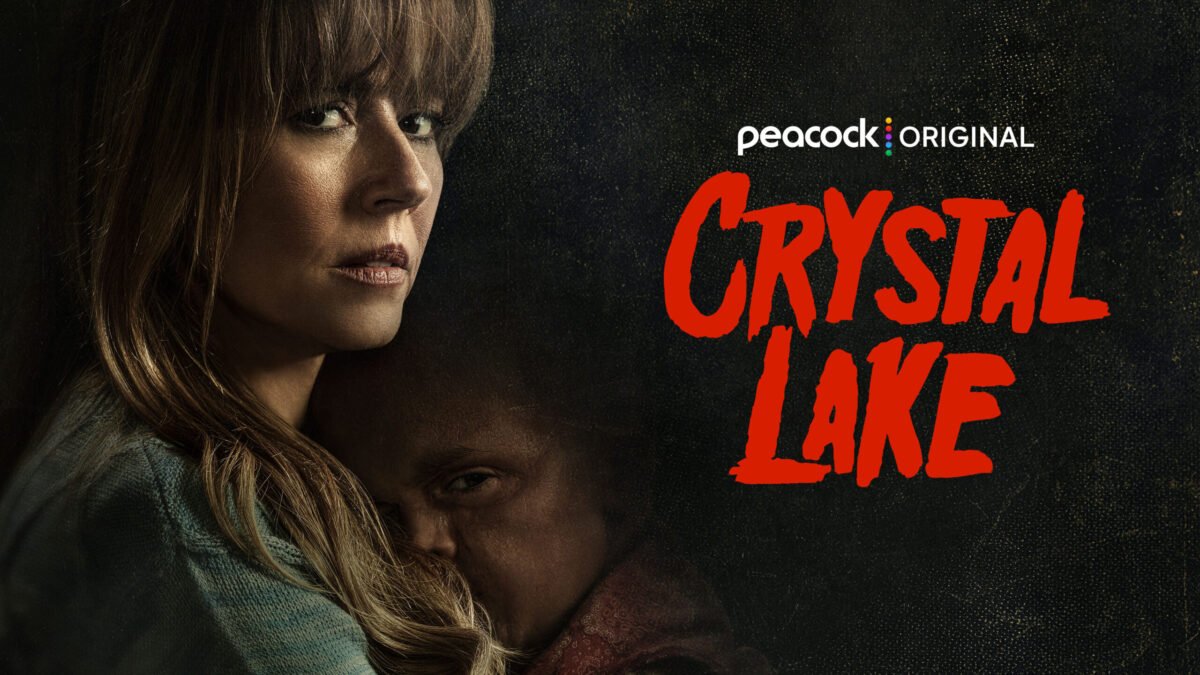
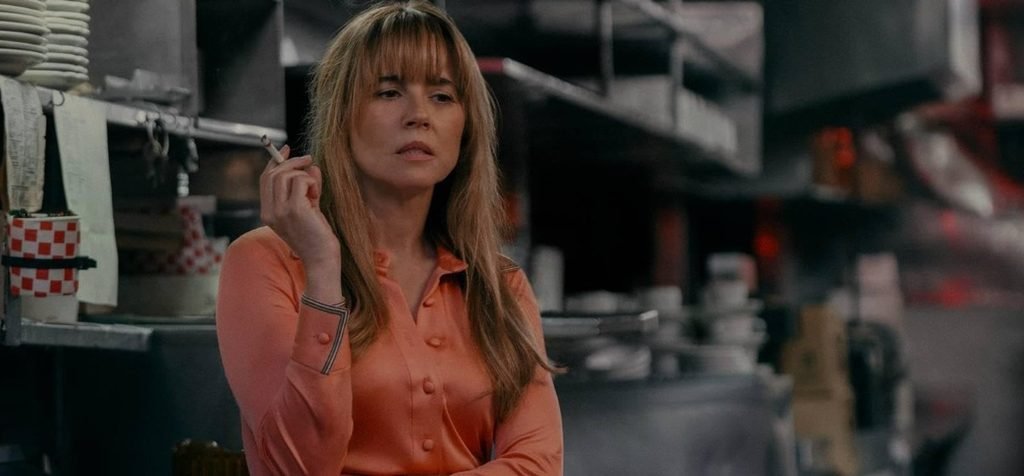
Freaks and Geeks star Linda Cardellini gives a powerful, layered performance as a young Pamela Voorhees, a doting mother to Jason (a fantastic performance by Callum Vinson, who had previously co-starred in USA’s Chucky series). She has been taking him to work at Camp Crystal Lake while she runs the kitchen. The poor child is afraid to go because “the kids stare at me,” he sadly admits, fully and painfully aware of his physical deformities. But Pamela can’t chance leaving him home, as he suffers violent seizures, and if she’s not there to give him his medication, he’ll surely die. It’s sadly unavoidable that to make a living to care for Jason, she has to bring him to a place where kids are cruel, making it a lose-lose for all involved. But Pamela is cheerful. She’s proud of her son and the bravery it takes to get out there and interact with people who aren’t accepting.
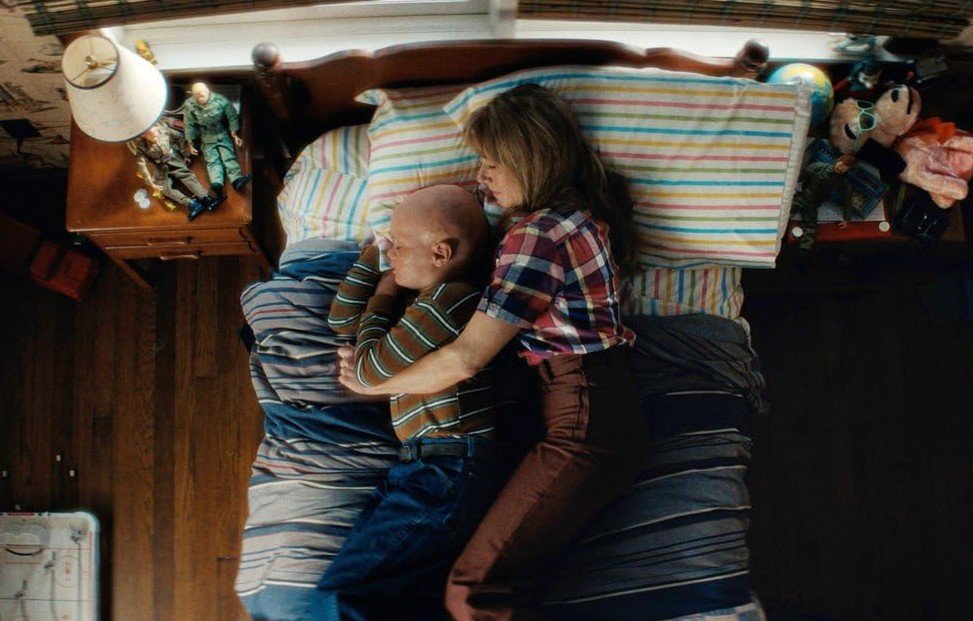
And it’s around here that the first wave of fan discontent begins. The writers’ and Callum Vinson’s depiction of Jason is one we’ve never been shown before. Jason’s drowning was always a brief flashback, and other iterations, like Freddy vs. Jason, for example, briefly showed him being mistreated. Despite the fact that we heard Jason crying for help in flashbacks, and eventually his pleas to “kill them, Mommy” from Pamela’s own mouth as her mind would splinter back and forth between herself and her “son,” people suddenly were taken aback by a version of Jason who spoke, showed excitement, fear and kindness.
It’s something that needs to be addressed. Crystal Lake, from the onset, is Pamela’s story. And to fully grasp how a mother’s love can be warped into grief and madness, we have to see the story through not just her eyes, but her heart. So when Jason is practicing swimming, we ache for the poor kid who can barely keep his head above water. We wince when a bully’s volleyball is lobbed at his face, and after a snide “apology,” we should feel our hearts drop when Jason rubs his face and says meekly, “It’s okay,” showing patience and kindness beyond his years, before the kid responds, “I was talking to the ball.” Jason’s eyes lower, his shoulders slump. We see in real time his heart breaking, and if there’s a modicum of heart in the viewer (either as someone who suffered or is suffering bullying, or as a parent of a child who has or is), your own heart will break for him. After all, he’s just a kid. Which is what makes what happens next even more gut-wrenching.
We learn that Jason’s drowning was no simple mishap, but a product of that kindness. After getting hit with the volleyball, Grace Snell (another bright newcomer in Gwendolyn Sundstrom) sticks up for him and throws the volleyball past the barrier rope and farther into the lake. Threatened with her expulsion from the camp as the kids wade out of the water, Jason, frightened to lose his only friend in the world, gallantly paddles out beyond the barrier rope to retrieve the ball to save her from trouble, but as we all know … “he wasn’t … a very good swimmer.”
Pamela and the Christys (the camp’s owners) try to save him before he goes into the depths, but he’s gone. His body is never found. The legend has begun.
But again, this isn’t Jason’s story; it’s Pamela’s. And these soft details into Jason’s innocence and torment are meant to invoke something fierce and protective within us and help us better find a mindset alongside Pamela, who just watched her entire world crumble. Like any grieving mother with an ounce of hope in her heart, Pamela stands on the docks of Camp Crystal Lake for nine months after the supposed drowning, holding a never-ending vigil. She can feel her boy out there … somewhere. The town of Crystal Lake sympathizes. What happened to Jason happened to all of them. A child is a child, however misunderstood. “Sweet kid … tough to look at, but … y’know … sweet,” one resident muses.
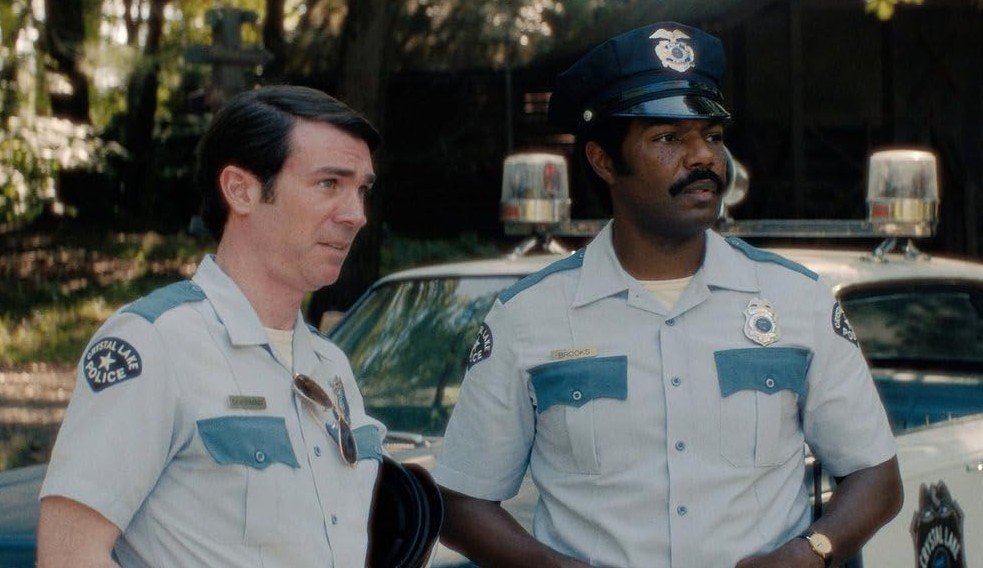
Chief Brooks (Will Catlett of Abigail, fantastic as a new character in the lore), new to town after leaving New York with his own baggage, wants nothing more than to help. He sees a woman in pain, someone who lives only for her son, even if the chances of him being alive are slim. He, himself, knows pain and loss and isn’t just a good cop, but a good man, and wants to ease Pamela’s grief.
But things aren’t always what they seem, and it’s here that the show seems to permanently divide fans right down the middle. The less you know about how things unfold in Crystal Lake’s subsequent seven episodes, the better, so if you don’t want to know how certain events unfold, now would be a good place to stop.
In much the same way as Mike Flanagan’s Carrie down the street on Amazon Prime, or HBO Max’s It: Welcome to Derry, Crystal Lake is opened like a corpse on an autopsy table to see the story within the story. We’re not just here to see Pamela’s descent into maternal madness after the “death” of her boy. Nor are we here just to learn more about the peripheral characters who appeared briefly in the original film but have room for expansion and backstory here. We’re being made privy to a past already steeped in tragedy before Jason was even born. We learn how a near-miscarriage was reversed by the engineering of a relatively new chemical company that has been experimenting with the DNA of cockroaches, namely the elements that have made them notoriously famous for allegedly being the only creatures on Earth that would survive nuclear fallout.
It’s in the penultimate episode of the season, titled Friday…, that we’re given the controversial reasons for Jason’s superhuman resiliency, his ability to heal from wounds (or drowning, hint-hint) with a paranormal amount of speed, and, in a plot hole fans have debated for ages, why he goes from a child in the jolting finale of the original to a lumbering, sack-masked woodsman “one year later” in Part 2.
Crystal Lake shapes these new elements in ways that broaden and enrich the franchise as a whole. We all, yes, all of us, took for granted that Jason was just an unstoppable killing machine and that his mother was driven wacko by his supposed drowning. We didn’t bat an eye when he was able to squeeze a dude’s head until his eyeball popped out or take an axe to the face and keep kickin’, all prior to his official “death” and electric resurrection as “undead” Jason for the remainder of the series. We just accepted it. He was “NHL Michael Myers.”
Here, we’re given context. We’re given meaning, and as outlandish as some will (or have) found the reasoning, it’s not in any way, shape or form damaging the franchise. I’ve seen countless posts and reviews since its premiere claiming that the series has been “retconned” and that it exists outside of the canon timeline, and it’s patently untrue. It fits neatly within the confines of pre-existing material and smoothly guides us to the carnage of the 1980 premiere film, even so much as reenacting the famous opening kills. But people are taking issue with not only some of the newer elements to F13 lore, and a little bit of comparative hindsight may be necessary here.
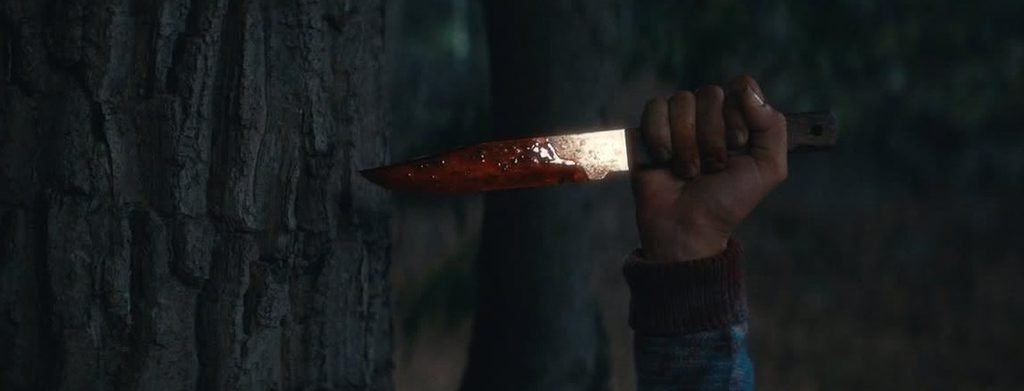
When we found out that the government had been well aware of Pennywise for decades and was hoping to (of course) weaponize the creature’s fear to win wars in It: Welcome to Derry, or that Dick Hallorann’s “shine” helped track it down to begin with, it was accepted and never to the detriment of It: Chapter 1 or 2, much less Kubrick’s The Shining. By all accounts, fans and critics alike embraced these prequel-ized “revelations” as just part of the building blocks that led to a bigger picture in shows that expanded upon pre-existing material. If, as fans, we can accept that Jason went to Hell (and back), battled telepaths, exists in the same world as Elm Street, or traveled to fucking space of all things, I think the idea of his DNA being manipulated in utero is hardly the most outlandish take the franchise has given us. Nothing that occurs in Crystal Lake’s eight-episode run derails anything that would come in the 12 films that take place after these events. If anything, it provides answers and exceptions to plot holes we’ve shrugged off for years.
Remember watching The Cabin in the Woods and it suggesting that every nightmarish horror scenario we’ve seen in cinema was orchestrated by a deity-appeasing lab of government officials worldwide, sitting atop a literal warehouse of monsters? It added a zeal to every horror film cliché and misfire without putting one dent in the fender of any movie you and I enjoyed growing up. The same can be said here, and I think, for the most part, people are warming up to this idea. As of this writing, Crystal Lake holds a 76% on the Tomatometer, a franchise high, and a very telling 87% on the Popcornmeter of fan reaction.
And why shouldn’t it? Crystal Lake is the first Friday the 13th project in 17 years, and with it come eight brilliantly titled episodes that are heaped with franchise Easter eggs and callbacks, wonderful performances by the entire cast, not one playing it for camp but giving it the sincerity of a prime-time drama, and, of course, buckets and buckets of chunky, red gore that the series has made a signature for over 40 years. I find it ironic that we can go back and watch movies from the ’80s, trimmed down from an “X” rating by the MPAA for things as trivial as how many spurts of blood can be seen erupting from a neck or how many whacks someone can take in a sleeping bag against a tree, and here’s a television show 40 years later that contains so much facial mutilation by machetes, meat tenderizers, bare hands (a fucking rad throwback to the eyeball “pop” from Part III) and, in one showstopping moment, a medical drill. The crimson spray is on full display, folks. Nothing is held back.
But again, none of the work was played for laughs or with a sly wink-and-nod to the audience. Cardellini plays Pamela with such sincerity and boiling rage that you not only feel every bit of her heartbreak in losing her “special, special boy,” but feel positively vindicated when she allows her wrath to scorch the Earth. One scene in the local “Beef Pit” BBQ restaurant is so satisfying I had to rewind it and watch it again. It’s beautiful, it’s justified, it’s … fucking sick. I loved it.
The new characters, like Chief Brooks and his aspiring journalist sister Briana (played by Devin Kessler) are fantastic new additions to the franchise, proving in his case that not all authority figures in Crystal Lake are idiots, and in hers that this quiet, unassuming town is hiding some dark, twisted secrets. Cameron Scoggins as a young Deputy “Dorf” Dorfman begins as comic relief, but by season’s end shows his medal during a tense shootout in the police station, cementing him as the future no-nonsense officer in the original film “who won’t stand for any weirdness out here”. Gwendolyn Sundstrom as Jason’s sole friend Grace is played with a complexity and darkness far beyond her years, and will hopefully play a larger role should the series continue, and Nick Cordileone does a fantastic job as “Crazy” Ralph, who also is given a backstory in hardship and mental illness that neither mocks, nor trivializes the role Walt Gorney made iconic, and instead, shows a sympathetic, if not damaged individual who probably has more in common with young Jason than anyone would have guessed.
Add to this a new opening theme by franchise composer Harry Manfredini, who finds a new spin on classic musical themes to make an opening credit song that feels fresh and new, but undeniably classic and familiar, combined with episode titles that reference several of the films, and an opening title that shatters the glass like days of old, and you get something that is unquestionably made by fans for fans.
Cardellini holds all of this together with her amazing performance, switching from warm and caring, to gnashing rage on a dime, somehow becoming soothing and startling in ways only a truly broken character like Pamela Voorhees could. A rampage through a hippie camp wearing her signature gray sweater is a top-notch sequence of harrowing violence and madness that’s as gory as it is chilling and featuring deaths that all old-school fans will appreciate in their familiarity.
But the MVP right now, and across all social media is Callum Vinson as Jason, who seems to have won over even the hardest of naysayers. There have been criticisms of Crystal Lake “humanizing” Jason, but anyone who has paid attention knows that he’s always been a victim first. Like his mother (and Frankenstein’s monster, as compared earlier), Jason became a monster after years of mistreatment from people who were unaccepting of anyone “different”. We’ve “met” young Jason a number of times, but Vinson is given room to paint an as-yet-unseen picture of the boy behind the deformities. Everyone who has played Jason has brought something unique to the role. Steve Dash gave him a curious simplicity that made him scary, yet hesitant. Richard Brooker made Jason quick, ghastly, and relentless. Ted White added urgency and anger to the character. C.J. Graham as the first “undead” Jason gave him a detached, almost “workman” like focus to his carnage, while Kane Hodder – arguably the most recognized and longest tenured Jason – brought a rage and intensity that set him apart from all the others. Both Derek Mears and Ken Kerzinger allowed Jason to seem more sympathetic and humanistic.
Callum Vinson, however, does something unseen and unheard of for the series, and gives Jason humanity. He was never a monster, but someone given an unfair shake from the womb, and by no choice of his own, shoved into a world of cruelty, judgment and hatred, while navigating a molecular alteration that he didn’t ask for, which caused him seizures, rapid growth, and eventually, a burning, uncontrollable need to kill. The early scenes with Callum are genuinely heartbreaking, and his soft voice, small, crooked smile, and hopeful eyes give young Jason just the right amount of sadness and pathos to allow you to not only hurt when he’s bullied, but to feel for him when we know what all of this is going to lead to. It’s a subtle, effective performance, and one that I know will cement him as one of the best “Jasons” in the franchise. The internet is already abuzz with fans showing reaction videos and reviews championing this new iteration, and how it’s moved them, and I think it’s one of the sweeter and most unexpected aspects to come from this new series.
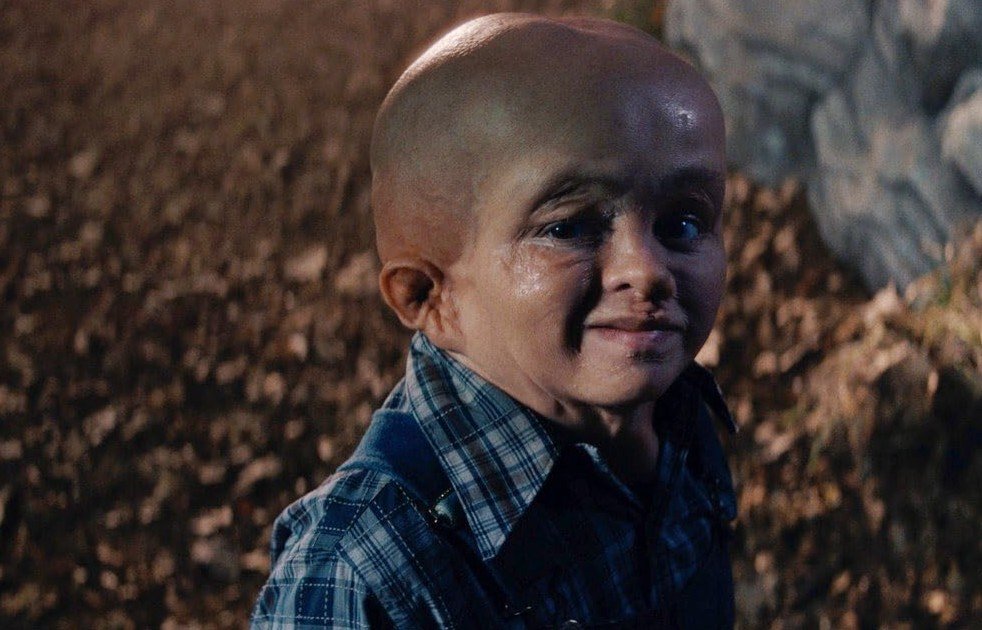
Victor Miller, the original writer of Friday the 13th, once said in an interview that Ms. Voorhees was “the mother I never had”, hinting without detail at a childhood wrought with sadness, and that he created the mother who would go above and beyond to protect her son in Pamela. Here, in Crystal Lake, Cardellini and Vinson get to play the mother and son that he envisioned. In the poignant final shot of Episode One, as fireworks light up the night sky, Pamela “feels” a small hand reach out and hold hers. It’s Jason. Still small. Still innocent. Smiling up at the mother who would do anything for him.
They stand together in spirit, in the woods – now his woods – and watch as a black bear devours the corpses of Pamela’s first victims.
Hey…it’s Crystal Lake. Here, you steal happy moments where you can.
Really detailed review. Made some great points about how this show adds depth to the franchise.