
Move Over, Kevin McCallister…
For years, the internet’s favorite pop-culture conspiracy theory has claimed that the booby-trap-obsessed child from “Home Alone” grew up, traded his paint cans for reverse bear traps, and changed his name to John Kramer (The killer in “SAW“). It’s an amusing thought exercise, sure. A kid who takes sinister joy in scorching micro-villains with blowtorches could plausibly grow up into a sadist in a pig mask.
However, as a writer and connoisseur of all things macabre, I’m here to tell you that the internet has been looking at the wrong blonde trap-enthusiast.
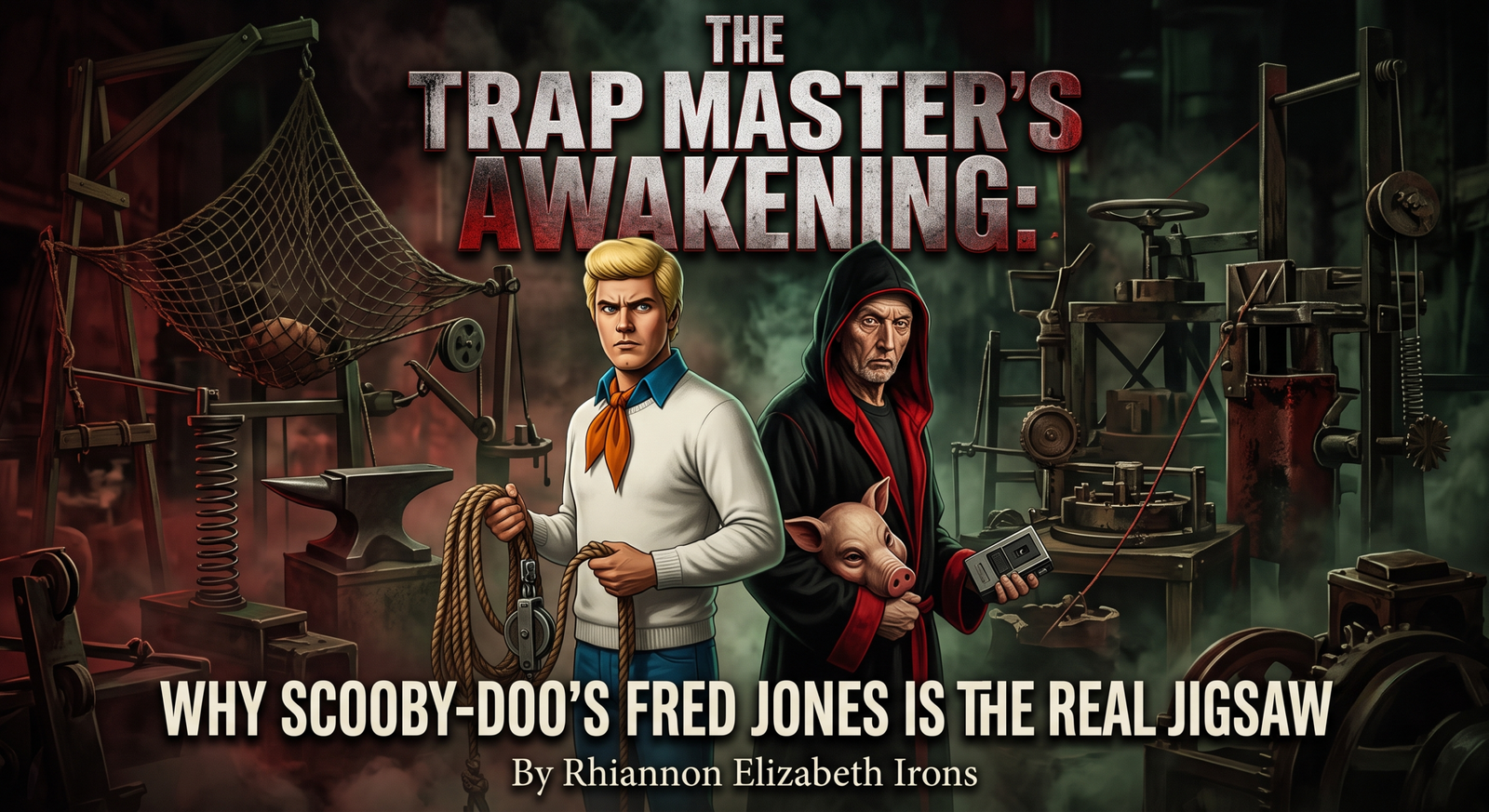
My name is Rhiannon Elizabeth Irons, and I am here to present a far more terrifying, meticulously evidenced truth: Fred Jones, the ascot-wearing leader of Mystery Incorporated, is the true architect of the SAW franchise.
When you strip away the bright 1960s animation, the laugh tracks and the canned groovy tunes, the evidence is overwhelming. Fred Jones isn’t just a harmless teenager who drives a van. He is a criminal mastermind in training, displaying every hallmark, methodology, and philosophy of Jigsaw long before John Kramer ever engineered his first test.
Phase I: The Obsession With Rube Goldberg Architecture
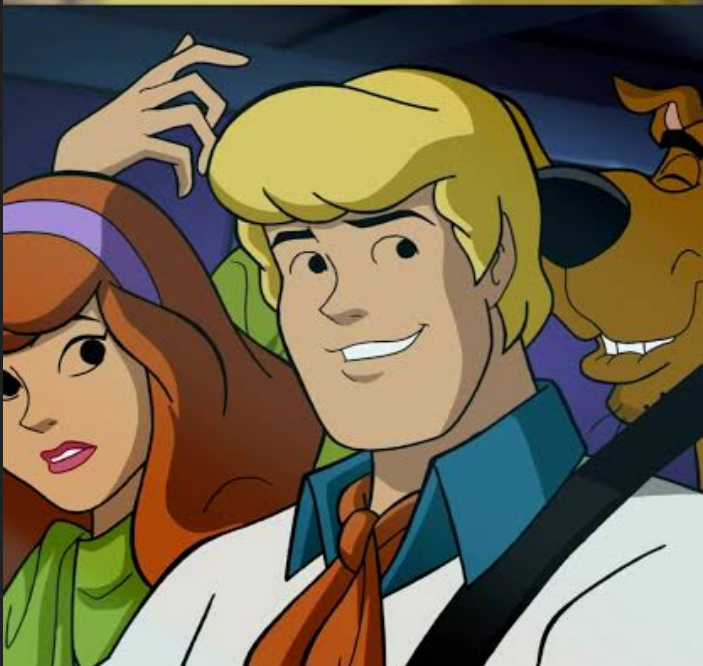
To understand the connection, we must first look at the mechanics of the game. John Kramer isn’t an opportunistic killer; he is an engineer of convoluted morality tests. His traps rely on complex, multi-stage physics: pulleys, tripwires, gears and precise timing.
Now, look at Fred.
In every single iteration of the franchise, from Scooby-Doo, Where Are You! to A Pup Named Scooby-Doo and the darker, serialized Mystery Incorporated, Fred’s singular, consuming personality trait is his obsession with building traps. While Velma analyzes clues and Daphne looks for context, Fred is off in a corner rigging an elaborate system of ropes, nets, anvils and falling cages.
Fred doesn’t just set a simple snare; he designs ridiculous, over-engineered Rube Goldberg devices. Why? Because to Fred, the catch isn’t what matters. It’s the craft. It is the theatrical execution of the mechanism.
Is it really so hard to imagine an aging Fred Jones, disillusioned with catching real estate developers in rubber masks, realizing his architectural genius was being wasted on simple nets? The transition from a net triggered by a bowling ball to a tripwire-activated shotgun collar is purely a change in materials, not philosophy.
Phase II: The Use of Sacrificial Pawns
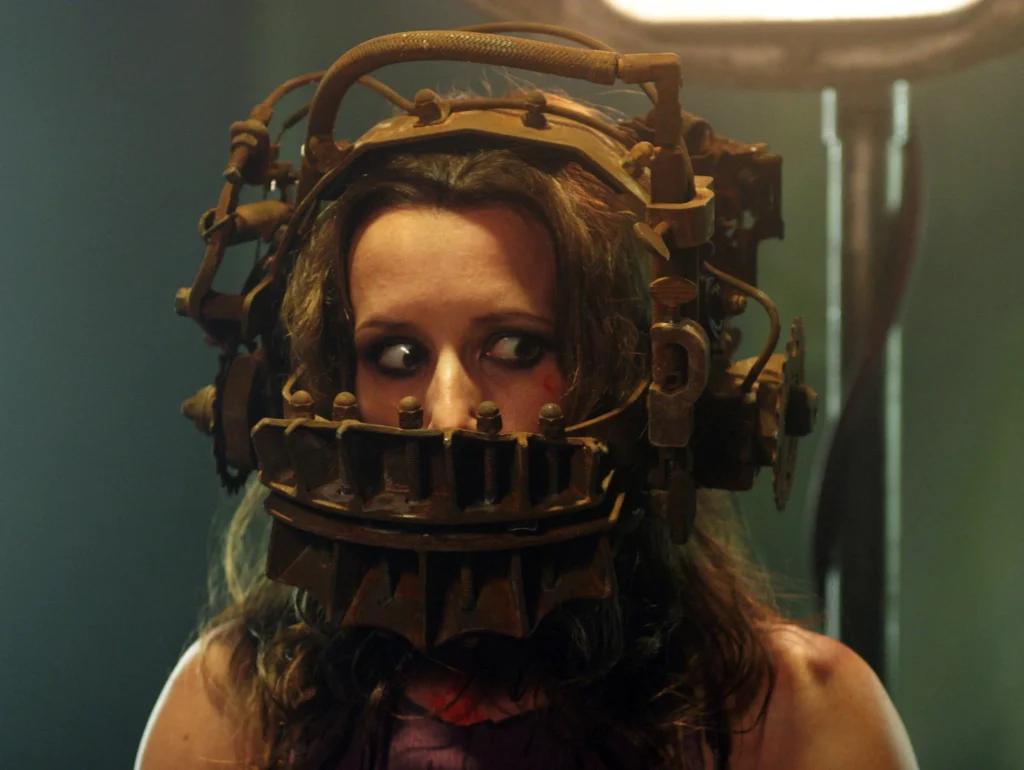
One of Jigsaw’s most distinctive traits is that he rarely puts himself in direct danger during the execution of his games. Instead, he uses proxies, apprentices and forced participants to guide the victim into position.
Cast your mind back to almost every episode of Scooby-Doo. Who actually acts as the live bait? It is never Fred.
Fred stands comfortably in the shadows, hand on the lever, while he sends Shaggy and Scooby, the two most vulnerable, terrified members of the group, directly into harm’s way.
He bribes them with Scooby Snacks, manipulating their basic survival instincts to force them into life-threatening situations. They run through dark hallways, chased by monstrous apparitions, all according to Fred’s exact blueprint, solely to lure the target into the designated “trap zone.”
This is vintage Jigsaw behavior. John Kramer constantly manipulated the weaknesses of others, their addictions, their fear, their desperation, to push them into the precise physical location necessary for the trap to spring. Fred Jones perfected this psychological leverage in his teenage years. Shaggy and Scooby weren’t his friends; they were his Amanda Young and Mark Hoffman, willingly stepping into the crosshairs because Fred knew exactly which buttons to push.
Phase III: The Philosophy of “Unmasking” the Truth
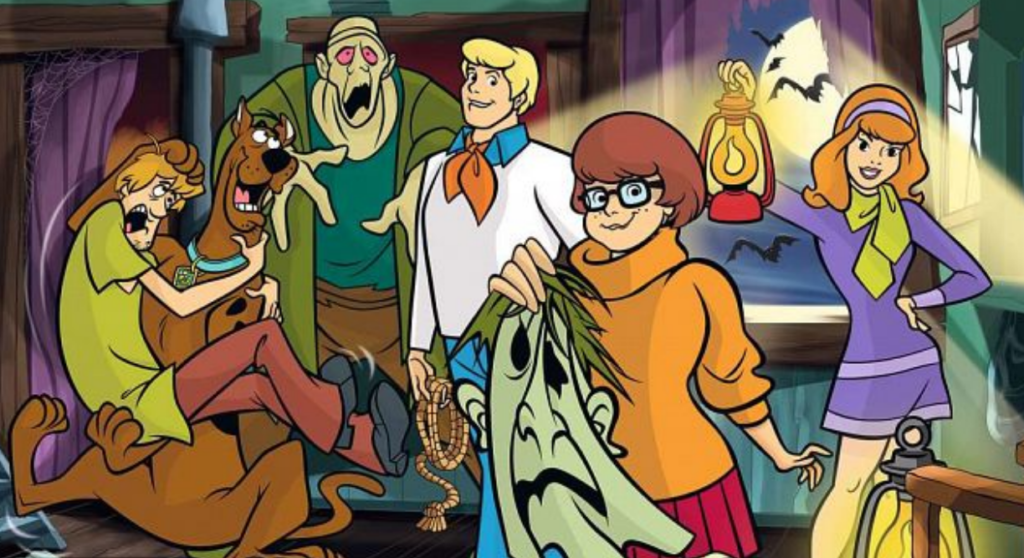
The most compelling link between Fred Jones and Jigsaw isn’t just how they operate; it’s why they operate.
John Kramer’s entire crusade stems from a profound hatred of hypocrisy. His victims are people who take life for granted, lie, cheat, or pretend to be righteous while harboring dark, corrupt secrets. Jigsaw’s traps are designed with a specific moral imperative: to force the subject through an agonizing ordeal so that their true nature is revealed. The trap, in essence, strips away the facade.
It unmasks them.
What is the climax of every single Scooby-Doo story? The villain is caught in Fred’s trap, surrounded by the group, and Fred reaches down to physically yank off the mask.
“Let’s see who this ghost really is…”
For decades, Fred dedicated his life to exposing frauds, corrupt businessmen, greedy land developers and fraudsters who wore terrifying faces to exploit the fears of the innocent. Fred lived in a world where people constantly pretended to be something they were not.
Eventually, a cynical mind forced to unmask low-level swindlers day after day is bound to fracture. What happens when Fred grows up and realizes that the worst monsters aren’t wearing rubber masks? What happens when he realizes that normal, everyday citizens walk around every day wearing invisible masks of deceit, greed and ungratefulness?
The evolution is terrifyingly natural. The pull of the mask string becomes the pull of a trap door lever. The desire to reveal a fake monster becomes the desire to reveal a human’s true will to live.
The Final Piece of the Puzzle
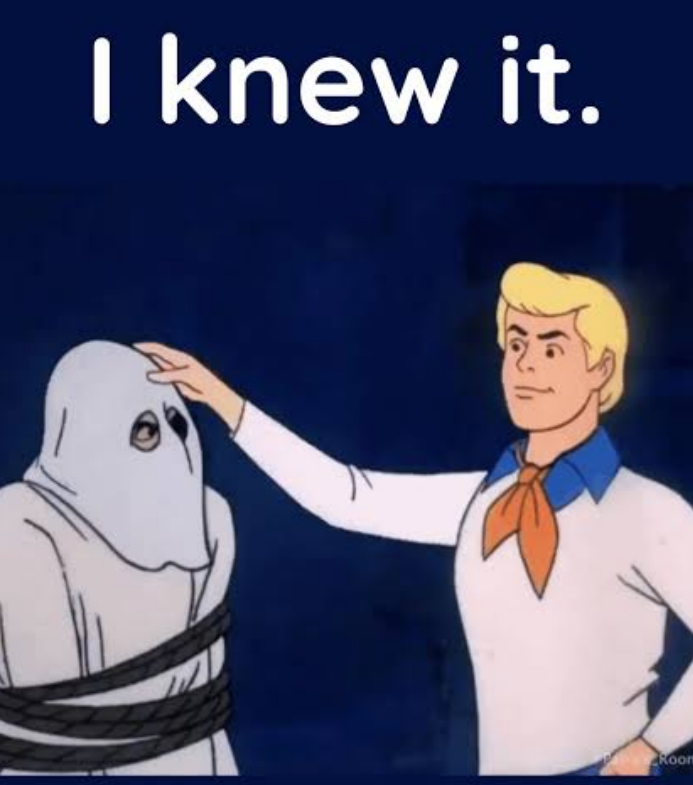
When you look at the evidence, the argument for Kevin McCallister pales in comparison.
Kevin built improvised defenses in a moment of panic to protect his home. Fred Jones made trap construction his life’s passion, built a team to herd targets into his mechanisms, and dedicated his youth to the singular moral obsession of unmasking human corruption.
So, the next time you put on a horror classic and hear that iconic tape-recorded voice ask, “I want to play a game,” don’t picture a bitter old engineer in a workshop.
Picture a man in an orange ascot, leaning against a teal and green van, smiling softly as he prepares to pull the rope.