
G’day! If you thought dodging razor gloves, machetes and Bowie knives was tough, wait until you meet an entity that hands you your worst nightmare wrapped in your fondest desire.
I’m Rhiannon Elizabeth Irons, horror analyst, genre enthusiast, and someone who knows better than to ask anyone for a favor without reading the fine print. Today, we’re stepping out of the classic slasher realm and into the surreal, blood-soaked world of 1997’s Wishmaster to break down one of the nineties’ most criminally overlooked monsters: the Djinn. Played with magnificent, theatrical malice by Andrew Divoff in the first two installments, this ancient creature doesn’t need to chase you through the woods or stalk your dreams. He just needs you to open your mouth and ask for something. Grab a cold drink, keep your desires to yourself and let’s explore why this ancient cosmic menace remains a masterclass in sadistic irony.
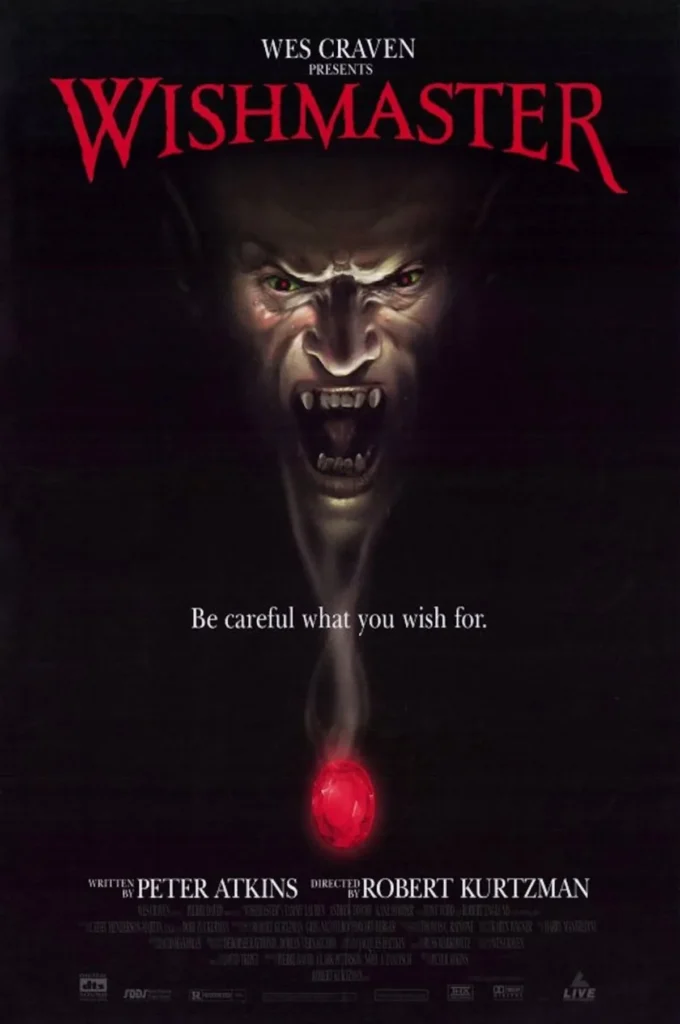
When director Robert Kurtzman and writer Peter Atkins unleashed Wishmaster in 1997, executive-produced by Wes Craven himself, horror was in the middle of a post-Scream meta-revival. While audiences were obsessing over self-aware teens in ghost masks, Wishmaster quietly crafted an entirely different kind of monster: an ancient, demonic force that weaponized humanity’s inherent greed, vanity and ambition against itself.
The Djinn isn’t a mindless brute or a silent stalker. He is an articulate, immortal cosmic entity whose power is absolute, yet entirely dependent on human agency. He can grant literally anything: wealth, beauty, health, revenge. But every wish comes with a catastrophic, literal and darkly comedic catch.
The Biological Trap: Weaponizing Human Desire and Ambition
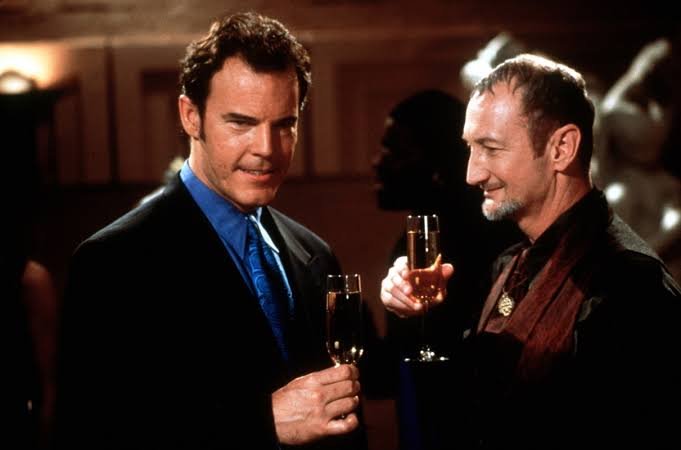
The terror of the Djinn doesn’t begin with physical violence; it begins in the quiet, desperate corners of the human ego.
Unlike traditional killers who must hunt down unwilling prey, the Djinn’s trap is built entirely on consent. He feeds on our deepest, most selfish urges. In a modern world driven by instant gratification, his sales pitch is irresistible. He doesn’t force your hand; he simply asks a polite, encouraging question: “What is your wish?”
Once a wish is spoken aloud, human free will becomes the instrument of its own destruction. The Djinn takes the figurative language, casual hyperbole and secret desires of his victims and executes them with uncompromising, hyper-literal precision. If you wish for your beauty never to fade, he turns you into a mannequin. If you wish for an enemy to get cancer, he accelerates it to explode them in seconds. Your own imagination and desire become the blueprint for your execution.
WATCH THE FIRST SCENE IN WISHMASTER BELOW
Ancient Shadows: The Dark Middle Eastern Mythology of the Jinn
While Western pop culture often sanitizes djinn/genies into friendly, blue cartoon helpers granting three wishes, Wishmaster tapped directly into older, darker Middle Eastern folklore and Islamic mythology:
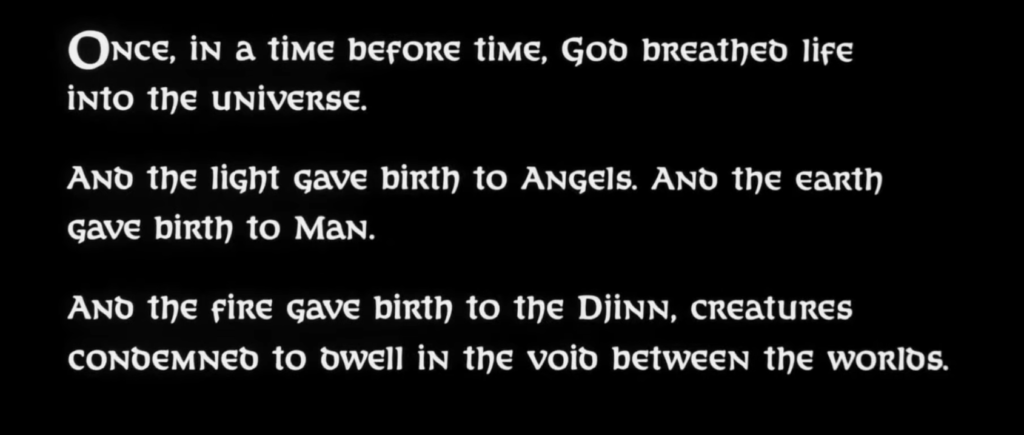
• The Unfettered Race of Smokeless Fire: In traditional lore, the Jinn are a race of beings created from smokeless fire, existing alongside humanity but possessing immense, preternatural abilities. Unlike angels, they possess free will, and the malevolent among them, the Ifrit or Marid, are predatory entities that resent humanity’s place in creation.
• The Fire Opal Prison: According to the lore crafted for the film, the Djinn was trapped in a red fire opal by a Persian sorcerer during the reign of King Solomon. Releasing him requires a mortal to awaken the gem, and granting three wishes to that unearther will open a gateway to release the entire race of Djinn to enslave the Earth.
• The Faustian Bargain: The Djinn embodies the classic pact with the Devil. He plays the long game, using charm, manipulation and legalistic exactitude to trick mortals into surrendering their souls or their lives for short-term gain.
The Architecture of Fear: Regal Elegance and Fleshy Abomination
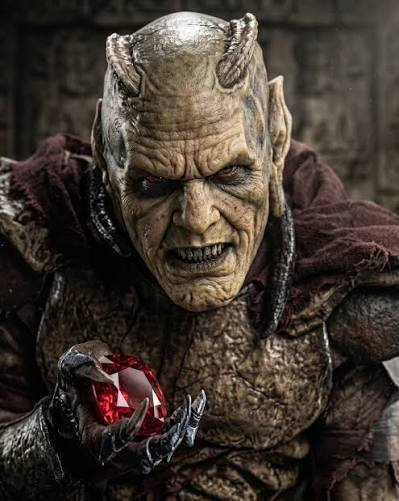
The visual identity of the Djinn is a brilliant exercise in duality, brought to life through Andrew Divoff’s legendary performance and top-tier practical creature effects.
• The Human Shell (Nathaniel Demerest): When walking among mortals, the Djinn assumes the guise of an impeccably dressed, suave gentleman named Nathaniel Demerest. With a smooth, velvet voice, sharp suits and an air of aristocratic calm, he looks like a high-end art dealer or sophisticated salesman. Divoff’s sinister smile and subtle, reptilian head tilts constantly signal the predatory monster hiding beneath the polished veneer.
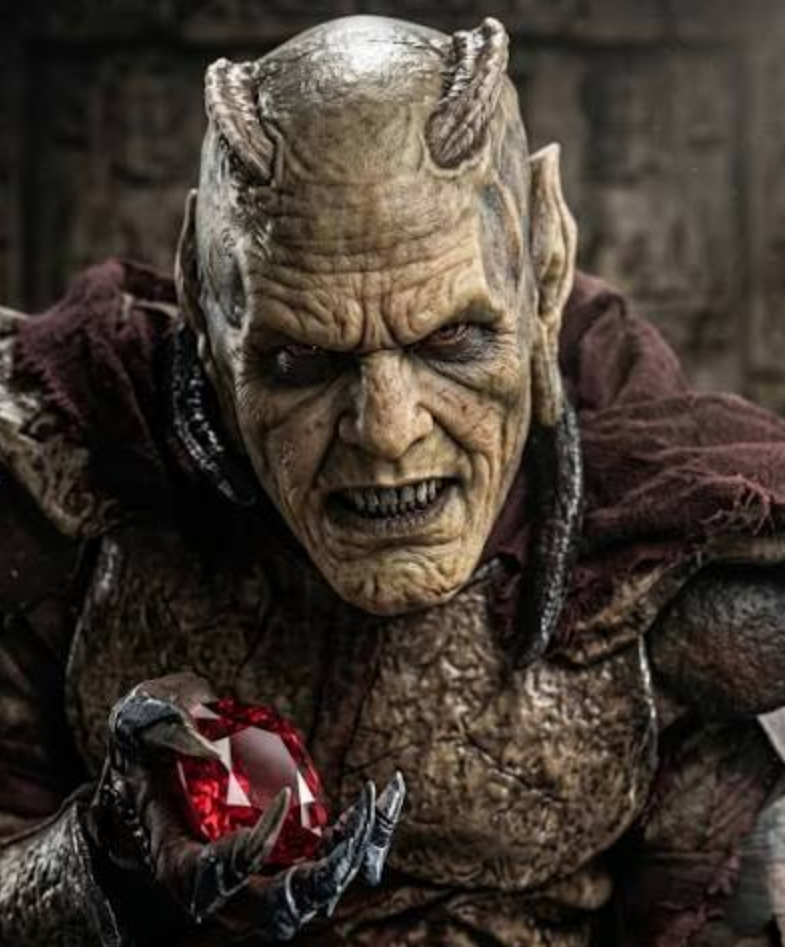
• The True Form: Stripped of his human disguise, the Djinn’s true appearance is a grotesque, green-skinned hybrid of demon and reptile. Featuring curled horns, exposed muscular structures, glowing yellow eyes and tendrils extending from his scalp, his design screams ancient, unholy power. He doesn’t hide behind a mask because his true face is an assertion of cosmic dominance.
A Timeline of Poetic Cruelty: 10 Memorable Wishes & Kills
What makes the Wishmaster franchise a favorite among gorehounds is its sheer creative cruelty. Every kill is a custom-designed practical effects spectacle built around a pun or a literal interpretation of a victim’s words.
1. The Skeleton Burst (Wishmaster – 1997)
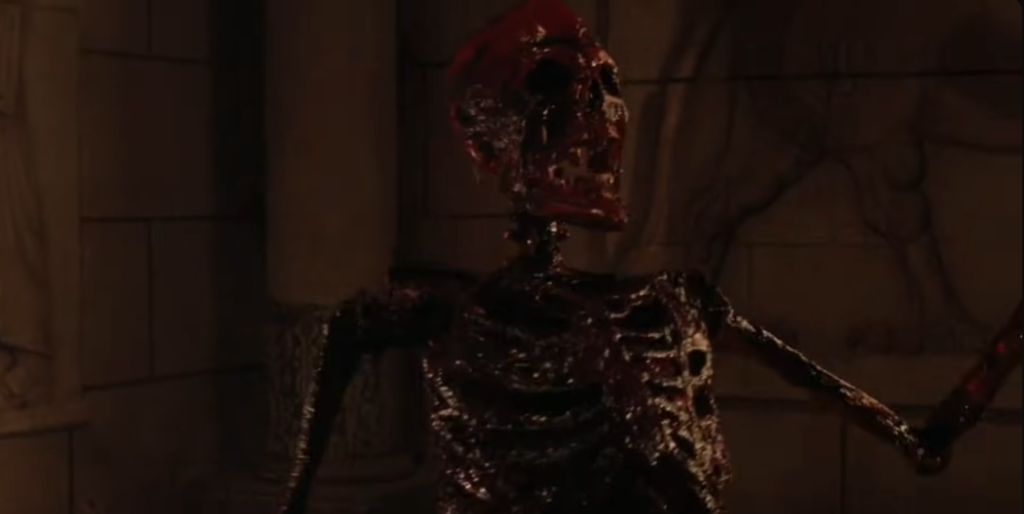
• The Wish: During a flashback to ancient Persia, a courtier wishes to see “wonders.”
• The Kill/Execution: The Djinn obliges by causing the man’s entire skeletal system to violently tear its way out through his skin and muscle, leaving his discarded flesh behind while his skeleton walks on its own.
2. The Pharmacist’s Cancer (Wishmaster – 1997)
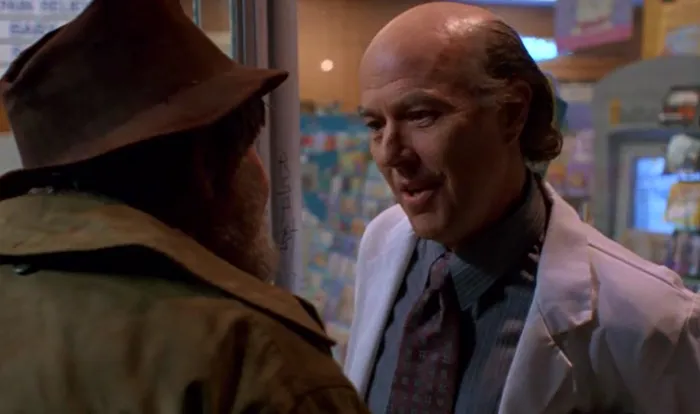
• The Wish: After getting into a heated argument with a condescending pharmacist, a homeless man wishes that the pharmacist would get cancer and die.
• The Kill/Execution: The Djinn grants the wish instantly by spawning hyper-mutated, aggressive cancer cells inside the pharmacist that grow so fast his body erupts from the inside out within seconds.
3. Fused Eyelids (Wishmaster – 1997)
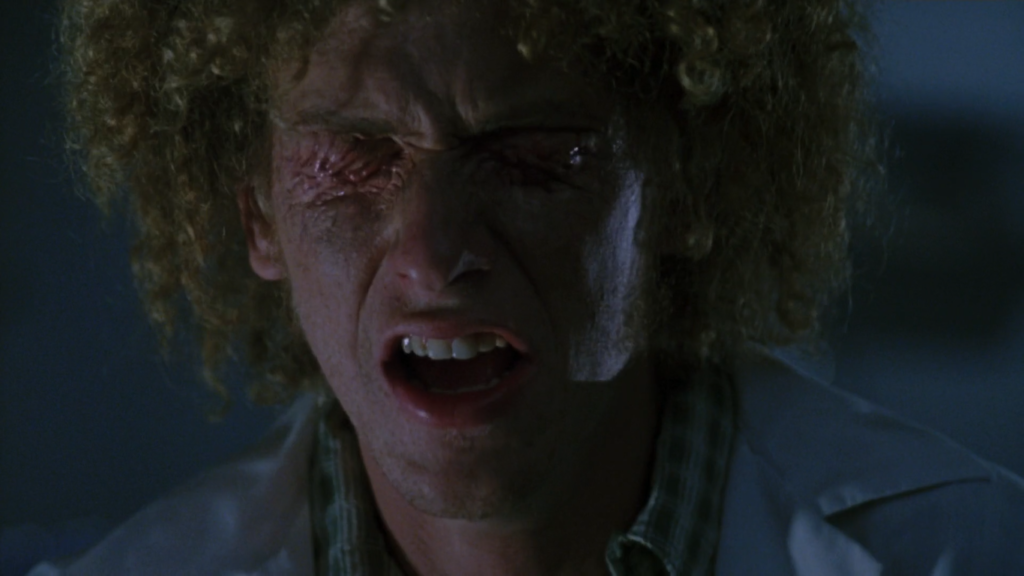
• The Wish: In the campus morgue, a terrified medical student watching the Djinn skin a corpse’s face tells him she “doesn’t want to see this.”
• The Kill/Execution: Taking her words completely literally, the Djinn smiles and instantly fuses her eyelids completely shut with seamless, solid skin, permanently blinding her.
4. The Mannequin Transformation (Wishmaster – 1997)
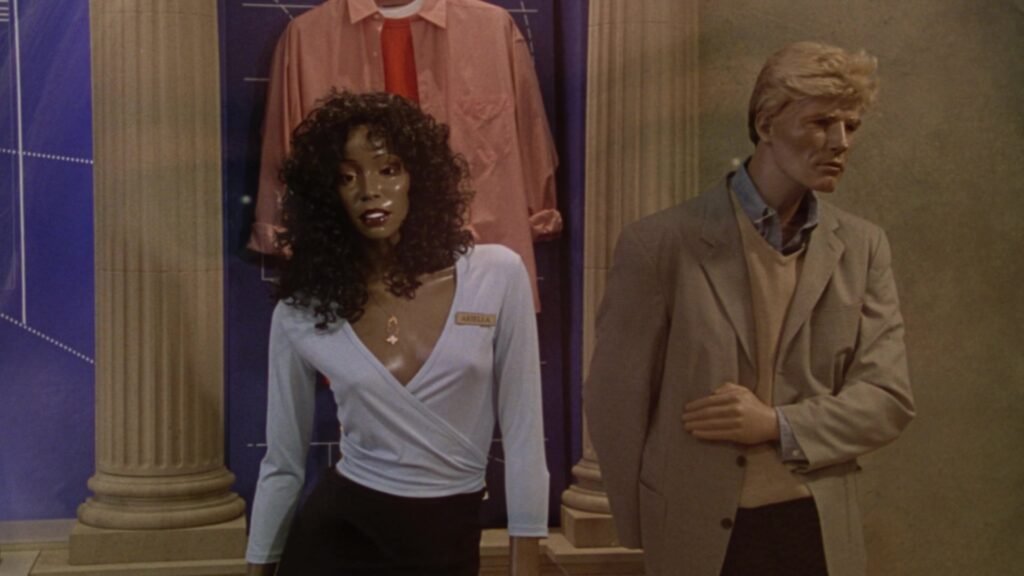
• The Kill/Execution: A vain clothing store clerk wishes that her beauty would “never fade.” The Djinn grants her eternal, flawless youth by freezing her body solid and transforming her skin into smooth, lifeless plastic, turning her into a literal store mannequin.
5. The Lawyer’s Payout (Wishmaster – 1997)
• The Wish: The protagonist’s boss, Raymond Beaumont, wishes for a million dollars to clear up a financial crisis.
• The Kill/Execution: Moments later, his mother dies in a sudden, horrific plane crash, leaving him a life insurance policy valued at exactly one million dollars.
6. The Escape Act Water Tank (Wishmaster – 1997)
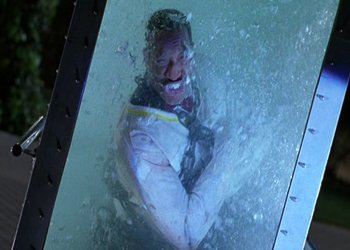
• The Wish: Door guard Johnny Valentine, played by Tony Todd, complains about his dead-end job and tells the Djinn he wishes he could “escape.”
• The Kill/Execution: The Djinn teleports Johnny into a locked, water-filled escape tank, tauntingly telling him, “Houdini did it in two and a half minutes,” as he leaves him to drown.
7. The Museum Party Massacre (Wishmaster – 1997)
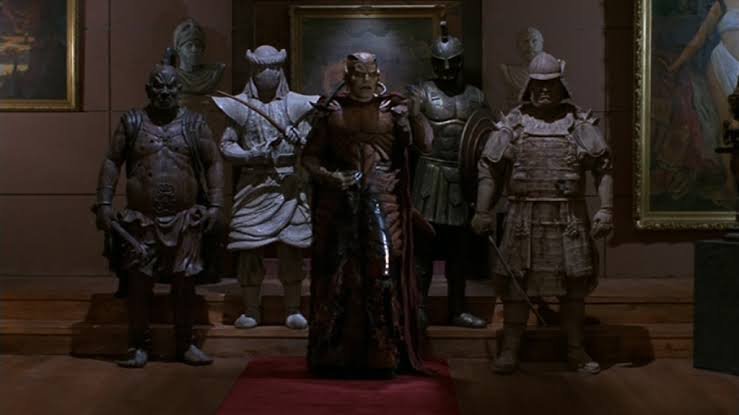
• The Wish: Raymond Beaumont wishes for his high-society museum gala to be “unforgettable.”
• The Kill/Execution: The Djinn turns the party into a practical-effects war zone. Samurai, ninja and Hun statues come alive to hack guards to pieces; Jack the Ripper emerges from a wax display; piano wire decapitates guests; stone snakes smash faces; and guests are burned alive or trapped inside paintings, a bloody apocalypse that is only undone when Alex uses her final wish to prevent dockworker Mickey Torelli from being drunk on the job, erasing the ruby’s unearthing entirely.
8. The Jailbreak Bar Squeeze (Wishmaster 2: Evil Never Dies – 1999)
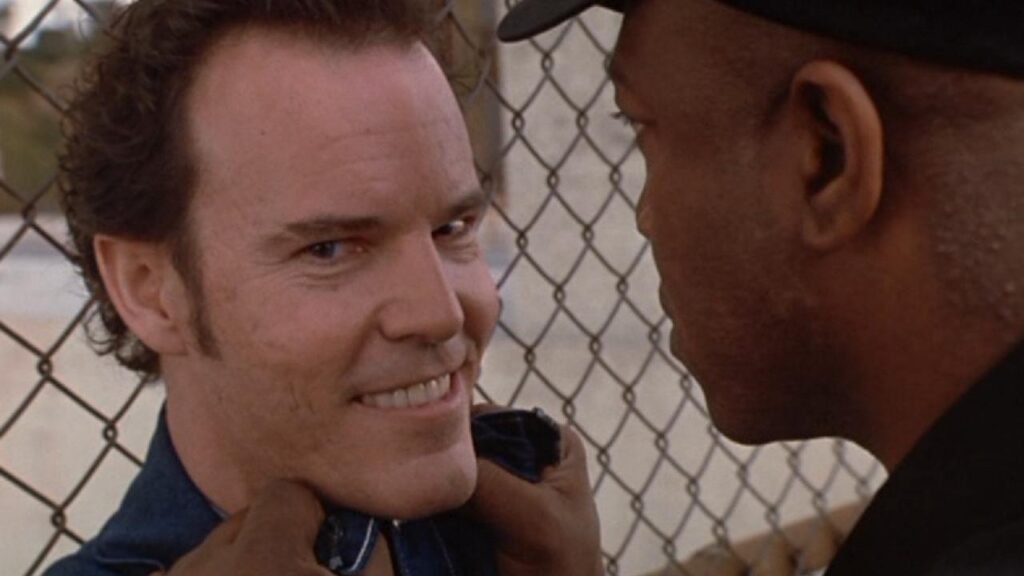
• The Wish: A prisoner wishes to “walk right through those bars.”
• The Kill/Execution: Rather than making the iron bars intangible, the Djinn turns the prisoner’s body into soft, jelly-like tissue, violently forcing his body through the narrow gaps like meat through a grinder.
9. The Attorney Directive (Wishmaster 2: Evil Never Dies – 1999)
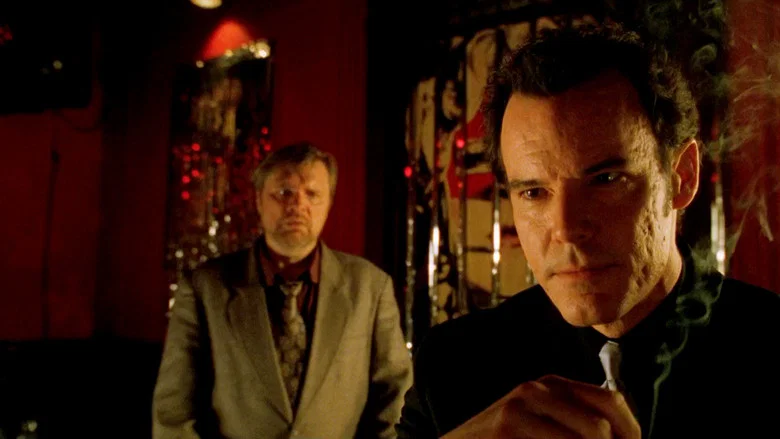
• The Wish: An enraged inmate, furious at his sleazy defense attorney during a negotiation, wishes for his lawyer to go “fuck himself.”
• The Kill/Execution: The Djinn turns the crude insult back on the attorney, magically contorting his body into impossible, bone-snapping origami shapes until he literally fulfills his client’s directive.
10. Casino Roulette & Bladed Wheels (Wishmaster 2: Evil Never Dies – 1999)
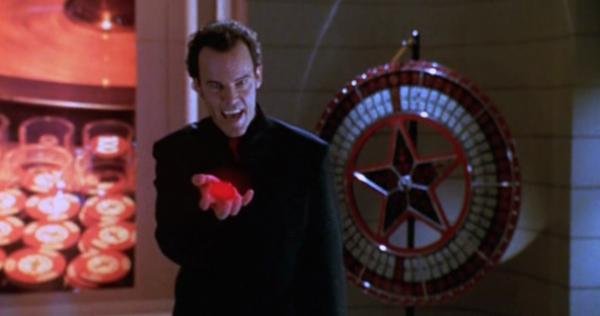
• The Execution: During the high-stakes casino sequence, the Djinn weaponizes gambling equipment against the patrons. He manipulates a roulette wheel to launch heavy metal balls like bullets, striking three patrons dead, while bladed roulette wheels spin wildly out of control to dismember two others, a gorefest that only ends when Morgana uses the fire opal to banish the Djinn and undo his rampage.
Why Horror Is Better Off With the Djinn
The Djinn endures as a fascinating horror icon because he subverts the core dynamic of the slasher subgenre. Most villains represent an external threat breaking into your safe space. The Djinn is the ultimate mirror: he sits back and lets humanity’s own flaws, greed and lack of foresight do all the heavy lifting.
By combining dark folklore, theatrical charisma and some of the most inventive body-horror kills of the late 1990s, the Wishmaster series delivered an unforgettable, bloody fable. The scariest monsters aren’t always the ones chasing you down a dark alley; sometimes, they’re the ones standing right in front of you, smiling politely and asking what your heart desires most. And my heart desires a reboot of the franchise with Andrew Divoff returning to the role.