

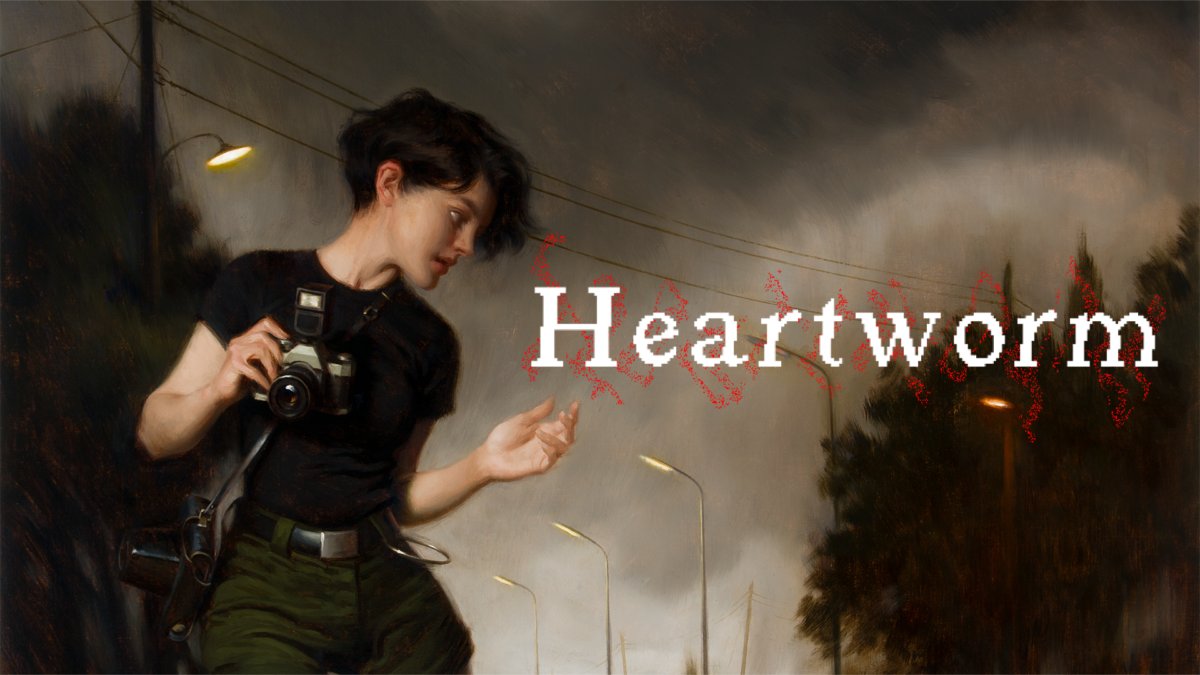
Earlier this month we mentioned that 2025 throwback survival horror game Heartworm finally made its way to consoles. Our friends over at DreadXP were kind enough to send us a copy for the Nintendo Switch 2.
Developed by solo developer Vincent Adinolfi and published by DreadXP. This game is definitely interesting upon first glance cause it borrows a lot from its inspirations and does very little to hide it. We all know the old saying; imitation is the sincerest form of flattery. And when it comes to Heartworm, most PSX horror games should be blushing.
Heartworm is more a less a “greatest hits” of other games from the late 1990’s into the early 2000’s. But does it use those inspirations to carve out its own identity, or does it just become a failed imitation standing on the shoulders of giants? Let’s dive headfirst into this forgotten world of loss, grief and death to find out.
Story
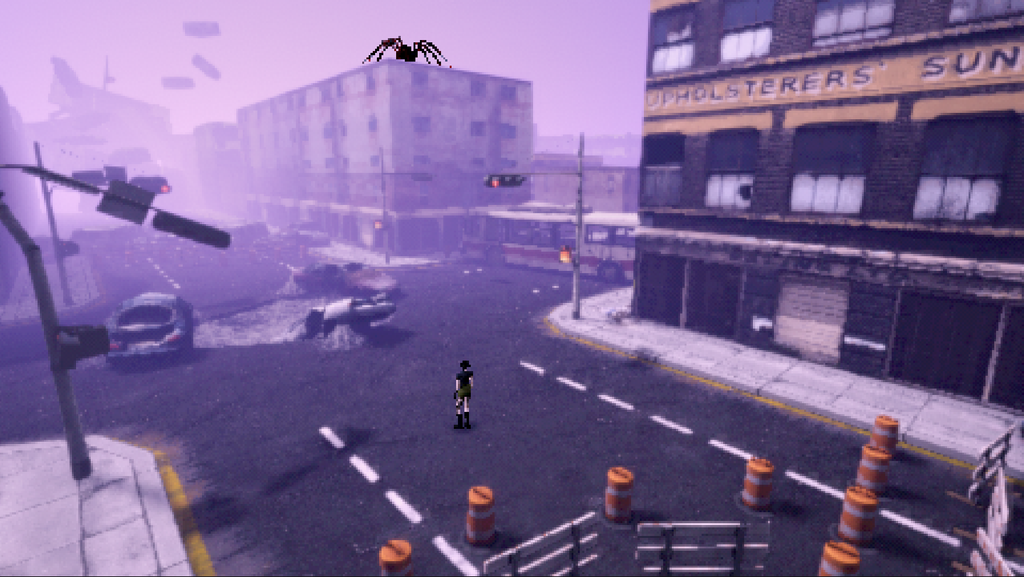
You play as Sam, a young girl who is obsessed with death. Since the death of a loved one she has been desperately seeking answers. Are the dead truly gone? Can you communicate with those who have crossed over? As these questions take root in her mind, she stumbles upon an online forum. The forum tells of a mythical place where the living can travel to venture into the realm of the dead. A place where the answers to her questions and more must be found. Only issue is no one who has dared entered has ever returned to inform anyone what they found. They just simply disappeared.
While most would never entertain the idea of risking their own life in search of answers impossible for the living to comprehend, Sam will not be deterred. She leaves behind a letter as nothing more than a declaration of intent and goes forth into the realm of the dead. To possibly never return.
Heartworm’s story is quite possibly its strongest asset. A person trying to understand the weight of grief and dealing with what that loss leaves behind has so much potential to truly be a heavy story few games have tackled. In a nutshell this game tells a heartbreaking story of loss, grief, guilt and the pursuit of acceptance. Now anyone who has lost someone close to them knows, acceptance is the hardest part. For some they think they just need to accept the loss of the loved one but can never understand the loss of their former self. The person they were with those they loved; this person is also gone. Life no longer feels normal or safe. There is a black hole that feels all too inviting. This game explores the idea of what could happen when you don’t want to leave that black hole.
The main issue with the narrative in Heartworm is not the heavy emotional content, but rather the lack in its execution. I played the game in the recommended “challenged” setting and still managed to beat the game just over three hours. This obviously does not count the amount of times I died and continued, but we’ll get to that later. A subject matter as bleak and complex as death needs more character development and ultimately time to build itself properly.
Heartworm never really gives us the opportunity to explore Sam’s relationship with the deceased. How this person shaped her, or why they meant so much to her that she would risk everything with zero regard for herself. That’s a love that deserves to be known in more than just simple exposition and short voice over dialog.
The game also never goes deeper than the surface level with the areas you’re transported to. The game does a great job of presenting itself as a fever dream. Reality as we know it is not real here. Places and items we take for granted in our world do not behave the same way as in this other world. But as you traverse the houses, rooms, and dimly lit areas, we get nothing more than a passing understanding of what this place means to Sam.
The same goes for the enemies you encounter in the game. If they are meant to convey a connection to Sam in some way, this is communicated sparingly or not at all. Most of the enemies are just static people or strange creatures with no real introduction or depth to their existence in the world. They just attack Sam, and we just have to deal with it.
Atmosphere
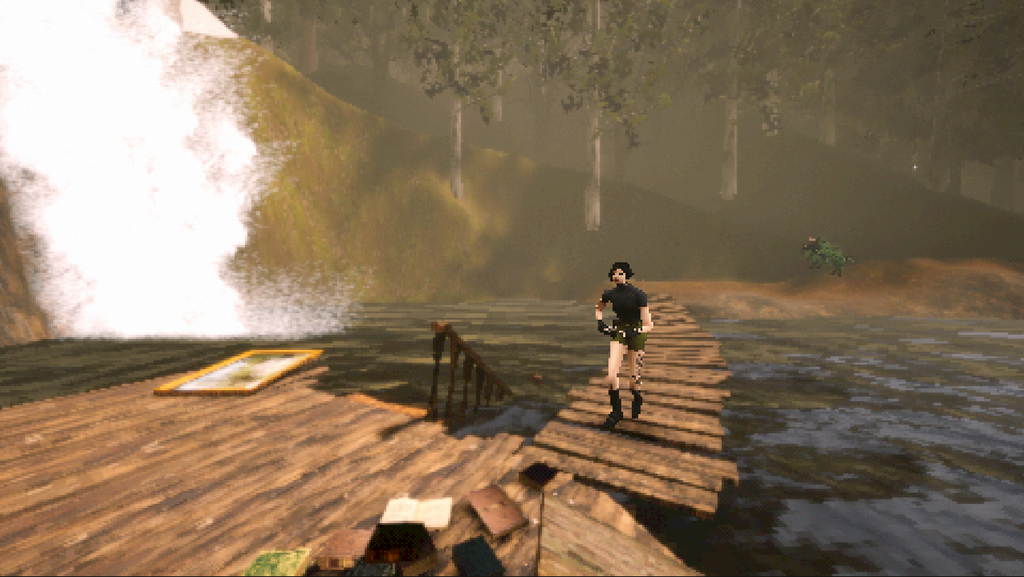
Early in the game, the atmosphere does a good job of making you feel like you shouldn’t have passed over to this world. You are the foreign entity and the other world, and its inhabitance don’t like you being there. With the fever dream presentation, the world has a bleak and oppressive feel. A consistent feeling of foreboding and as if you’re being watched. Its labyrinthine halls and pitch-black corridors do little to help you with this feeling. You have no idea what waits for you when you turn a sharp corner or open a door. With each flash of your camera light just giving you seconds of illumination, the ever-closing darkness can become suffocating.
Unfortunately, for seasoned horror gamers, this feeling ends up mutating itself into eye-rolling frustration when you find yourself lost and constantly running in circles. The enemies are not the hardest to avoid for the most part, making learning their patterns easy and predictable. Seeing the quick flashes of light dissipate while you’re just trying to find your way around stops being creepy and ends up infuriating.
Gameplay
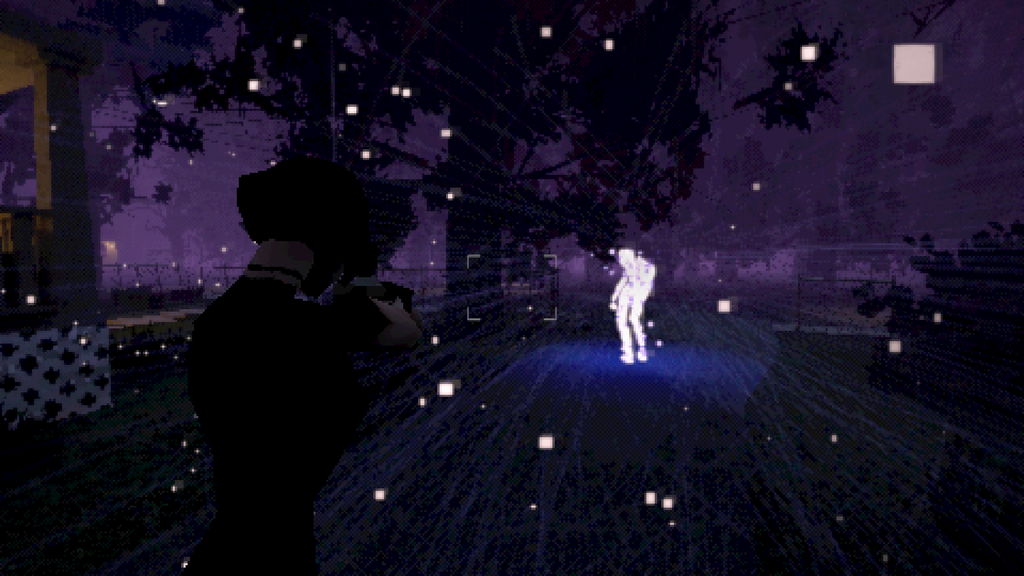
The irony is not lost on me when I say I feel this is the least enjoyable part of the game. Especially when Heartworm does everything it can to be like other legends of the genre. The only “weapon” you are equipped with is a camera, which you use to shoot enemies with to damage them. This is obviously a nod to Fatal Frame. But unlike Fatal Frame, you are NOT fighting ghosts, and this is NOT an enchanted or mystical camera. There is a connection to Sam with the camera, but I won’t spoil that here. The odd choice with the camera is you’re not just battling static entities, some of the creatures you come across seem to be flesh and blood. Which begs the question of how a camera can harm them. But given the lack of explanation and the fever dream presentation, this is just something we are forced to accept. Using the camera during combat also changes the view perspective to a third person over the shoulder. Making the aiming a bit easier when you’re dealing with enemies. Which in reality will probably be limited to boss fights and areas with more annoying creatures you don’t want to keep dealing with on backtracking segments.
As mentioned before, the camera is used for more that just combat. You use it to photograph certain areas to remove static and open it up to move forward and also use the flash as quick source of light. This is your only true light source, which can become frustrating as mentioned above. The camera does have added abilities, but I only came across one in my playthrough. So, I have no idea how much depth there is on upgrading and if there is more I just missed.
The layout of the levels go from simple to needlessly complicated. The final area ends up just being a multi-room labyrinth. You have to constantly go back and forth opening up more areas, trying to piece together the last bits of story and character growth.
The puzzles aren’t too difficult overall. Some will have you scratching your head for a minute before figuring it out. While others have their set up randomly generated, which makes dying after solving a puzzle interesting. You’ll being forced to solve it again, but now the setup can be different. It does force you to pay attention but depending on how much you die and not save, can become a hassle.
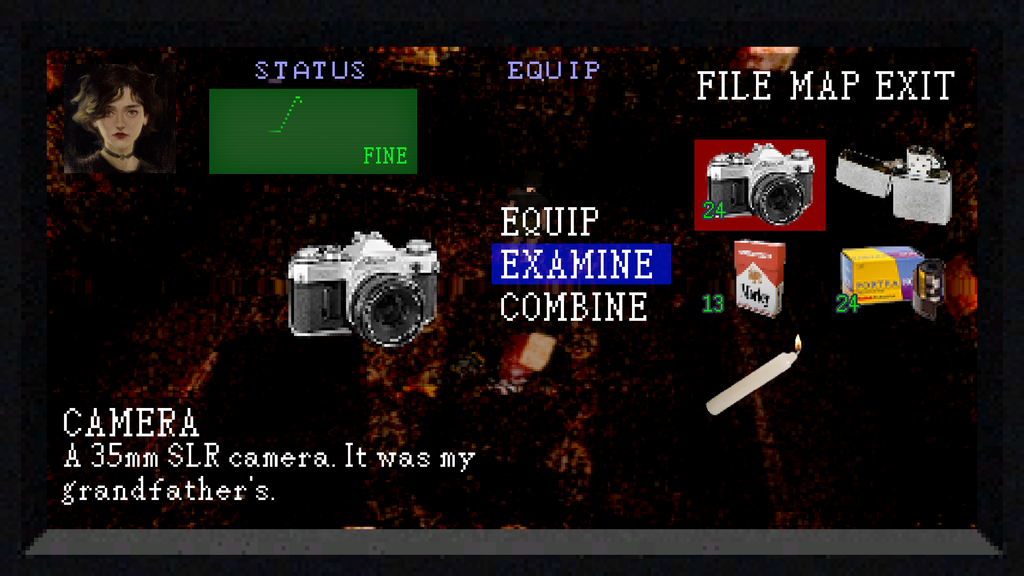
Item management is always a point of contention in survival horror. Limited resources and limited space can ramp up the tension, force you to think outside the box and value every item you pick up. But at the same time, if done wrong can add more frustration than horror. Heartworm does both, in this regard. There were times that the limited health and film made for genuinely creepy and intense moments. Fearing what could be hiding in the dark. But after a while, that fear turns to anger. Limping around the majority of the game avoiding as much conflict as possible becomes tiresome.
The one saving grace in this situation is you can save as much as you like, as long as you can survive long enough to reach the safe room. I found myself using similar tactics in old school Resident Evil games, where I would clear areas heading to safe rooms to allow for simple backtracking. There is no item required to save, so when I spent most of the game one hit away from death, I just save spammed after every minor progression. Having multiple saves were a must to prevent a death loop due to lack of health. One primary save file as far back as needed with full health, and a more recent save file inching closer till I could heal up to replace the original file.
Graphics
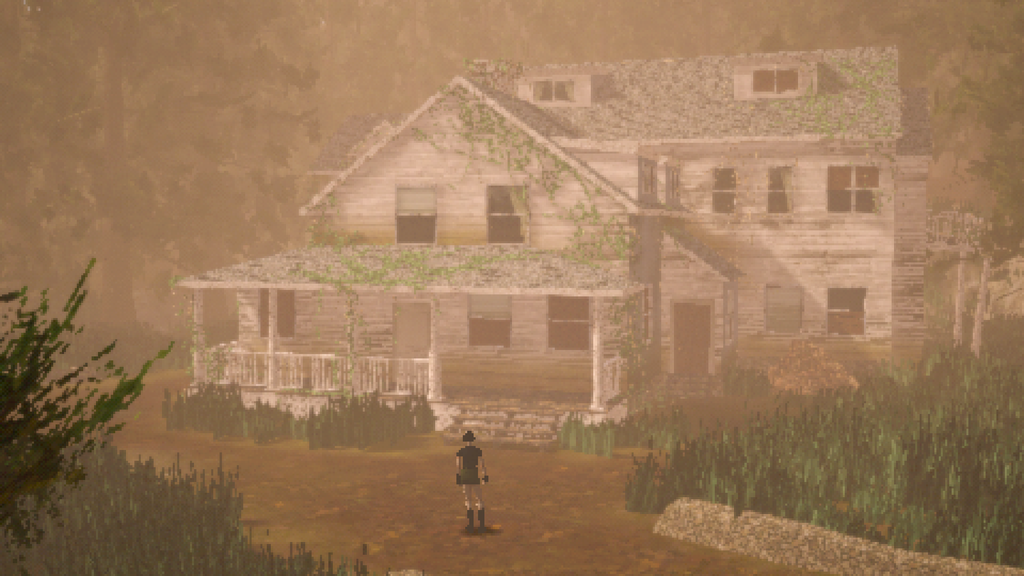
Graphically, Heartworm does exactly what it sets out to do. The game looks and feels like a lost 1990’s PSX game. There are some quality-of-life improvements to the overall design, but it’s more or less true to its roots. The low-resolution polygons do a great job of bringing players back to the classic days of survival horror. Nostalgia aside, if you’re new to PSX horror games, this game is a decent visual representation of that era.
Final Word
Heartworm is a decent enough throwback to horror’s 3D beginnings but just lacks the overall depth of some of its inspirations. The unfortunate reality is that the games that it so lovingly imitates do everything Heartworm does right, better.
The story lacks the weight of a Silent Hill or Fatal Frame game, and Sam is too surface level for us to ever truly feel for her. The gameplay lacks the fun it needs to want to dive deeper into the game. Most of my time was spent in frustration with its level design and combat. The potential is there in its foundations, but Heartworm doesn’t allow the time needed to really dig deeper into the heart of the experience.
I give Heartworm 3 Internal Dialog Rants out of 5