

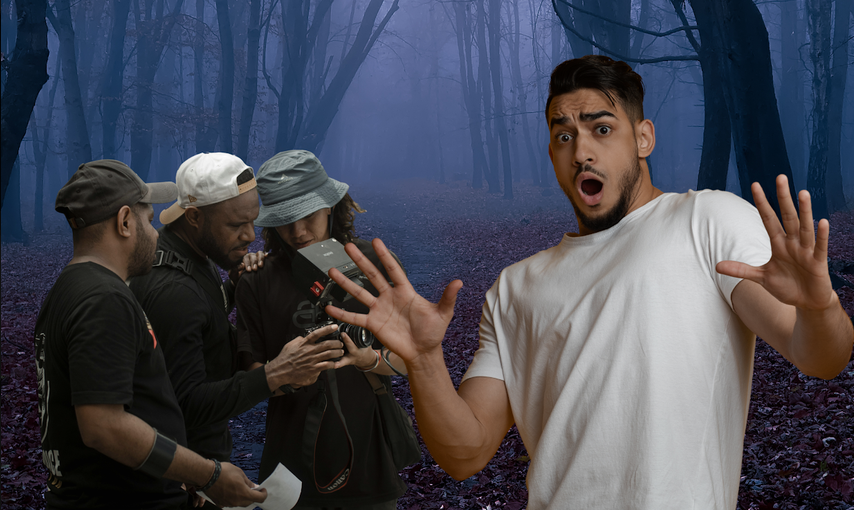
Wilderness found-footage horror often demonstrates how quickly a beautiful landscape can become a source of practical difficulty. The trees may be attractive and the air refreshing, yet visitors can soon find themselves searching for a vehicle that was supposedly “just over there.” As the sun sets and disagreements increase, the phrase takes on an increasingly uncertain meaning, contributing to the group’s growing panic. This progression is significant: the landscape itself may remain unchanged, while the people moving through it become increasingly distressed.
For found-footage horror, the forest does not require a supernatural personality to be frightening. It can remain entirely indifferent while the characters become cold, hungry, exhausted, and disoriented. Nature has no obligation to accommodate their plans. This indifference provides a strong foundation for wilderness horror. Before supernatural elements appear, the film can establish realistic problems that disrupt the characters’ plans and introduce additional challenges.
Found-footage horror immerses viewers in the characters’ limited perspective. Unlike conventional cinematography, it offers no reassuring aerial shots to reveal that safety lies just beyond the next hill. A bend in the path disappears behind them, and one person may turn toward a sound while another continues forward. Because viewers receive the same incomplete information as the characters, they share their uncertainty. This perspective becomes especially effective when the person operating the camera expresses confidence that is not supported by their recent decisions.
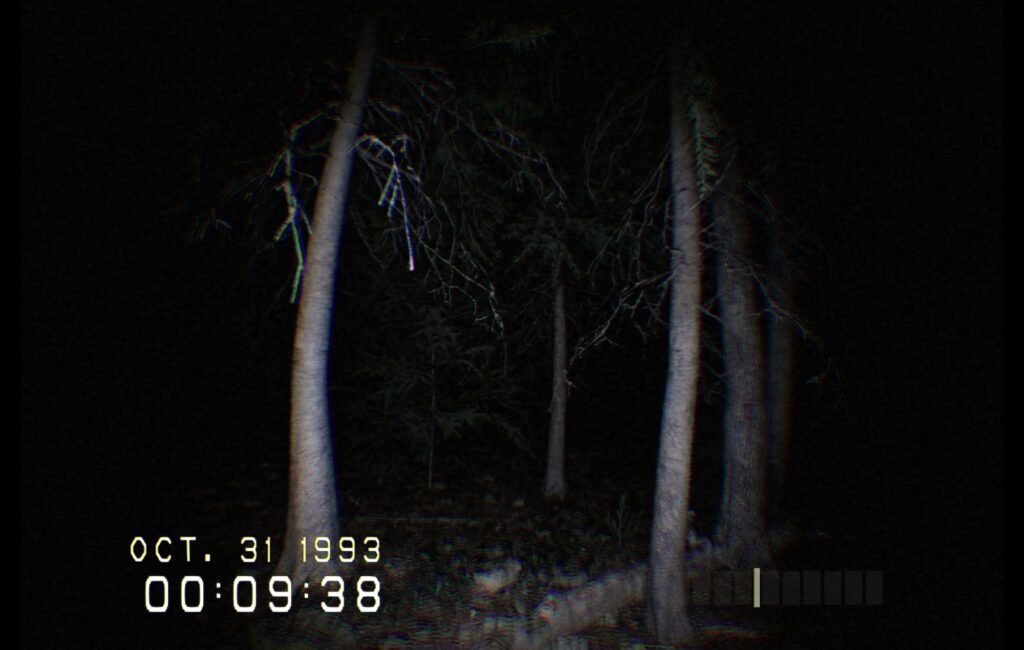
Getting lost often occurs gradually. Familiar landmarks become difficult to interpret, memories begin to conflict, and the footage fails to provide a reliable map. The group may record numerous images while gaining little useful information about its location. This dynamic can benefit a found-footage horror film, but it reflects poor preparation for a wilderness excursion.
Nightfall changes who controls what the group can see. During daylight, the characters can examine their surroundings and question their route. In darkness, the person holding the light largely determines where the group directs its attention. A narrow beam illuminates one section of the path while leaving the surrounding area unresolved. This limitation makes the camera an important source of suspense. The person filming may reveal one significant detail while overlooking another nearby, their confidence remaining apparent even as visibility becomes increasingly limited.
Weather can complicate the mystery itself. Rain may erase a footprint that appeared to confirm someone’s passage, while wind can distort a distant voice and make it impossible for the group to agree on what was heard. The characters may then argue about evidence that the environment has already destroyed. This is more compelling than using weather solely as an atmospheric device. A person may remain certain about an observation while lacking anything verifiable to show the others. The forest effectively withholds evidence just as the group’s conflicting accounts are becoming less reliable.
Exhaustion can also determine whose interpretation of events is accepted. Someone who offered practical advice early in the journey may become quiet, while the most confident speaker gains authority simply because the others no longer have the energy to challenge them. This shift reveals how fragile cooperation can be. Members of the group may agree to continue for entirely different reasons: one may trust the route, while another may simply want to end the argument.
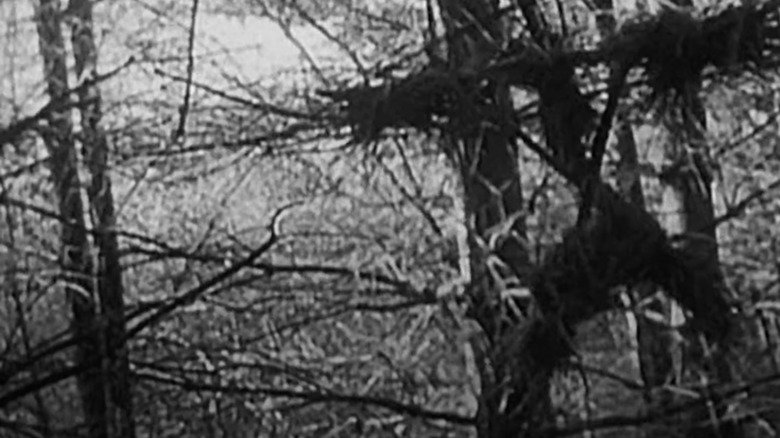
The camera records a group that appears unified even as its understanding of the situation begins to fragment. Authority, in this context, can develop more easily than genuine knowledge.
The Blair Witch Project makes this erosion of group confidence central to its unease. The documentary project gives the characters a shared purpose, but uncertainty gradually alters their interactions. Their disagreements become part of the horror because reassurance becomes increasingly difficult to provide and easier to question. The woods acquire emotional significance through the people moving within them. The film portrays a group struggling to remain cohesive as the seemingly ordinary task of choosing a route becomes increasingly contentious.
WATCH THE TRAILER FOR “THE BLAIR WITCH PROJECT” BELOW
The relationship between the setting and the characters’ interactions makes the film a particularly useful example. The surrounding landscape does not need to produce a dramatic event every few minutes to remain disturbing. The characters bring their expectations, frustrations, and fear into each conversation. An ordinary section of woodland can appear threatening when the people observing it no longer trust their own interpretations or one another. The recording captures this transformation at close range, giving the uncertainty a personal and immediate impact.
Filming can further complicate navigation. The camera operator must concentrate on the frame while moving through an environment that requires broad awareness. They may overlook uneven ground or fail to notice when a companion changes direction. This limitation is most effective when it develops naturally from the characters’ purpose. The camera remains useful, but operating it carries a cost. The project and the surrounding environment demand attention simultaneously, forcing the person behind the lens to decide which deserves priority.
The genre also benefits from portraying genuinely capable characters. Watching someone make reasonable decisions and still struggle can be particularly frightening because it prevents viewers from assuming that they would have managed the situation more effectively. The characters may understand the importance of finding shelter without locating a suitable site or recognize a navigational problem without having enough information to correct it. Their knowledge remains valuable without guaranteeing their escape. This creates a credible human vulnerability for the supernatural threat to exploit when it eventually appears.
FINAL WORD
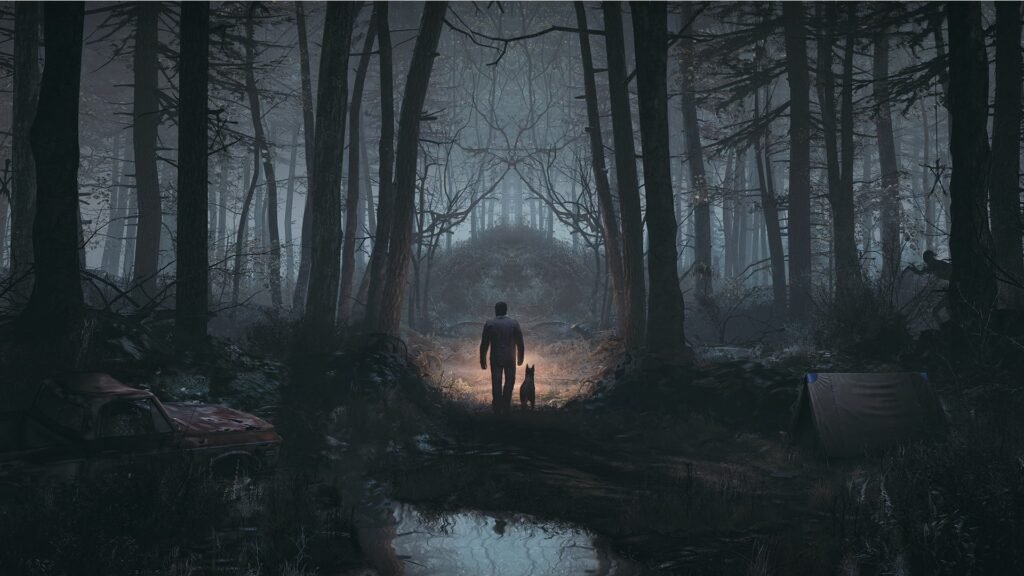
This is a central strength of wilderness found footage. Strange events may make the journey more difficult to understand, but the characters must still find rest, warmth, and a route home. These basic needs keep the story grounded while the narrative moves into unfamiliar territory. Meanwhile, the forest remains a forest. The scenery remains impressive, the trees do not explain, and the direction “just over there” continues to receive more confidence than the circumstances justify.