
Teenage girl Heather (Happy Birthday to Me’s Lesleh Donaldson) buses up to her pious grandmother’s house deep in the countryside to help her convert it from a funeral home to a “respectable” bed and breakfast. A hard-working Christian woman, Maude Chalmers (character actress, and two-time Police Academy guest Kay Hawtrey) and her husband James (crotchety My Bloody Valentine bartender Jack Van Evera) used to run the funeral home (“Chalmers the Embalmers” the locals used to call them), but since his mysterious disappearance, she’s had to supplement income by converting the place and selling flower arrangements.
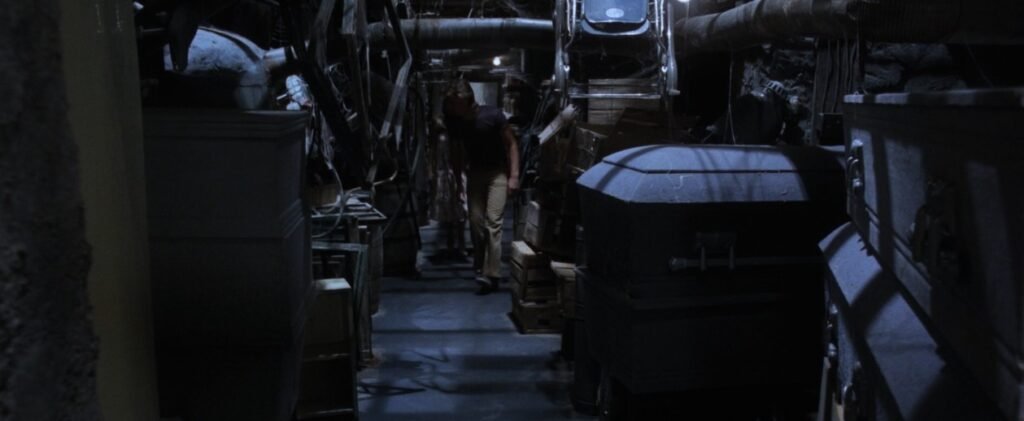
But James Chalmers isn’t the only person who has gone missing lately. The small town is up to six disappearances, and rookie cop Joe Yates (Alf Humphreys, also from My Bloody Valentine) thinks there’s something sinister afoot. His senior officers think he’s wasting his time wondering about these things. But he’s not alone. Heather has been noticing strange things around the property as well, not the least of which, hushed conversations with “someone” in the cellar that she’s not supposed to venture down to, and the lurking presence of a mentally disabled caretaker (The Stepfather’s Stephen E. Miller). There are also conflicting stories about Grandma Chalmers’ missing husband. Some people think the old drunk hooked up with another woman and ran off. Maude thinks her equally pious husband simply “disappeared”, God bless him. Heather’s bedroom seems to be the best place to catch these conversations, and with the help of the cute local boy Rick Yates (brother of police officer Joe and played by talented “one-and-done” actor Dean Garbett), she prowls the property, and chances sneaking downstairs into the forbidden cellar for answers – hoping Grandma (or whomever she’s covering for) don’t catch her.
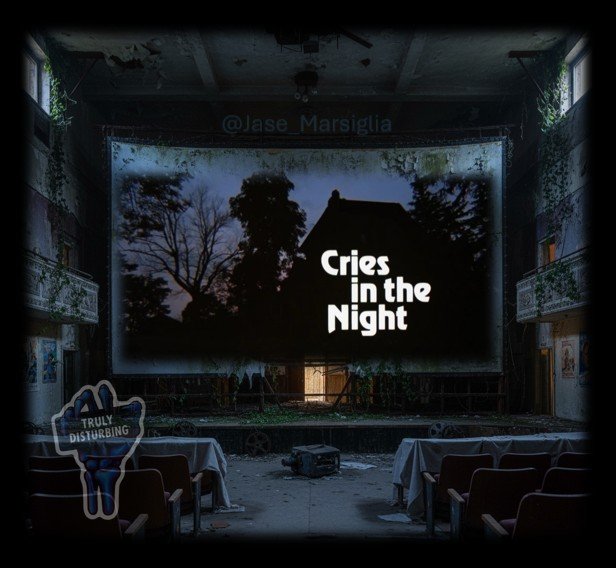
Cries in the Night (aka Funeral Home) (1986)
⭐️⭐️1/2
In the mid-70s, Canada introduced the Capital Cost Allowance “tax shelter”, which basically allowed investors to deduct 100% of their investments into film productions from their taxes. This didn’t just allow filmmakers to take advantage – “investors” could be anything from a producer to the local dentist who wanted to contribute to a film’s production, and not take a loss, as long as the production’s personnel was at least two-thirds Canadian, in order to benefit local talent and work crews. This was a sweet deal for Canada and allowed up-and-coming filmmakers like David Cronenberg and Ivan Reitman to start their careers.
But to compete with international markets, particularly America, Canada needed to hop on the current bandwagon: horror features. And they did so with relish. Classics like Black Christmas, Scanners, Shivers, Happy Birthday to Me, My Bloody Valentine, Terror Train, Prom Night and many others marched out of Canada at the time and were huge financial hits. Cries in the Night fit right into the middle of this genre outbreak, and while it didn’t do the kind of numbers the other titles did (it wouldn’t even reach America until 1983 or so, and when it did, it was retitled Funeral Home), director William Fruet’s little rural Gothic mystery certainly featured the earmarks of its surrounding brethren.
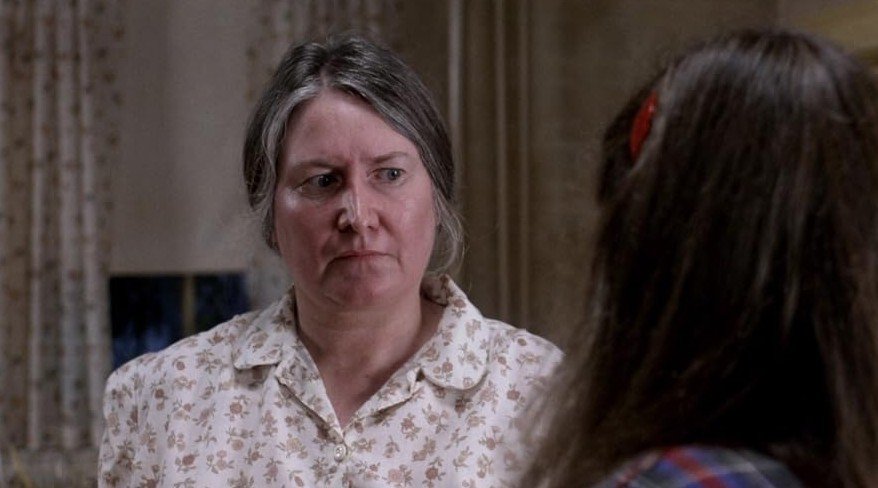
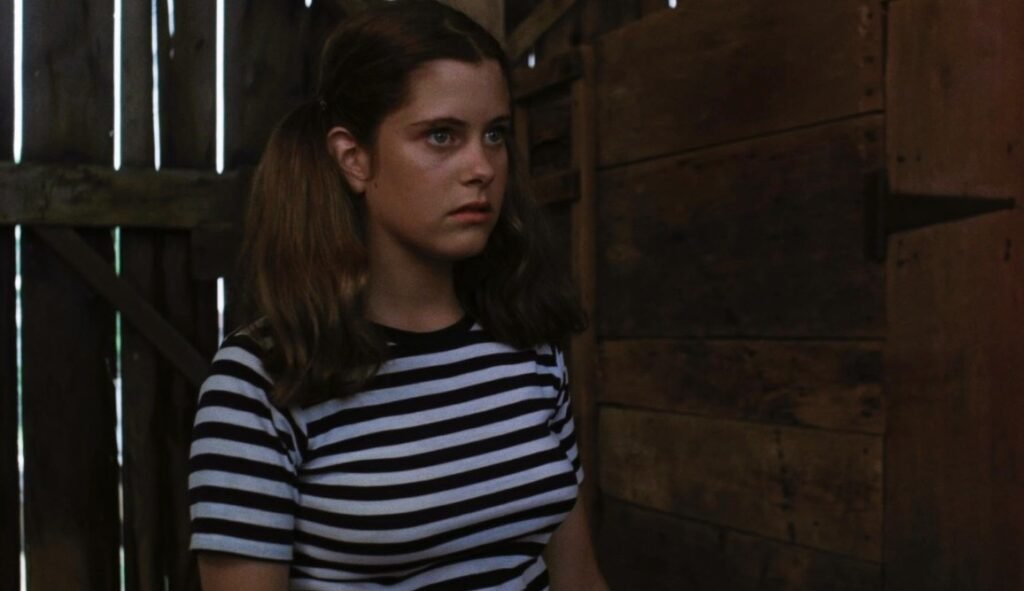
Fruet also has a knack for capturing the type of small-town suspense that goes with a plot such as this. Cries in the Night unfolds a lot like a pocketbook mystery and – for better or worse – brings all the tropes with it: Dark and stormy nights, black cats perched on fence posts, run-down garages full of secrets, peculiar disappearances of tenants, a disinterested police force, and, of course, those whispered conversations in the cellar heard from the vents upstairs. Everyone seems to have a secret they’re harboring, and Heather, played with a wonderful, doe-eyed innocence by Donaldson, is wholly believable as the confused teen who is getting severely creeped out by this whole mess.
Despite its creepy setting, ominous mood, and good performances, particularly by Donaldson and Hawtrey (the latter of whom has a great way of glazing her eyes over sinisterly when confronted with questions about secrets she seems to want buried), Cries in the Night still suffers a bit from its slow boil, some pretty obvious red herrings, and a finale that steers way too close to Psycho to be considered much of a payoff by any stretch (right down to extra, unnecessary expositional “epilogue” during – of all things – the end credits!). It’s executed exciting enough (maybe even a little sad), but it’s ultimately too familiar to really turn the screws.
HOME VIDEO
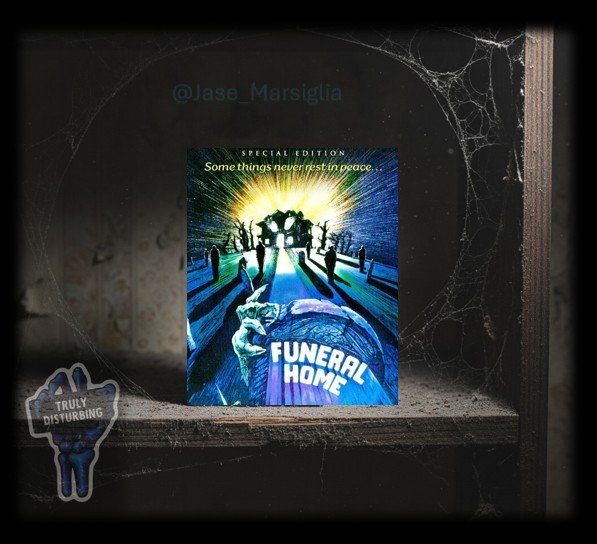
Cries in the Night, often released under its Funeral Home title, popped up here and there on DVD after its 1983 VHS release by Paragon Video, but it was usually released in lackluster, bare-bones affairs, with weak, VHS-quality transfers.
Thankfully, the folks at Scream Factory gave it a new scan from its original camera negative, and surrounded its casket with a bright array of colorful flowers – er…supplements, which included the following items:
- Aspect Ratio: 1.85:1 HD Widescreen, scanned from the original camera negative.
- Audio: DTS-HD Master Audio English Mono 2.0
- Subtitles: English
- Audio Commentary with Paul Corupe of Canuxploitation.com and Film Historian Jason Pichonsky
- Isolated Score Selections and Audio Interview with Music Historian Douglass Fake
- Audio Interviews with Actor Lesleh Donaldson, First Assistant Director Ray Sager, and Production Assistant Shelley Allen
- Secrets & Shadows: Interview with Director of Photography Mark Irwin
- Dead & Breakfast: Interviews with Art Director Susan Longmore and Set Assistant Elinor Galbraith
- Family Owned & Operated: Interview with Brian Allen, President of Premier Drive-In Theaters
- Original Filming Location Footage
- Theatrical Trailer
- Video Trailer
- TV Spots
- Radio Spots
- Still Gallery
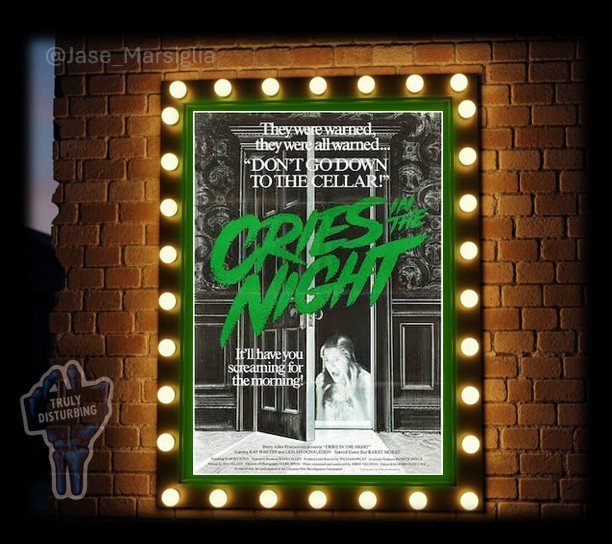
- Reversible cover insert featuring two different one-sheet designs, one of them with the original title of Cries in the Night.
- Limited Edition First-Pressing Slipcover featuring the original Funeral Home one-sheet design.
Bits ‘N’ Pieces
Traum-A-Meter:
1 out of 4
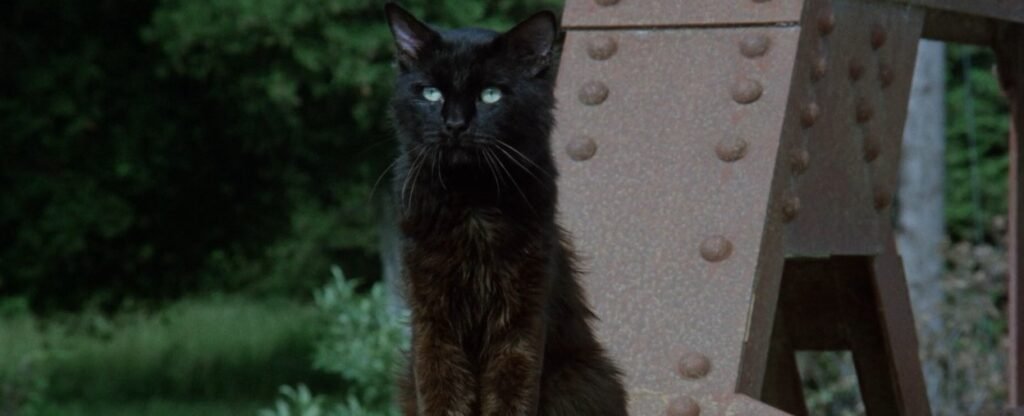
People are pushed off a cliff in their car, bludgeoned with a shovel, and stabbed to death with an embalming needle. Gore is minimal, and most of the more disturbing imagery comes from the standard discovery of corpses during the film’s final reel. By today’s standards, Cries in the Night could have been a PG-13.
Today’s Jam: “Another One Bites the Dust” by Queen was the big hit at the time of this film’s Canadian release on this day in 1980, which – if you’re working at the Chalmer’s Funeral Home – is something of an anthem for good business!
TODAY’S MORAL:
There’s something wrong in that house. Something evil!