
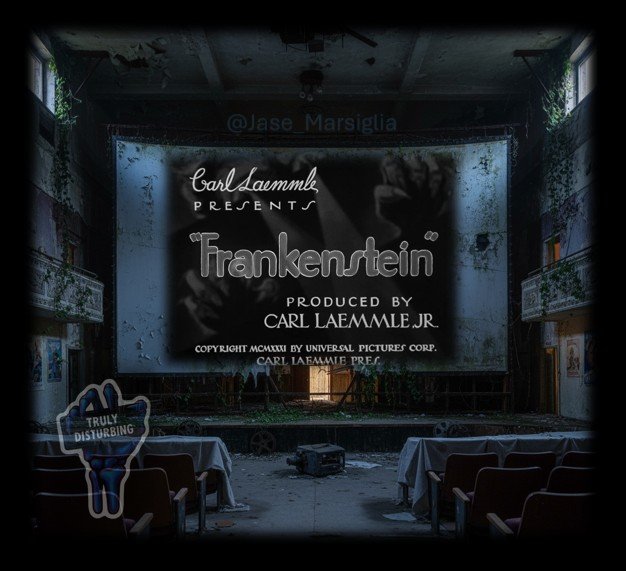
January 20, 1986. Like treasures within ancient temples, cinema archivists uncover previously censored footage from 1931’s Frankenstein, ending decades of speculation and rumors of excised sequences involving the death of a child, and a line of blasphemy that so disturbed audiences and critics of its day, that subsequent reissues of the film from 1937 and on gave subsequent audiences a “trimmed” version of one of Universal Pictures’ most revered and iconic monster films.
However, those front and center in 1931 caught a film that, like Universal’s Dracula just that previous Valentine’s Day, would push the boundaries of the genre’s limits for its time, and become something truly special…and deeply horrifying. It’s one of the earliest films I can think of that has a member of the cast (Dracula’s Edward Van Sloan) step out during a prologue with a warning from the studio head, Carl Laemmle Jr., that you’ve pretty much got until the end of this intro to vacate the theater, should you believe the film’s shocks are too much for your nerves…well, they warned you.
“Frankenstein” (1931)
⭐️⭐️⭐️1/2
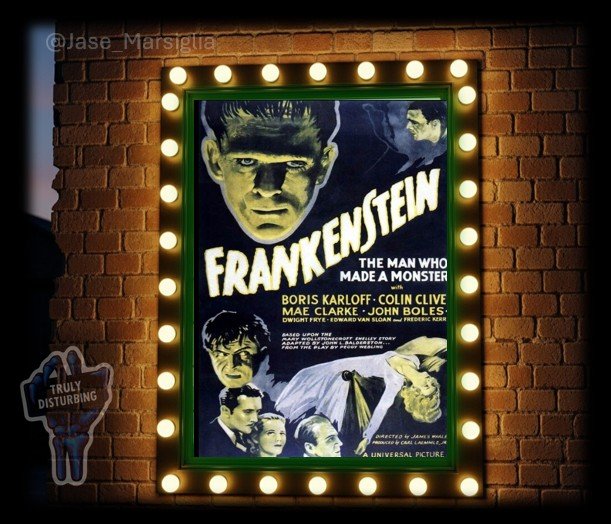
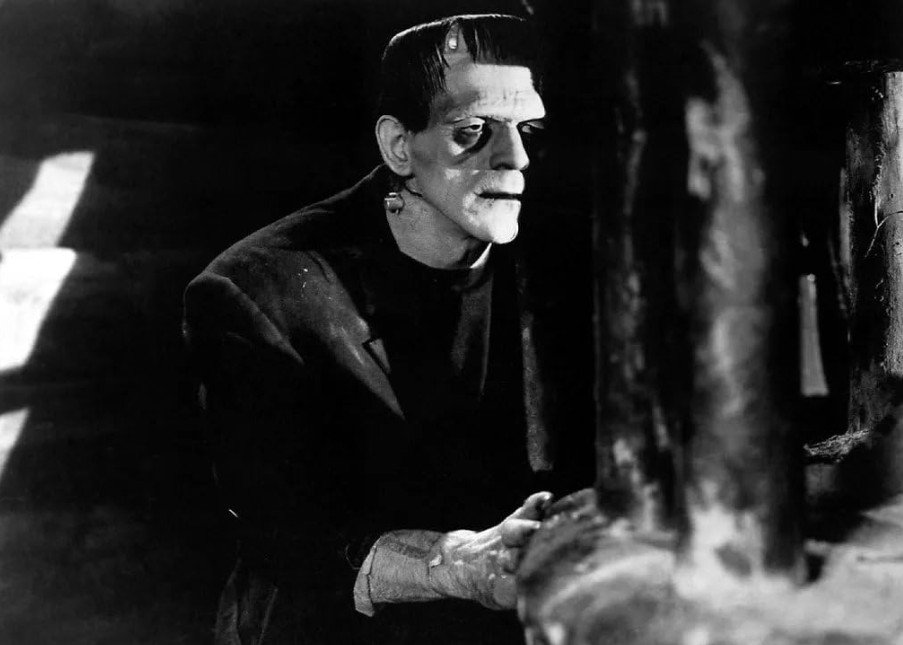
The obsessive Dr. Frankenstein is brought to vivid life by Colin Clive in this Universal horror classic adaptation of Mary Shelley’s iconic novel. Having cobbled together a super-human from various pieces of corpses he’s dug up, Dr. Frankenstein and his hunchback assistant Fritz (a wild-eyed Dwight Frye, who made quite the impression himself in Dracula) have just input the creature’s brain – the good doctor unaware that the brain they’re using is from that of murderer. Now awakened, the lumbering brute (Boris Karloff, who immediately became a terrifying horror icon on par with Bela Lugosi’s Dracula) is wreaking havoc on the German countryside.
Like Dracula earlier that year, 1931’s Frankenstein was less an adaptation of the source material as it was based more on a hybrid of stage plays by John Balderston (in the United States) and Peggy Webling (in the United Kingdom). And like Dracula, it’s understandable that to stay within budget, much of the “grander” elements of the book had to be trimmed down. Shelley’s novel is a story within a story, within a story. Dr. Frankenstein, mere hours from death from hypothermia, tells a ship captain trapped between glaciers, about his experiment on dead tissue, the brute’s re-animation, and then the creature’s story of survival and prejudice that led the two men into a do-or-die chase to the ends of the earth.
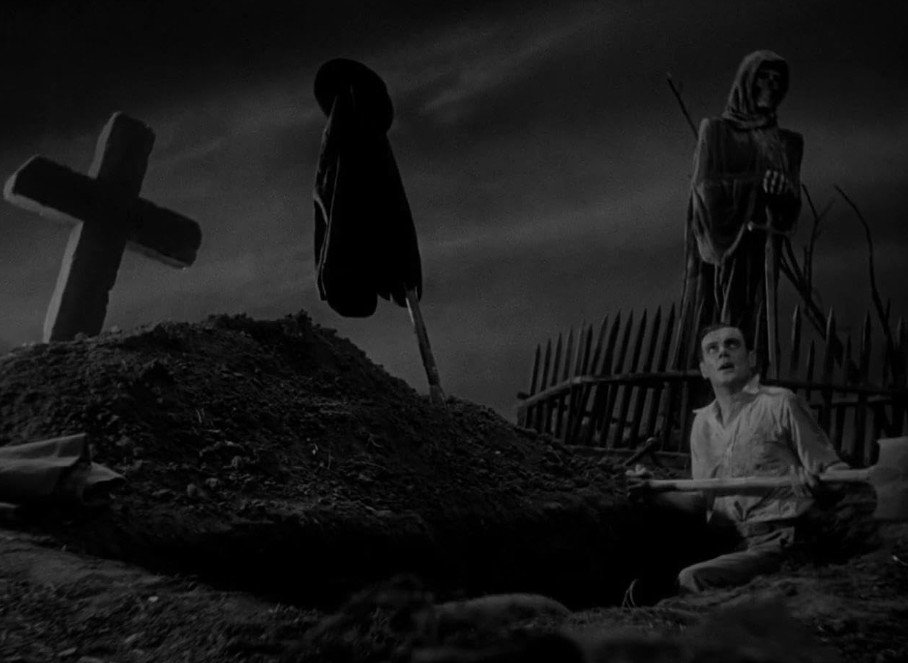
Universal’s film, directed by James Whale and written by Garrett Fort and Francis Edward Faragoh, had to scale back a lot of this to meet a suitable runtime, and to stay within the parameters of the money they were given. In that regard, Frankenstein is still as impressive as Dracula in its scale. It’s rich in gothic atmosphere, the backlot set of a Bavarian town full of villagers, Dr. Frankenstein’s laboratory, and its finale within a burning windmill are massive set-pieces and utilized wonderfully and fully. Similarly, the make-up effects by Jack Pierce, a pioneer in the medium following the death of Lon Chaney, of the creature played by Karloff, not only created a menacing, glowering visage for the film, but became the template for nearly every future iteration of the monster to this day. Everything from Groovie Goolies, to Herman Munster of The Munsters, to Franken Berry cereal, owe a large debt to Pierce’s design and Karloff’s iconic performance. Clive’s performance as Henry (not Victor, as in the novel) Frankenstein is inspired, and he balances his obsessive behavior with an insidious devotion that would seem quite familiar to fans of Jeffrey Combs’ similar performance in 1985’s Re-Animator. And finally, Van Sloan’s performance of Dr. Waldman, Henry’s former teacher, has mild echoes of his stint as Van Helsing in Dracula, but still works wonderfully.
Where the film falters though, even if only slightly, is that most of the other characters are made sort of silly. Dr. Frankenstein’s father, the Baron (Frederick Kerr), is no longer the supportive patriarch and Genevan magistrate who inspired Frankenstein’s ideals but a bit of a drunken fool who serves little more than oddly placed comic relief. His Italian fiancée Elizabeth (The Public Enemy’s stunning Mae Clarke) simply a corner of a love triangle between Frankenstein and his best friend Victor (King of Jazz singer John Boles) that goes absolutely nowhere, until she’s left with the task of fainting when the monster lurches near. It also does a disservice to Shelley’s novel by turning the Monster into a silent, lumbering brute when the novel painted a sympathetic creature so vividly, who was able to articulate his frustrations with mankind, his wants and needs, and eventually, his laser focus on destroying Frankenstein’s entire life as revenge for both his abandonment and refusal to create him “a bride”.
The latter complaint is a small one, however, since Karloff, acting with little more than a few grunts and growls, is still intimidating and frightening. The sunken cheeks, low brow, and menacing glare are more than enough to elicit genuine chills when he’s on screen. The sympathy comes during one of the film’s most notorious moments, which led to one of the two scenes excised from the film – the scene involving the monster meeting Little Maria, played by an angelic Marilyn Harris.
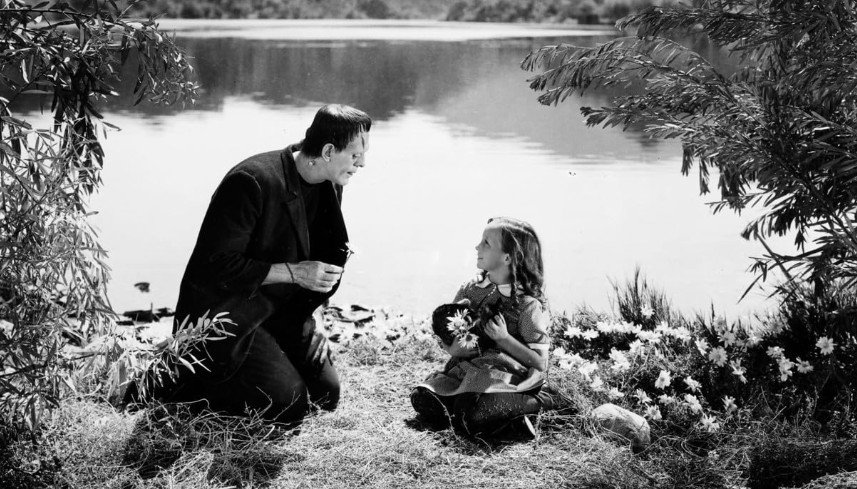
Unafraid of the imposing figure, the innocent child welcomes Frankenstein’s monster to the small area beside a pond where she’s playing and offers him a daisy. Karloff’s soft smile, and the audible sigh of relief and warmth he feels at being “accepted” with kindness for the first time is somewhat beautiful despite his ghastly appearance. Maria shows the monster how tossing the bloomed daisies into the water creates a pretty float, and they take turns plucking and tossing the tiny flowers into the pond. When he’s out of daisies, the monster decides that Maria – a thing of beauty like the flowers – will do the same, and he picks the small child up and tosses her into the water, expecting her to float like the spinning daisies as she screams quite possibly the film’s most gut-wrenching line, “No, you’re hurting me!”
The monster has no idea what he’s done, and as the poor girl splashes and struggles to stay afloat, he panics as she succumbs to the waters and flees the scene in terror. Karloff’s performance during this entire sequence is meticulously handled and so realistic that you can’t help but be both horrified and saddened by the events you’ve just witnessed. An innocent life has just been snuffed out by the creature, by not malice, but misunderstanding. The brilliance of how the scene escalated from something rather beautiful and poignant into the unthinkable was the perfect storm to terrify audiences in a way that had never been seen before. And they weren’t ready for it.
Ironically, the censoring of the little girl’s murder only made Frankenstein more frightening. In the censored version that was released in 1937 and up through the 80s, you see the monster toss the last of his daisies into the pond, then turn to the girl, reach out to her, and the scene abruptly cuts away. Later, we see her father walking through the crowded Bavarian street with his daughter’s corpse – a look of blank shock on his face. “Theater of the Mind” pops in to fill the gaps, and without the context of what was censored, we’re left to wonder what the hell this creature did to this poor child, and our imagination creates unspeakable horrors far more insidious than what really happened. It’s one of those instances in censorship where the missing footage makes the whole sequence far darker than intended. Doubly-ironic still that the John Barrymore silent classic Dr. Jekyll and Mr. Hyde, released 11 years prior, featured a scene where the ghoulish Mr. Hyde brutally stomps a toddler to death in the street in front of his horrified older brother – fully intending to, I might add – and didn’t receive a peep from critics. Such is life in the world of censorship, I suppose.
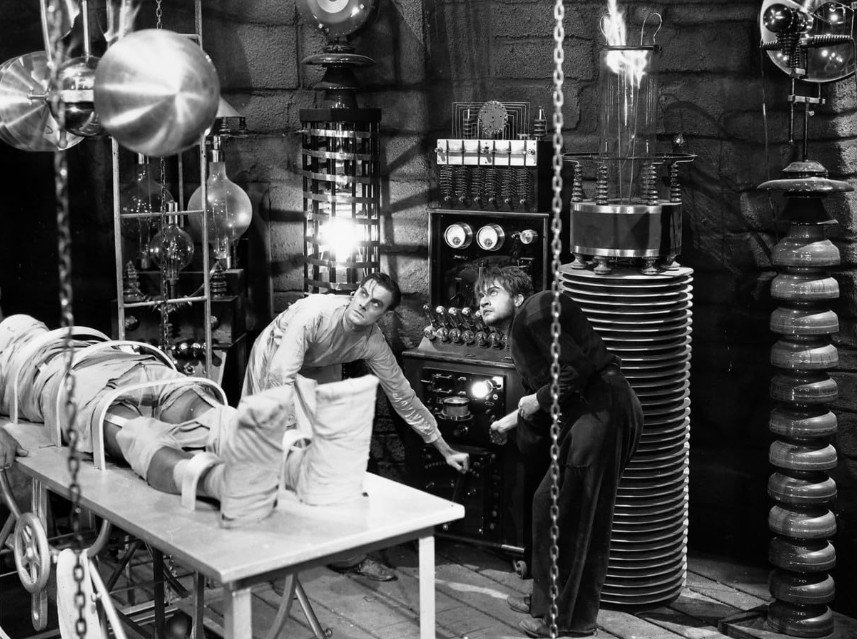
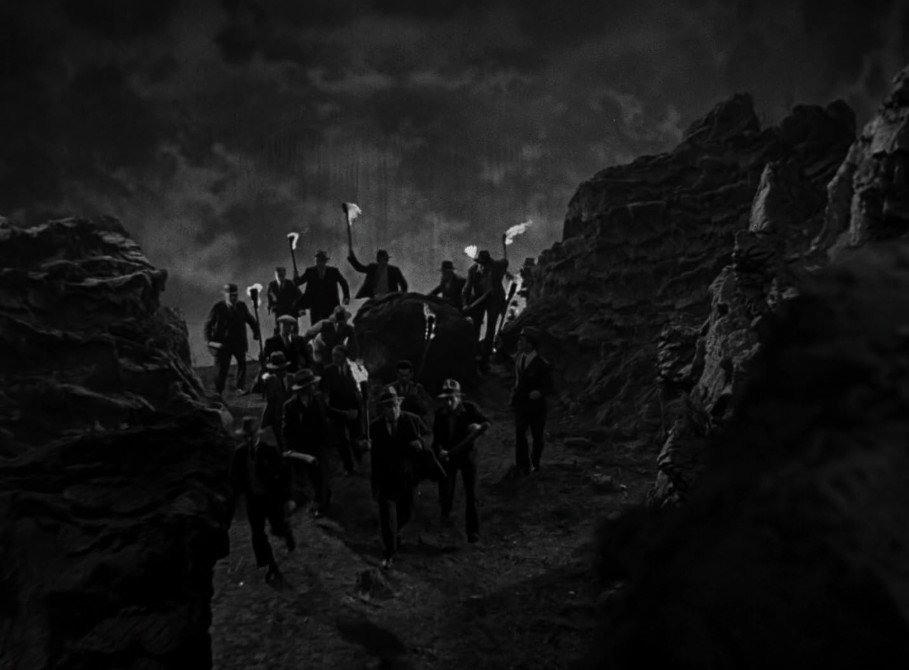
The other censored scene is during the famous “It’s Alive!” proclamation by Henry Frankenstein when he sees his experiment is a success. In his rapture, Henry shouts that “Now I know what It feels like to BE God!” Hoo-boy. Censorship boards in three American States (Massachusetts, Pennsylvania, and New York) decried that the line was blasphemous, and ordered the sequence cut from prints (though many simply used a thunder sound effect to cover the dialogue that surely gave the God-fearing audience the vapors). Using pieces of various corpses, grave robbing, and stealing brains – no problem. Say you know what it feels like to be God, and you’ll get chased with pitchforks and torches across the countryside.
Hahaha…ahhh, religion. Where was I?
Despite these edits, James Whale’s Frankenstein was – if you’ll pardon the pun – a “monster” success, with critics hailing its terror, suspense, make-up, and horror, claiming that it sits rightfully alongside Tod Browning’s Dracula, if not bettering it. While certainly quaint by today’s standards, with Universal’s Rogues Gallery of monsters becoming little more than classic “family” horror films anyone can watch during the Halloween season, Frankenstein is still an effective, eerie, gothic masterpiece in a then-burgeoning “House of Horrors”, and it – along with Dracula – made 1931 a banner year for the horror genre, and Universal Studios in equal measure. The dawn of a new era of horror was upon the world. A post-silent era of terror that began with Dr. Jekyll and Mr. Hyde, The Hunchback of Notre Dame, and The Phantom of the Opera, with Dracula and Frankenstein picking up the charge and opening the floodgates that would usher in the likes of The Mummy, The Invisible Man, The Bride of Frankenstein, The Wolf Man, and The Creature from the Black Lagoon rounding out a Murderer’s Row of monsters that became equally iconic on their own rights.
The runaway success of these films – these monsters – all but lit the fuse for decades of sequels, remakes, re-interpretations, and spin-offs, and essentially created a mixed universe where these creatures would inhabit each other’s films and stories. Any fan of The Conjuring Universe or even the Marvel Cinematic Universe owe a great deal to the imagination and ingenuity that created a world where vampires, werewolves, phantoms, mad scientists, evil pharaohs, and prehistoric creatures roamed countrysides, graveyards, castles, labs, ancient temples, and jungle lagoons, just waiting for the curious or unsuspecting to wander into their domains to satiate bloodlust or to pass curses upon them.
And they wait still…for each new generation to discover them. Deep in the depths of the genre, they still lurk. Holding up the pillars of everything that’s been born of them since.
WATCH THE ORIGINAL TRAILER FOR “FRANKENSTEIN” (1931) BELOW
HOME VIDEO
Frankenstein is, and will forever be, a readily available film. Its iconic status is more than assured. However, when movies like this are available in so many releases, what’s the best one to get?
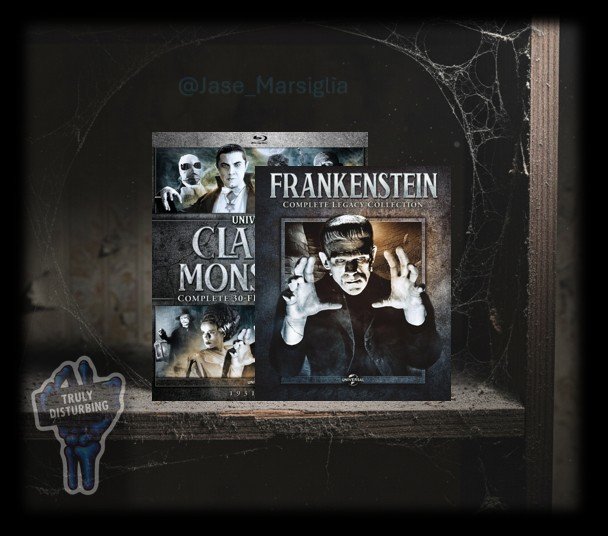
If you’re a hardcore collector or fan of the Universal Monsters, I wouldn’t look any further than the 24-Disc Universal Classic Monsters: Complete 30-Film Collection (1931-1956) on Blu-Ray. 30 movies, all together, with each of the iconic monsters available together, along with corresponding documentaries, commentaries, and even the three Abbott & Costello comedies where those jokers got mixed up with the monsters. It also comes with a 48-Page collectable booklet that provides a brief history of the Universal Monsters and their legacy, and the 3D version of The Creature from the Black Lagoon. With a current list price of $99.99 you’re basically paying a little over $3 per movie. For something that’s a must-have for Universal Classic Monsters fans, it doesn’t get much better than that.
However, if it’s only Frankenstein you’re after, the Frankenstein: Complete Legacy Collection is available both on Blu-Ray and 4K Ultra-HD, and comes with the following archival bonus features:
- Aspect Ratio: 1.33:1 Standard HD Fullscreen
- Audio: DTS-HD Master Audio English Mono 2.0
- Subtitles: English
- (Archival) Feature Commentary with Film Historian Rudy Behlmer
- (Archival) Feature Commentary with Historian Sir Christopher Frayling
- (Archival) The Frankenstein Files: How Hollywood Made a Monster
- (Archival) Karloff: The Gentle Monster
- (Archival) Frankenstein Archives
- (Archival) Boo! A Short Film
- (Archival) Theatrical Trailer
To top that off, the collection also comes with every Frankenstein-related film in Universal’s line-up, which includes:
- The Bride of Frankenstein (1935)
- Son of Frankenstein (1939)
- The Ghost of Frankenstein (1942)
- Frankenstein Meets the Wolf Man (1943)
- House of Frankenstein (1944)
- House of Dracula (1945)
- Abbott and Costello Meet Frankenstein (1948)
And, of course, if even that is too much (what the hell is wrong with you?), there are Blu-Rays with only this 1931 film, still showered with the bonus material above, and none of the other films.
No matter which way you cut it, there are releases of this film that should satisfy any preferred method of collecting you want.
Bits ‘N’ Pieces
Traum-A-Meter
1 out of 4
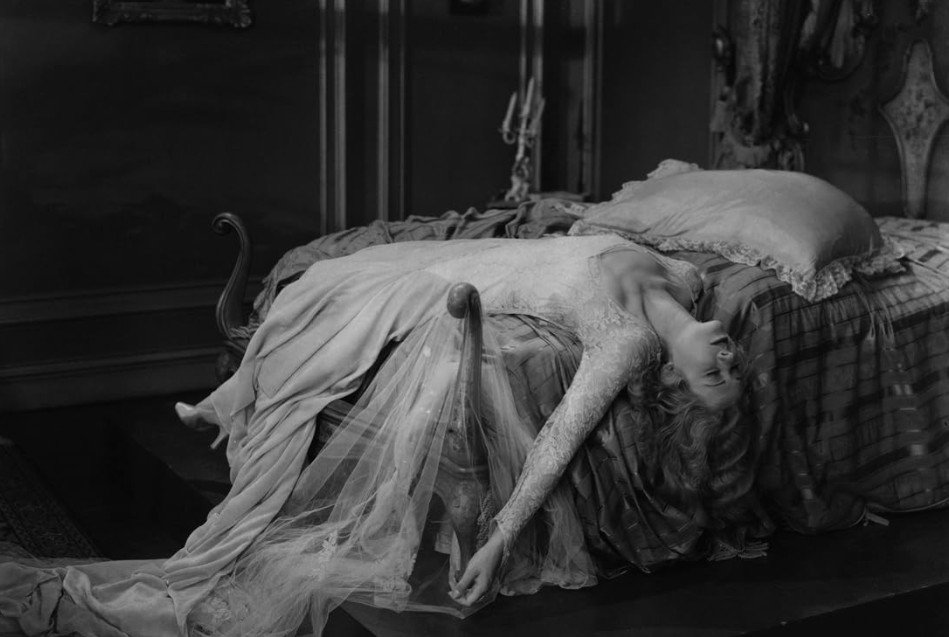
While the death of little Maria is probably the film’s most harrowing moment, Frankenstein is still a film made during a time when so many things were considered objectionable that even the little violence that is in the film isn’t going to do more than build the necessary suspense to keep you watching. It’s a horror film the entire family can watch.
Today’s Jam: Since there really wasn’t much of a “Top of the Pops” thing going on in the 30s, I’ve chosen “Building the Monster” by Midnight Syndicate as today’s tune, from their 2013 album Monsters of Legend, their tribute to the Golden Age of Universal horror.