

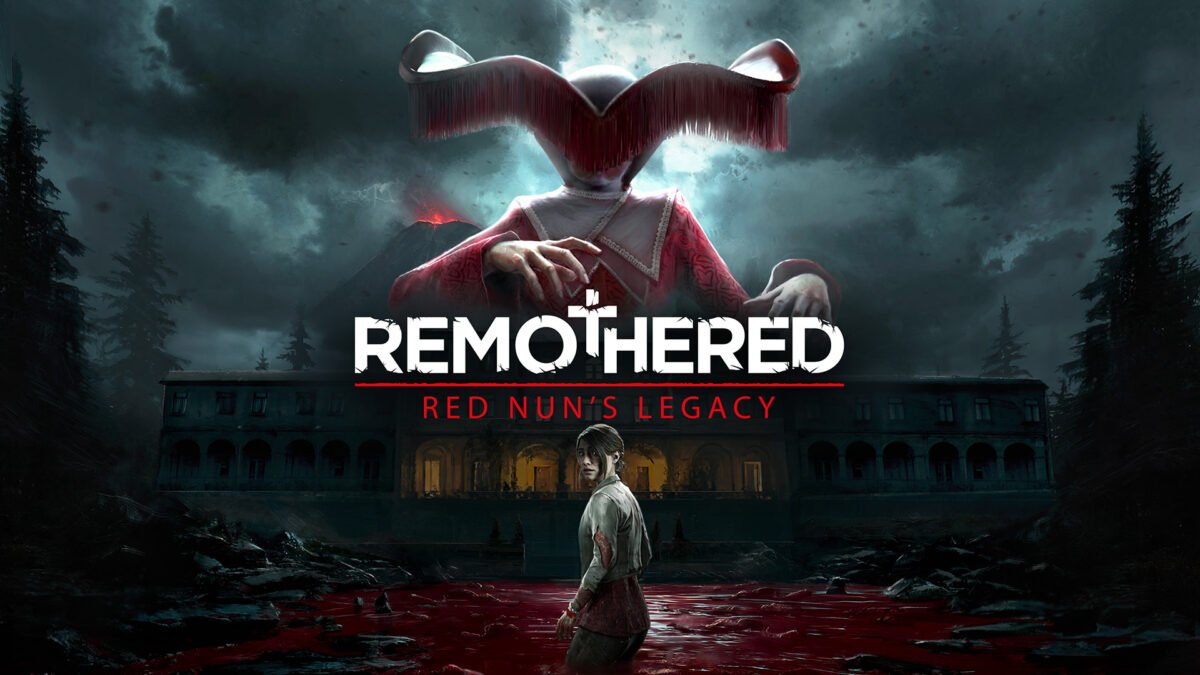
Back in March of this year, Stormind Games would announce the return of the Remothered series. The studio promised to bring the trilogy to a close and also push the franchise to new heights. With Remothered: Red Nun’s Legacy players will finally see the conclusion to a series involving many difficult themes. Themes of medical experimentation, abuse, child abduction, and many traumas.
Consider this a massive trigger warning:
This game has themes of sexual abuse, suicide, incest, and many other difficult themes.
After playing the Remothered series since the beginning, one thing has always been consistent. The inspirations it takes from old horror games like “Clock Tower” and 1970s Italian horror films. In Red Nun’s Legacy filmmakers like Argento, Fulci, Bava and Martino would probably be happy to see how their style has influenced a new generation of storytelling. Pepper in a dash of French Extremity films like “Martyrs” and “Frontier(s)” and we’re sure to have one messed up game. There is truly some disturbing stuff in this game (pun fully intended).
Since Red Nun’s Legacy is the third part in a planned trilogy, we will look at this game’s story a bit differently. Does this story continue and conclude the narrative of the previous 2 games? Does it also push the narrative forward as promised? How does the atmosphere stack up after the lackluster second game? With the inclusion of Hypnosis powers, how does the gameplay work? And lastly, with the Unreal Engine 5, how have the graphics improved compared to the original games?
Story
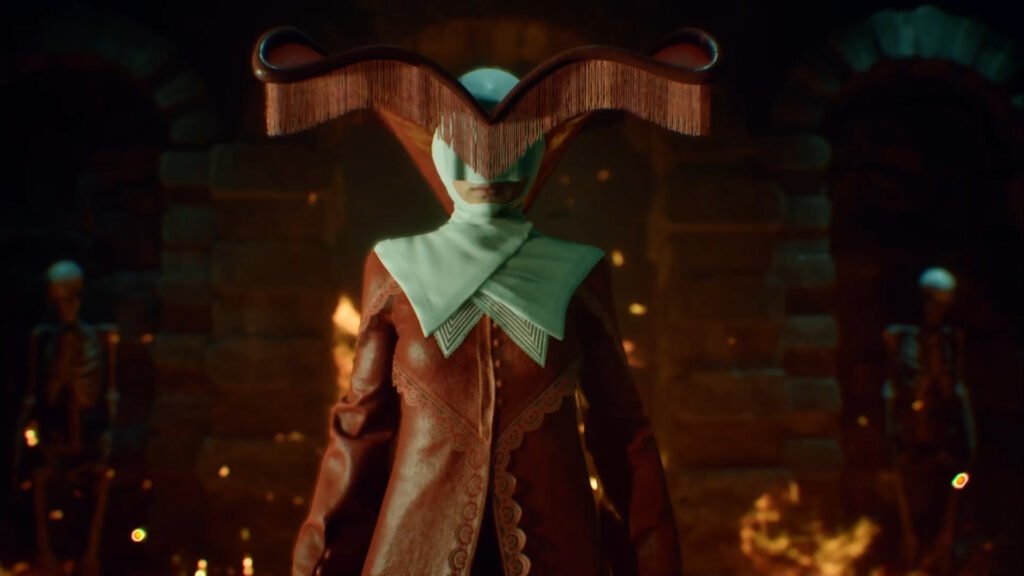
You play as Susan Harper. A young woman who has been searching for her daughter for the last 18 months after her abduction. Police and even her husband have given up hope, but not Susan. One day she receives a mysteriously unmarked package with a videotape showing that her daughter might still be alive and held captive at the infamous Ashmann Villa. The same villa of the disgraced family that has ties to the Felton/Wyman experiments and the fire that burned down Cristo Morente Convent that ultimately killed multiple nuns who were being used in those experiments.
Soon after arriving at the villa, Susan finds evidence that the compound is not as empty as everyone thought and her daughter might actually be alive and held there. As she goes deeper in the building, she soon learns finding her daughter is not the only problem. The villa is occupied by crazed nuns and it seems as if someone picked up on the failed experiments of the past. Will Susan find her daughter in time, or will she end up like everyone else in Ashmann’s history?
The story is one of the strong points of this game. As a player, you instantly feel for Susan and her search for her daughter. As the horrors ramp up and the story builds, we learn just how deep the trauma’s cut and that nothing is what it seems involving the Ashmanns and their controversy.
This game doesn’t pull any punches. It instantly paints a bleak and horrible narrative involving a young girl who was forced into seclusion at a convent after being raped and abused by a family member. This is not the first time the series has tackled themes of incest and child sexual abuse. The story goes back and forth from the game’s present time to Susan filling in the shoes of Gloria Ashmann. The titular Red Nun who was responsible for the infamous fire. We learn why Gloria did what she did and what happened to the Ashmann family, why Susan’s daughter was taken and how all this ties to the events of the whole series.
The inspiration from giallo films is obvious throughout, especially with its complicated structure. The slightly convoluted events do end up wrapping up better than I originally thought, especially with so many threads needing to be tied up from the previous two games. I did enjoy the story quite a bit. This is a story where the previous two games are necessary to fully understand the events of this game. Especially when we get into twists and reveals that span the series. The impact and shock value of specific events won’t hit the same without the context.
Atmosphere
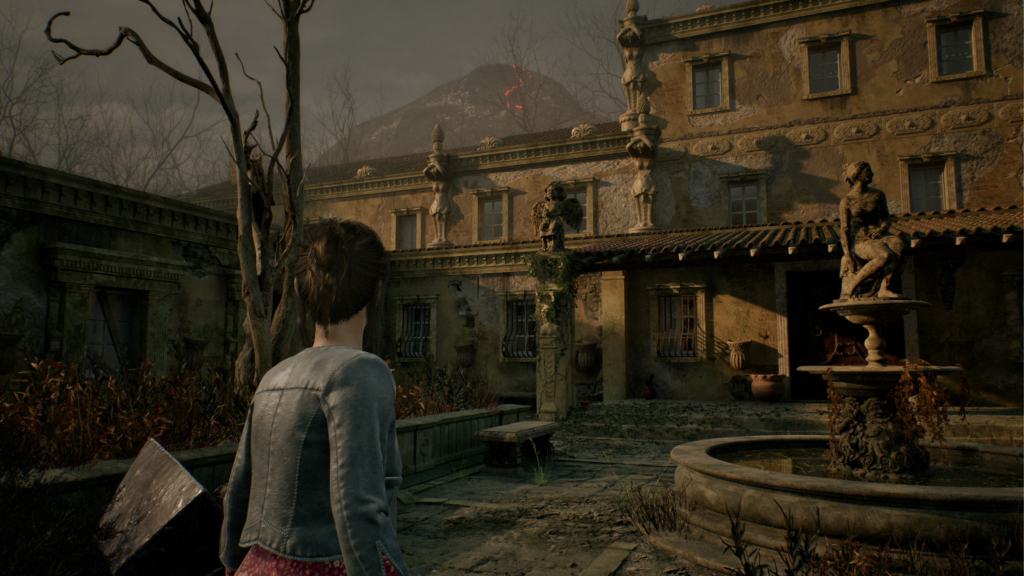
With the narrative being so bleak and dark, the sense of dread is palpable from the start. There is never a time where you feel at ease or safe, especially with the nuns roaming the halls of the villa. Most games that have a stalker type enemy that is impervious to damage can get predictable if you watch them long enough. The nuns in this game do have patterns, but they’re not set in concrete. Many times I would inch closer and closer behind one just have her break form and decide to go the opposite way, and ultimately right into me. Or other times I would stay as quiet as possible trying to listen for possible audio queues only to be suddenly greeted by a nun.
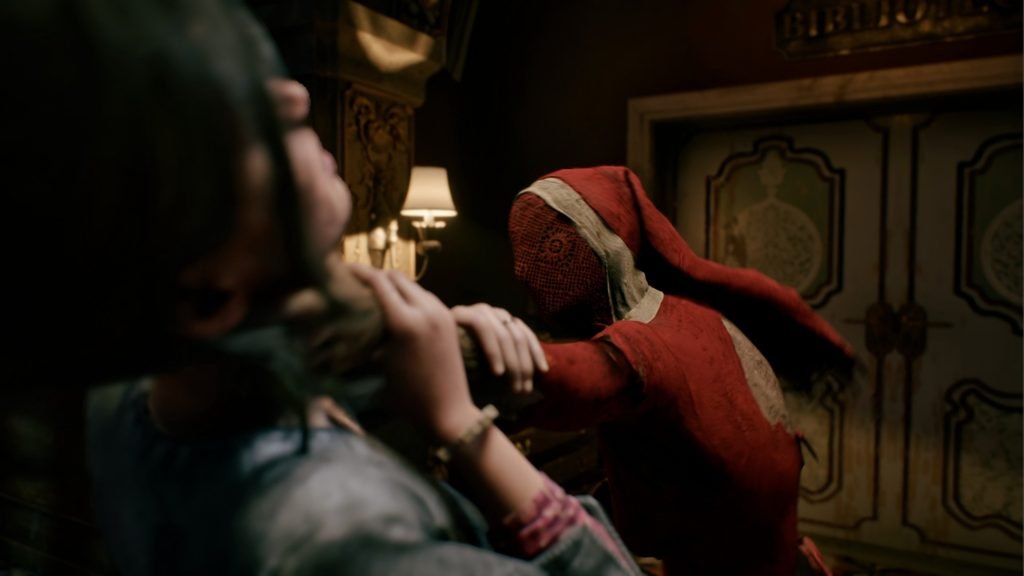
Couple this with the fact that you are mostly helpless and cannot truly fight back and the tension multiples. Hiding in wardrobes or under beds and benches offer some respite of your pursuers, but not much. The nuns actively hunt you, and if they sense you near, they will search hiding spots pulling you out if you fail a quick time event. There hasn’t been a game since Alien Isolation where the feeling of being caught by the unkillable enemy has been this terrifying. I had genuine moments where the hairs on my arm would stand on end or I would hold my own breath while hiding under a bed.
The score adds to the dread and tension of this game. The legendary Akria Yamaoka and Aram Shahbazians created a haunting score with many hills and valleys. When the horror ramps up so does the music, further fueling the terror you feel as you hope to survive.
The sound design is also something I want to bring up as a high note. When the game becomes eerily silent as you quietly walk the villa, you hear all sorts of sounds that stop you dead in your tracks. Doors opening and closing in the distance, chatter from the crazed nuns as they roam around, and what could be sounds of an old house settling. All of this creeps you out when you play in a dark room.
Gameplay
In a nutshell, the gameplay hasn’t changed much in this series. All three games have you hiding from a stalker enemy while collecting items and solving puzzles and attempting to uncover the mystery. The stalker mechanic has drastically improved in comparison to the previous two games, as mentioned before. This game has zero combat in the traditional sense. No enemies to kill at all.
The main addition to the gameplay is the Hypnosis powers. They do have a narrative connection, which I won’t spoil here. But this is the first time a playable character has the ability to use Hypnosis powers. As you progress through the game you will unlock the ability to hear memories from objects and paintings with “Retrocognition”. As you continue, you will eventually be able to pull “Secrets from Mirrors” by looking into them and finding hidden secrets in the reflection. Lastly, we finally have the ability known as “Moth Manipulation”, which gives you the ability to control moths to protect you against attacks from the nuns and also open areas closed off by cocoons.
Having those powers did switch up the gameplay experience from time to time. But the majority of the game is spent hiding and watching out for the nuns roaming the halls. The map is almost pointless when things get chaotic and it’s very easy to find yourself lost in the dark areas of the villa. The puzzles weren’t too difficult, but some did take a second to figure out. Luckily, the frustrations were kept to a minimum with the repetitive nature of the gameplay.
Graphics
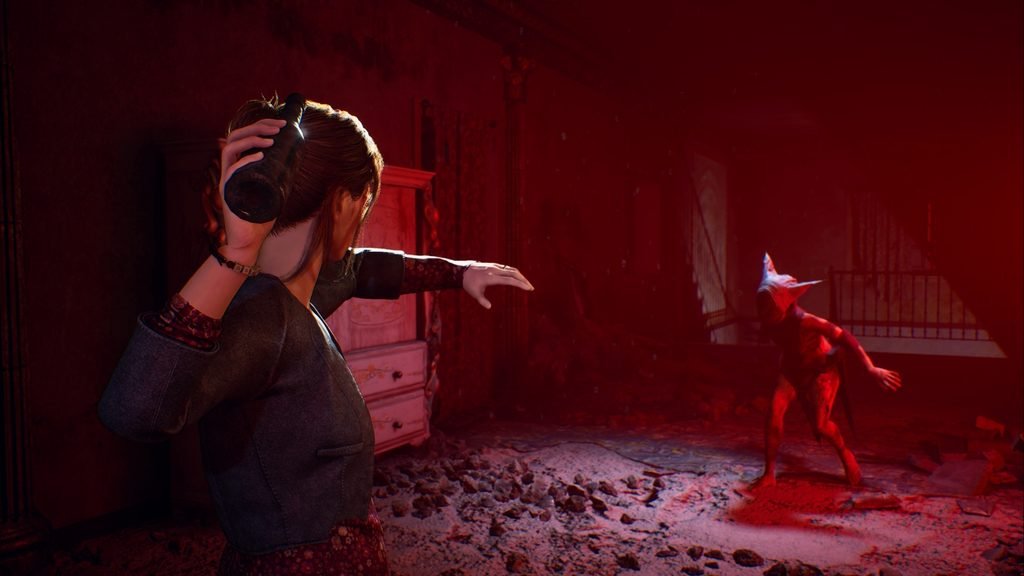
With the inclusion of the Epic Games’ Unreal Engine 5, this is by far the best the franchise has ever looked. The details of the environments and the lighting are top notch. I had many moments where I had to turn off my flashlight but it was so dark it was almost impossible to see. This did not diminish the details at all. This game is also disgusting and disturbing. There are scenes of body horror that involve genetic mutations, animals and lots of insects. Mix that up with buckets of blood and gore, and this becomes a Fulci movie.
Unfortunately, there were sections near the end game where I experienced frame rate drops and stuttering. Which did affect the experience, especially when important cutscenes where choppy and chase sequences had issues.
Final Word
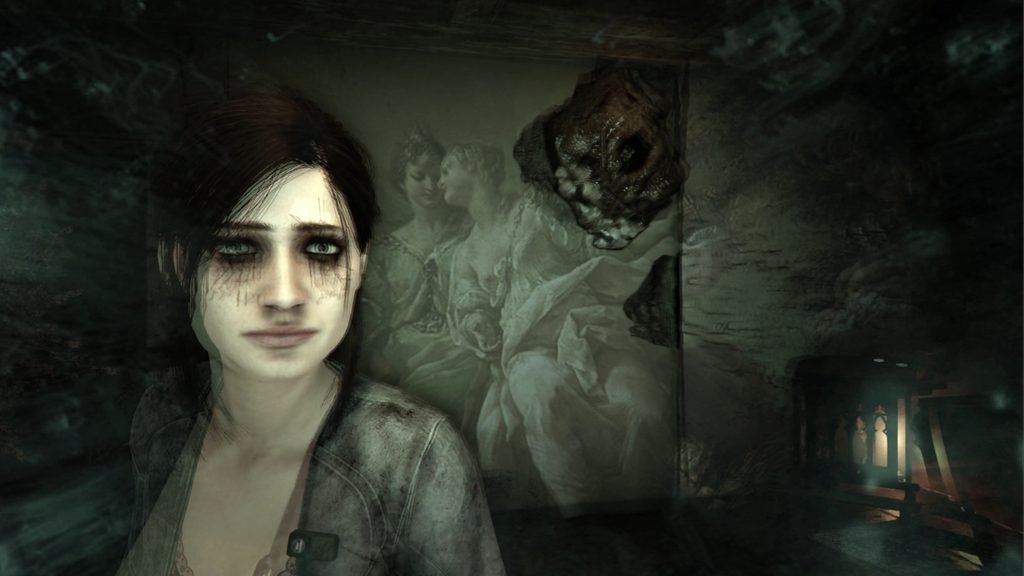
Returning after the difficult release of Broken Porcelain, Stormind Games have managed to bring the series back from purgatory. This is the best Remothered has ever been. Creating a story and experience that is so bleak and disturbing makes this game a difficult playthrough, but not because of technical issues. This might be the final part in this trilogy, but I’m excited to see where Remothered or Stormind go from here.
I give Remothered: Red Nun’s Legacy 4 Moth Cocoons Out of 5
Remothered: Red Nun’s Legacy Out Now for PlayStation 5, Xbox Series X/S, and PC. Nintendo Switch 2 Version releases on December 3 2026.
Steam review key provided by Stormind Games