
G’day, dear readers. Welcome to your personal Australian tour of terror. I’m Rhiannon Elizabeth Irons, and I’ll be your tour guide as we venture into the macabre that only the unforgiving Australian landscape can truly provide. It is recommended that you keep your hands and arms inside the car at all times. Things are about to get messy.
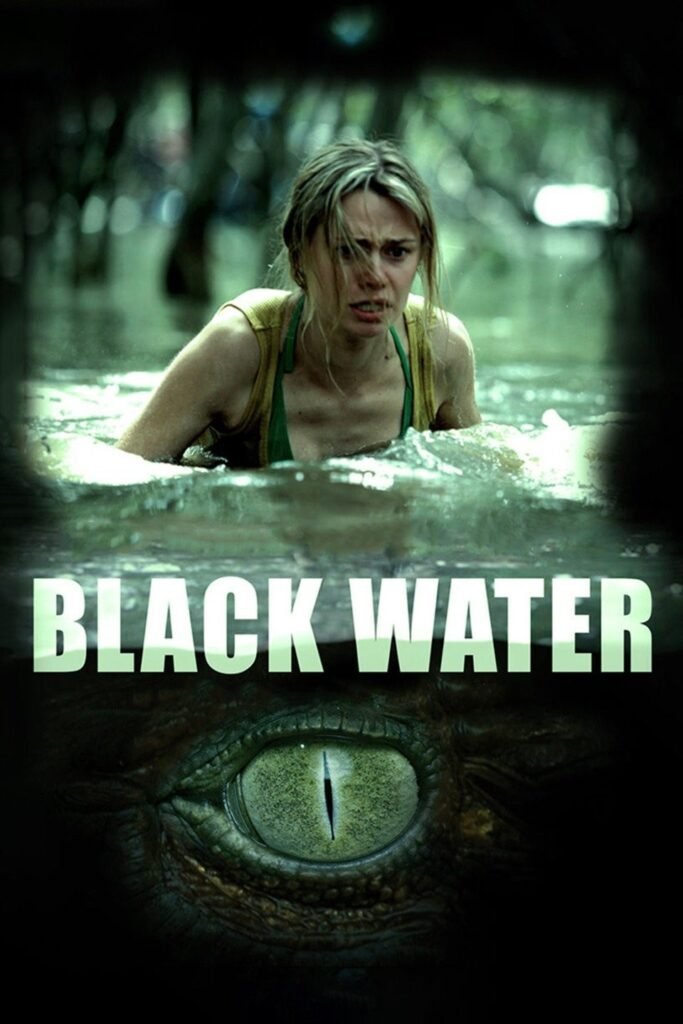
Continuing our Outback Spotlight series, we are diving into the grim, terrifying reality of animal attack horror with the 2007 survival thriller, Black Water. Directed by Andrew Traucki and David Nerlich, this film avoids Hollywood spectacle and opts instead for stripped-down realism and suffocating tension. It is based on a real-life fatal crocodile attack that occurred in the Northern Territory, lending the terror a genuine, agonizing sense of possibility.
WATCH THE TRAILER FOR “BLACK WATER” BELOW
But before I can continue, this is your only warning: There may be spoilers ahead.
Trapped in the Mangroves
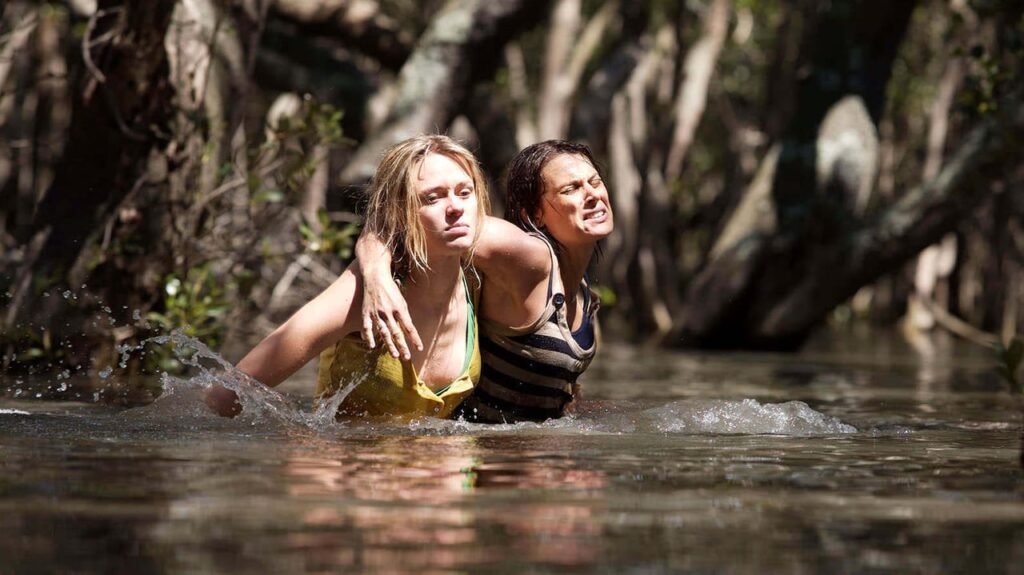
The film’s premise is agonizingly simple and relatable: Grace (Diana Glenn), her sister Lee (Maeve Dermody), and Grace’s boyfriend Adam (Andy Rodoreda) are on holiday in the mangrove swamps of the Northern Territory. They hire a local guide, Jim, for a fishing tour. The trip quickly turns catastrophic when their small boat is capsized by a massive saltwater crocodile.
The initial chaos leaves them stranded, clinging desperately to the branches of a mangrove tree that has partially fallen over the capsized boat. Their dilemma is immediately clear and agonizingly simple: The dense, muddy water is infested with a massive, unseen predator, and the nearest land is unreachable. The bulk of the film is spent trapped in this small, exposed space, relying on the immense tension generated by the creature’s unseen presence and the characters’ mounting desperation.
The Power of the Real
What makes Black Water such an effective piece of horror is its commitment to unflinching realism. Unlike Rogue (another major Australian croc film), this movie is low-budget and highly efficient, choosing not to use CGI for the predator. Instead, the filmmakers integrated footage of actual saltwater crocodiles into the scene, which gives the encounters an authentic, primal weight.
The directors masterfully use the claustrophobic setting and the dark, murky water to create continuous, suffocating dread. The crocodile is often glimpsed only as a pair of dark, silent eyes or a sudden, devastating ripple in the water. This focus on implication, rather than full revelation, maintains a high level of tension throughout. The water itself becomes a terrifying barrier; stepping into it means certain death, but staying on the unstable tree means being exposed to the sun, insects, and fatigue.
The film’s emotional horror is rooted in the characters’ rapid psychological deterioration. They are forced to make increasingly desperate and morally compromising decisions, watching their window for survival shrink with every passing minute.
Thematic Devolution: Indifference of Nature
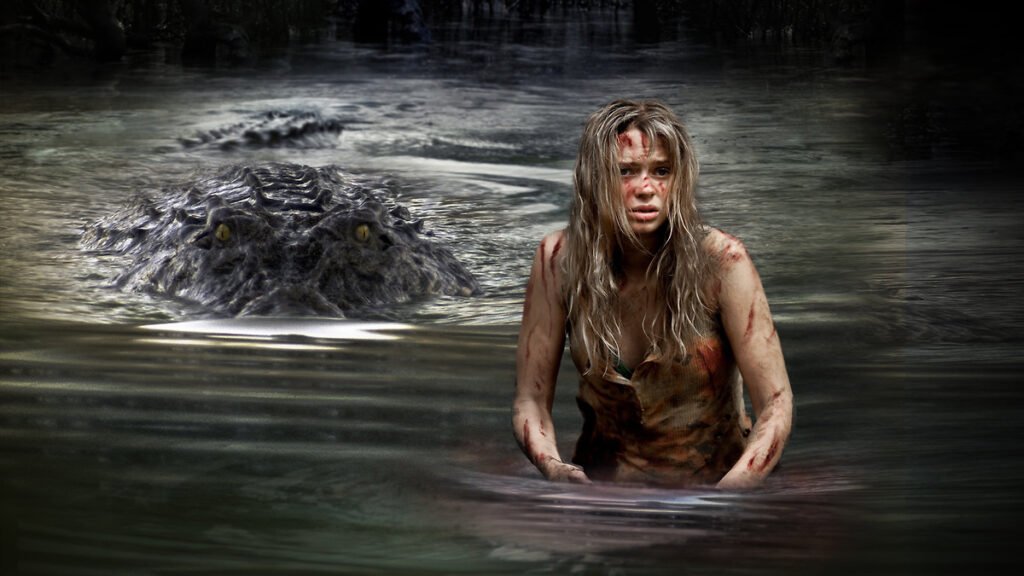
Black Water serves as a stark, uncompromising warning about the Australian wilderness. It reinforces the theme of Nature’s indifference. The crocodile isn’t malicious; it’s simply a massive, hungry animal following its instincts. The tragedy is entirely due to the characters straying into its domain unprepared.
The film contrasts the beauty of the vast Australian wilderness with its inherent danger. The lush, suffocating mangrove swamp is presented as a beautiful, yet inescapable natural prison where human intelligence and technology are useless against the sheer size and speed of a perfect predator. The sheer isolation experienced by the characters, so close to civilization yet completely cut off, is a common and terrifying trope in Australian horror.
Production Highlights and Behind the Scenes
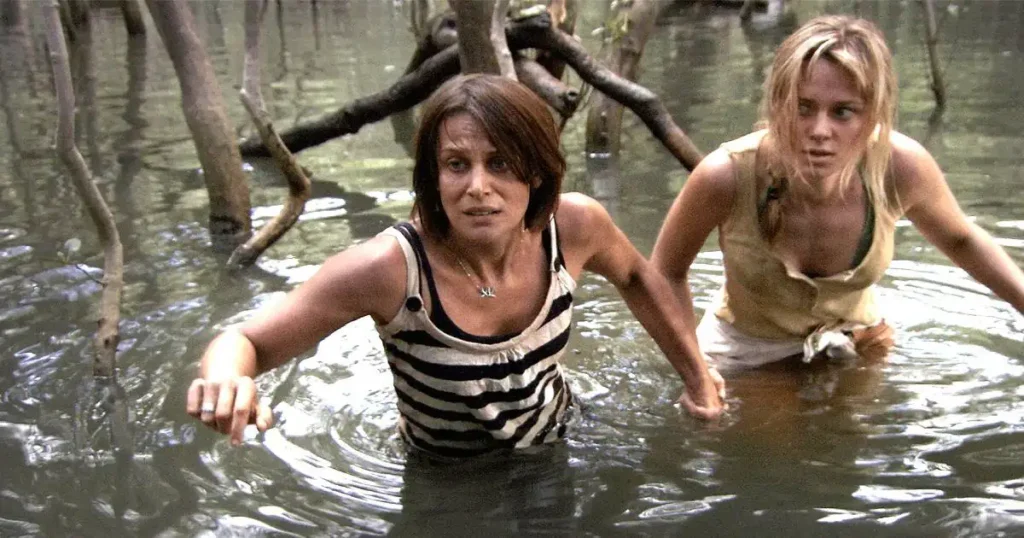
Beyond the tense performances and minimalist direction, Black Water holds some fascinating production details that underscore its impact:
• Real Crocodiles: The directors made the decision early on to integrate real, trained crocodiles into the filming, often using protective barriers between the actors and the animals. This commitment ensured the reptile’s presence felt genuinely threatening.
• Wet and Wild Shoot: The filming was notoriously difficult, with actors spending weeks submerged in cold, muddy water and dealing with the logistical nightmares of working in a real mangrove swamp. This hardship translated into the authenticity of the characters’ suffering on screen.
• Low-Budget Success: Despite its small budget, the film garnered international attention and critical praise for its sustained tension and realism, paving the way for similar Australian survival thrillers.
Conclusion: A Viciously Necessary Gem
Black Water is a brutal, lean, and highly effective survival thriller. It succeeds because it uses its simplicity to maximize primal fear, reminding the audience that sometimes, the greatest terror is entirely real, waiting patiently in the murk. It stands as a powerful and enduring entry in the Australian animal attack subgenre, demanding that viewers respect the danger lurking just beneath the surface.
Verdict: An essential watch for fans of realistic, high-tension survival horror and creature features.
Continuing the Outback Spotlight column, this review explores another facet of the raw, visceral nature of Australian horror. Stay tuned for more terror from Down Under!