

If you take into account the influx of early-2000’s “tech-horror” films (which were mostly remakes of already established J-Horror flicks about evil technology like The Ring, Phone, Pulse, One Missed Call or Shutter, to name just a few), and combine those with cinematic adaptations of popular survival horror games like Resident Evil and Silent Hill, then something like Stay Alive makes a lot of sense. With every other useful form of media being cursed or haunted in theaters, why not a cursed video game?
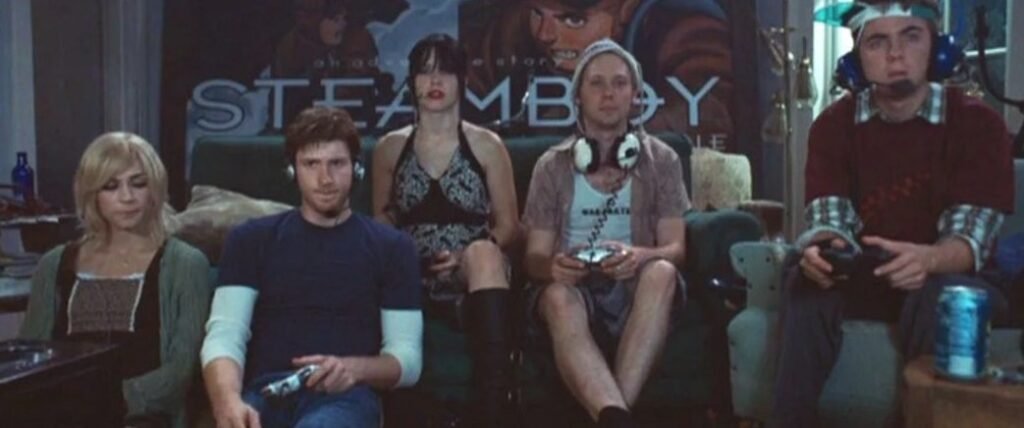
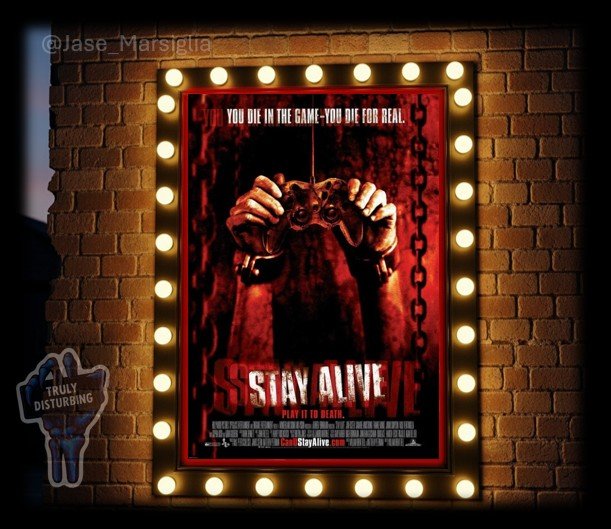
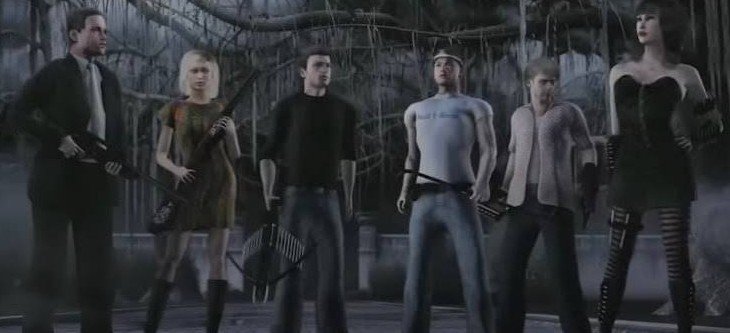
A beta tester mysteriously dies the night he played a horror game called “Stay Alive”, and his mourning gamer buddies get their hands on it at the funeral. As a tribute to their friend, they all gather, plug in for a LAN party, and play this mysterious horror game in his memory, which begins with them reading the incantation during start-up (always a bad move) before plunging into a New Orleans-based, Fatal Frame-style nightmare with Countess Elizabeth Bathory as the game’s bloodthirsty final boss. The game, now “awakened”, begins a systematic slaughter of the players, and as the film’s tagline promises – “you die in the game, you die for real”. With no choice but to uncover the mystery behind the curse, which involves blood sacrifices, an urban legend involving a nearby plantation, the rapidly dwindling group of players try to avoid getting their avatars killed in the game long enough to save their very real-life asses.
Stay Alive: Unrated Director’s Cut (2006)
⭐️⭐️⭐️
Some of my more “seasoned” readers may have noticed that today really isn’t the theatrical anniversary of Stay Alive, as it was released in March of 2006. Why didn’t I review it back in March (aside from the fact that its release date didn’t fall on a Saturday this year – OCD is a powerful thing)? I’m going to let you in on a shameful secret: I’ve never seen the theatrical cut of Stay Alive. It wasn’t in theaters long enough to make any dent, and by the time it hit video, this Unrated Director’s Cut was one of the options to watch. I chose the latter, thinking that this was the director’s preferred vision. And it is! But more on that in a bit…
With only a few exceptions, “Director’s Cut” or “Unrated Cuts” are buzz terms to make you think you’re getting something wholly different from what you’ve seen in theaters. Sometimes, that is true. Take some of the films by James Cameron, like Aliens, The Abyss, or Terminator 2: Judgment Day – three films that were wildly successful in theaters, but upon their home video releases, had special copies that inserted footage originally removed from theatrical distribution for things like time or pacing. In these three examples, much of the re-inserted footage adds a wealth of character and plot aspects that completely shift the way we see our favorite films. Suddenly, Ripley’s bond with Newt takes on a whole new meaning. The creatures in The Abyss aren’t just curious travelers, but benevolent entities that see the violence of our world as something they can “extinguish” for us. And there’s sequences involving Kyle Reese, and the T-800’s programming that further deepen his understanding of John and play an integral role in bonding with this child he was sent to protect.
Obviously, not all Director’s Cuts are rewarding to such a degree. Many are simply films that have a scene or two that the director would have liked to include but trimmed because they don’t have too big a bearing on the plot, and some Unrated Cuts (like 1981’s My Bloody Valentine) simply feature more gore and violence that needed excised to receive an MPAA rating (to be fair, that example is bad because the re-inserted footage changed the whole game on that one – in a good way!). And in the case of Stay Alive, that’s largely the reason for this cut.
Not too unlike Wes Craven’s Cursed a year prior, Stay Alive languished in theaters thanks to studio interference and an indefensible need to cut the gory flick down to a PG-13, neutering its mean streak and rendering its plot sort of scare-impotent – all in an effort, ironically, to appeal to a larger audience. Instead, the ploy backfired (as it always does), sending Stay Alive into box office obscurity. It’s doubly ironic that the younger audience they were aiming for, were likely already playing video games far more disturbing and violent than the film was, and likely would have gone to see this, had it not been rated something so banal for a horror film as the dreaded “PG-13” (a point of contention with many horror fans, though I argue there are many PG-13 horror films that are stellar). You could assume that a video game-based horror film would have survived just fine as a PG-13 if the plot looked interesting enough, but let’s face it – Stay Alive involved blood sacrifices, occult rituals, and the titular game in the plot was based around Elizabeth Bathory and the slaughter of countless women.
PG-13 wasn’t going to cut it (so to speak).
Thankfully, director/writer William Brent Bell and his co-writer/producer Matthew Peterman kept all the gore, sex, bong rips, and blood-bathing nudity that they intended the movie to feature, giving us a much nastier, meaner version of Stay Alive than what played to thinly populated cineplexes (despite making back its budget, it didn’t do much profit-wise). Having seen this version several times, I almost can’t imagine what a watered-down version of it would even look like. Every death is gruesome, the funniest lines involve “four-letter words” that the ratings board frowns upon, and the plot is dark as hell. I can only assume the original cut of Stay Alive is a wasteland of scenes that start to go somewhere, and abruptly pivot elsewhere, saving our delicate sensibilities from seeing any gruesome result of a pending impact.
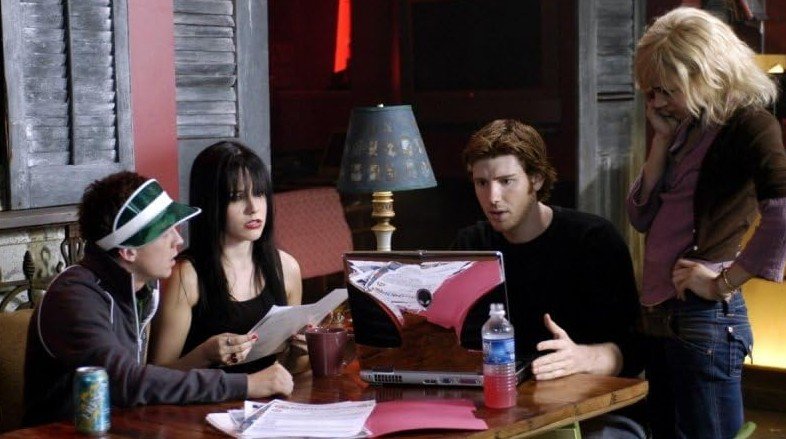
But Bell and Peterman’s intended cut doesn’t just include gore removed for a PG-13 rating, it removes plot points they think the movie needed to do without, shuffles a couple of scenes for pacing, and includes a little more character meat for its cast, so that we can get to know them as people and not just grist for the mill (hell, scenes involving Breaking Dawn’s James Haven and Silent Hill’s Alice Krige, which provide the film a massive amount of backstory, are seen here, having been entirely removed from the theatrical cut). This is a difference of 15 minutes! That’s a lot of material to hit the floor, and most of it, character driven.
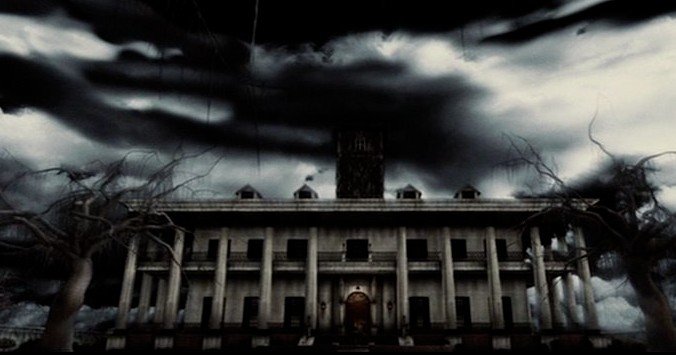
Let’s face it, any time we get to see more of Jimmi Simpson being a likeable, stoner asshole, or Sophie Bush play a hot Goth chick who has all the occult bric-a-brac to provide us exposition, I’m in! Jon Foster carries the movie capably as the film’s hero, Samaire Armstrong as the group’s new pal is wonderful (and has a great scream), and Franky Munez as the group’s kid tag-along is fun as “Swink”, who speaks almost exclusively in G4, and spends most of the film being told to shut up when his tech-babble pipes up at inopportune moments (insert “life is unfair” joke here). It’s a well-rounded, fun group of characters, and we’re getting more of them in this version. Set it in the dark, culture-rich cemeteries and streets of a pre-Catrina New Orleans, and the modern gothic mood practically sets itself.
This isn’t perfect, by any means. Stay Alive still plays fast and loose with its own built-in rules, and that’s always a hinderance. You can’t lay groundwork and then decide this or that is no longer relevant to advance the plot or shoehorn in scares and body count. As one player shouts when the film pulls one of these stunts, “Bitch, that’s cheating!” There’s also a series of “convenient” plot holes, not the least of which the aforementioned New Orleans location. Don’t get me wrong, The Big Easy is a wonderful place for a horror film, but when you’re racing the clock to find the game developers and/or graves of various spirits in order to save your lives, it’s just dumb blind luck that they all happen to be right there in N’awlins, when in reality, Bathory died in Hungary, and damn near every video game is developed in Japan. These characters didn’t even have to hop a jet to Silicon Valley, much less Silent Hill. Like they said, “Bitch, that’s cheating!”
But these gripes are small in the long run. We’re seldom given truly good video game adaptations in cinema, and when we get one that isn’t based on a real game and exists within its own world, there’s a lot of room for creativity, and Stay Alive does a fine job of blending dark history with modern tech. The makers knew their shit, the film has a good sense of humor about itself, the characters (outside of peripherals, like the ineffective law enforcement) are largely likable and sympathetic, and the video game animations and their connections to their real-life avatars are fun and true to form. One key sequence during the finale involves one player unlocking doors and dropping items in the game world, that are directly aiding their friend in the real world, and details like that are just plain, old-fashioned fun.
I can’t speak to Stay Alive’s PG-13 cut, but as far as the Unrated one is concerned, it’s a gruesome, fast-paced, funny, creative little pot-boiler with some fun ideas and cool visuals. It’s a guilty pleasure, through-and-through, and is exactly the type of flick I’d have settled in for on a Saturday afternoon as a kid, had it come out in the 80s. It shares that type of go-for-broke mentality and largely succeeds, making it ripe for reevaluation.
All you have to do is grab some friends, plug in and say the words. I think I’ll do just that, because Sweet Sebastian Bach, I wanna play!
HOME VIDEO
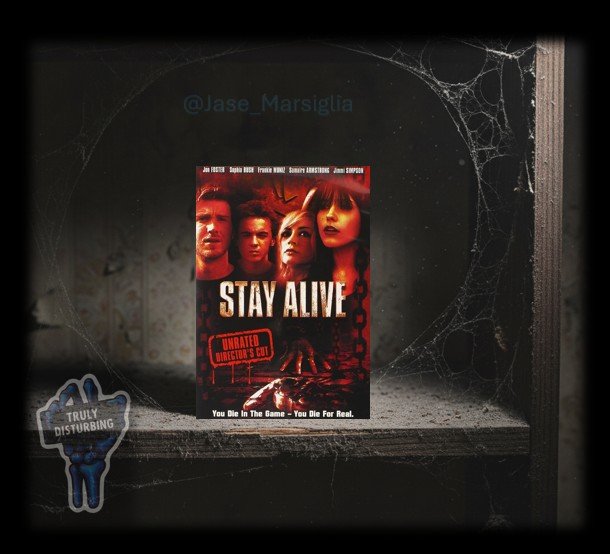
Yet to be released on Blu-Ray, Stay Alive: Unrated Director’s Cut is still only available on DVD from Hollywood Pictures Home Entertainment, but even then, you’ve got a perfect example of the showmanship that went into this title. While it’s not heavy on bonus material (its biggest feature being the audio commentary), it did feature a fun little gimmick for its title menu, in which you could design your own player from three different avatars, and unlock a secret menu if you get the combination of character/clothing/weapon correct. It’s not much, but it’s fun, and at the time, would unlock secret words that would have earned you a downloadable e-mail signature on the film’s website – which is history, sadly.
Below is what you get with this release:
- Aspect Ratio: 2.35:1 Anamorphic Widescreen
- Audio: Dolby Digital English Surround 5.1
- Subtitles: English, French, Spanish
- Start-Up Trailers
- Interactive Menu Game
- Audio Commentary by Writer/Director William Brent Bell and Co-Writer/Producer Matthew Peterman
- Visual Effects Reel
The PG-13 version of the film is also available separately; however, I think it’s important to note that that copy of the film is in standard 1.33:1 Fullscreen ONLY, and not the widescreen presentation here. That said, even this version’s transfer has a lot of moments that look pretty hazy, for whatever reason, causing some noticeable dips in quality here and there.
All the more reason someone needs to re-release this title with retrospective interviews, an updated commentary track, behind-the-scenes of the animatics and make-up effects, a quick spit-shine remaster (PLEASE), and for completists, BOTH versions of the film in one place (BOTH widescreen), so people can watch either one and compare the two versions. And if you’re a boutique distributor reading this, yes, keep the interactive menu game when you port over the archival features. It’s too cool a feature of its era to cast aside when creating a new release (anyone who has the 20th anniversary of House of 1000 Corpses can attest that a good menu set-up is worth keeping).
Bits ‘N’ Pieces
Traum-A-Meter:
3 out of 4
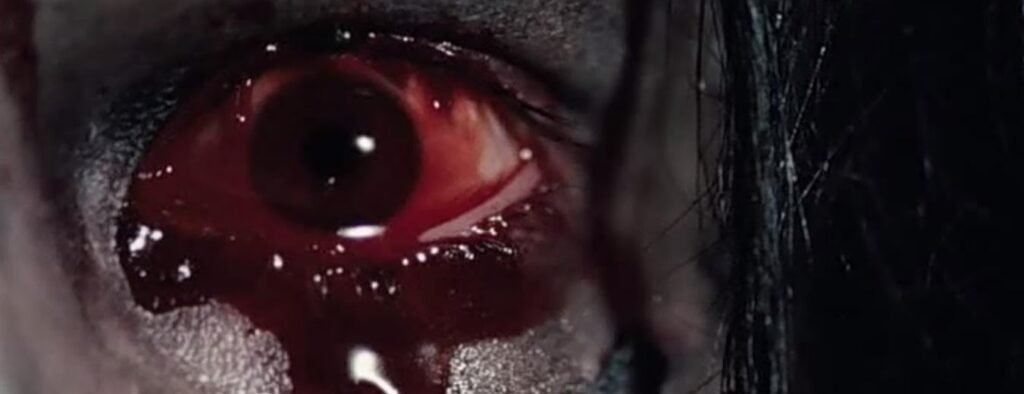
With this version of the film we get off-camera slaughters that paint rooms red, hangings, exploding heads, slit throats, nails in the head, fire deaths, and character run down by a horse and carriage. Lots of fun gore, and a freaky nod to Aphex Twin for the win.
Today’s Jam: “Lips of an Angel” by Hinder would have been on the airwaves the weekend you decided to head to the video store to rent this one.